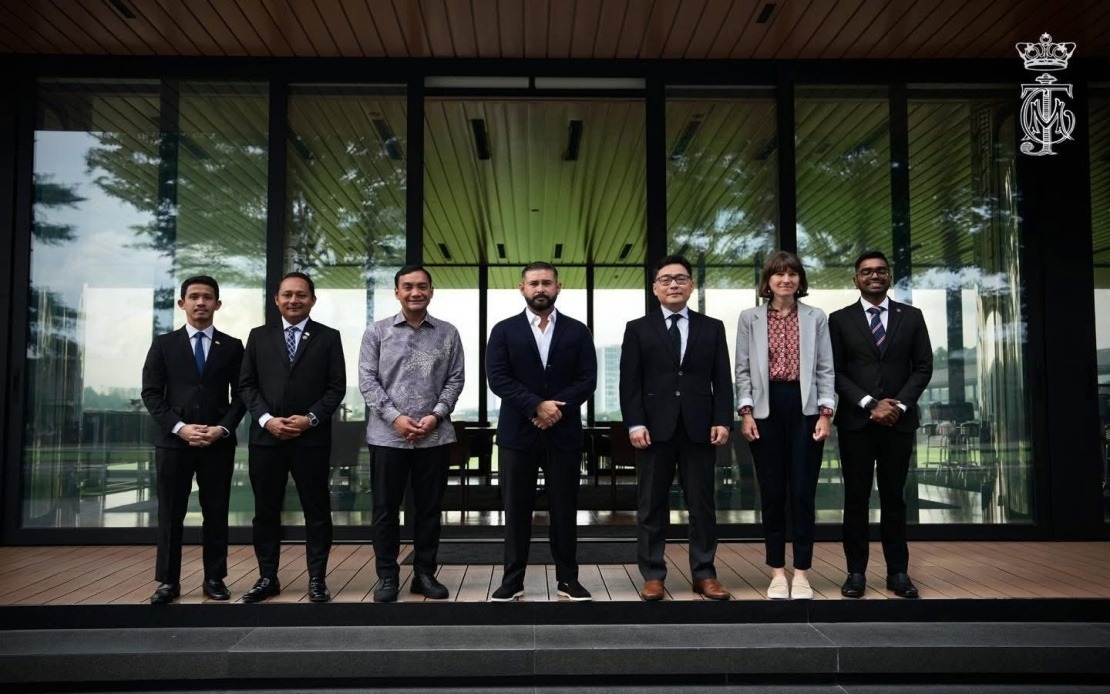
A landmark educational partnership between Johor State Government and Harvard University will extend the Programme for Scientifically-Inspired Leadership (PSIL) to approximately 100 students across two major schools in the state, signalling a deeper commitment to elevating student outcomes through internationally-benchmarked curriculum frameworks. The initiative, which represents a carefully orchestrated strategic collaboration unveiled in Johor Bahru this week, seeks to integrate Harvard's pedagogical expertise with Sekolah Rintis Bangsa Johor's (SRBJ) existing educational philosophy, creating a hybrid model that balances intellectual rigour with local contextual needs.
According to Aznan Tamin, chairman of the State Education and Information Committee, the PSIL framework—originally established by Harvard University in 2019—deliberately prioritises active learning methodologies, development of critical thinking capabilities, refinement of communication skills and structured leadership training. These competencies increasingly feature in employer expectations across Southeast Asian markets, where soft skills gaps remain a persistent challenge for regional graduates competing in knowledge-intensive sectors. The programme's emphasis on scientifically-grounded approaches to leadership distinguishes it from conventional school-based leadership modules, offering students exposure to research-informed practice.
The collaboration's first cohort will comprise 100 carefully selected students drawn from Sekolah Menengah Kebangsaan Tasek Utara and Sekolah Menengah Kebangsaan Seri Kota Puteri 2, with implementation anticipated to commence in January 2027. The extended timeline allows sufficient preparation for curriculum integration and teacher training infrastructure. This measured rollout contrasts with rapid, often unsustainable adoption of foreign programmes, suggesting institutional confidence in the partnership's sustainability and cultural adaptability within Malaysian education contexts.
Beyond student participation, the initiative incorporates professional development for 40 SRBJ educators through intensive workshops designed to equip teachers with active learning pedagogy competencies. This teacher-focused component recognises a fundamental truth in educational transformation: curriculum reform depends fundamentally on educator capability and confidence. By investing in pedagogical upskilling, the partnership addresses a critical implementation bottleneck that has historically undermined international education collaborations in Southeast Asia. Teachers gaining exposure to Harvard's evidence-based instructional methods can subsequently cascade these approaches across their wider teaching practice.
The Regent of Johor, Tunku Mahkota Ismail, recently hosted Harvard delegations including Dr Dominic Mao, assistant director of Undergraduate Studies and Lecturer in Molecular and Cellular Biology, alongside Dr Andrea Wright, assistant dean of Harvard College. This high-level engagement underscores the institutional gravity attributed to the partnership at state level, positioning education innovation as a priority concern for Johor's leadership. Such symbolic commitment frequently correlates with sustained political and financial support necessary for long-term programme viability within Malaysian contexts, where educational initiatives sometimes struggle when initial enthusiasm diminishes.
SRBJ's foundational educational model already emphasises simultaneous mastery of English-language proficiency whilst preserving Malay language competency, a balance particularly relevant for Malaysian students requiring bilingual fluency for both regional and global opportunities. The institution further prioritises science, technology, engineering and mathematics skill development—increasingly recognised as essential for economic participation in digitally-driven sectors. This existing infrastructure provides fertile ground for Harvard partnership integration, as both parties share pedagogical values emphasising STEM literacy and evidence-based problem-solving.
The programme explicitly incorporates personality development and student employability enhancement, addressing a recognised gap in Malaysian secondary education where academic achievement sometimes outpaces professional readiness and interpersonal competency. Employers across Malaysia and the broader Southeast Asian region frequently report that graduates, despite strong technical qualifications, require substantial onboarding support to develop workplace communication skills, team collaboration, and adaptive thinking. PSIL's integrated approach to leadership development directly targets these capability gaps.
Additionally, SRBJ's assessment frameworks are being calibrated toward international equivalency standards, enabling participating students to undertake competency evaluations comparable to recognised external benchmarks. This alignment strategy facilitates student mobility and recognition across educational jurisdictions, potentially enhancing pathway clarity for further tertiary study internationally. Simultaneously, the partnership maintains alignment with Malaysian Ministry of Education policy parameters, ensuring that innovation remains institutionally consistent rather than operating as isolated parallel provision.
For Malaysian observers, this collaboration represents a broader trend wherein ambitious state governments increasingly pursue direct relationships with premier international universities, circumventing federal channels to accelerate educational modernisation. Johor's initiative demonstrates strategic networking capacity and appetite for sustained international engagement, positioning the state competitively within an increasingly knowledge-driven regional economy. The partnership's success metrics will likely extend beyond immediate student outcomes to encompass broader systemic influence—whether Harvard-influenced pedagogical approaches ultimately reshape teaching practice across wider Johor schools, or remain confined to pilot institutions.
The January 2027 implementation timeline suggests robust groundwork currently underway, with curriculum design, teacher preparation, and institutional alignment requiring coordinated effort across multiple stakeholders. Successful execution could establish a replicable model for other Malaysian states considering international partnerships, potentially influencing how Southeast Asian education systems operationalise global best practices whilst maintaining local relevance. Conversely, implementation challenges—whether curriculum adaptation, resource constraints, or teacher readiness issues—would offer valuable lessons regarding realistic timelines and support infrastructure necessary for sustainable international education collaboration within Malaysian contexts.


%22%2F%3E%3C%2Fpattern%3E%3C%2Fdefs%3E%3Crect%20width%3D%22100%25%22%20height%3D%22100%25%22%20fill%3D%22url(%23ph2hy9vg)%22%2F%3E%3Crect%20width%3D%22100%25%22%20height%3D%22100%25%22%20fill%3D%22url(%23ph2hy9vp)%22%2F%3E%3Ctext%20x%3D%2250%25%22%20y%3D%2250%25%22%20text-anchor%3D%22middle%22%20dominant-baseline%3D%22central%22%20fill%3D%22rgba(255%2C255%2C255%2C0.95)%22%20font-family%3D%22Georgia%2C%20'Times%20New%20Roman'%2C%20serif%22%20font-weight%3D%22700%22%20font-size%3D%22272%22%20letter-spacing%3D%22-0.02em%22%3EAnwar%3C%2Ftext%3E%3C%2Fsvg%3E)