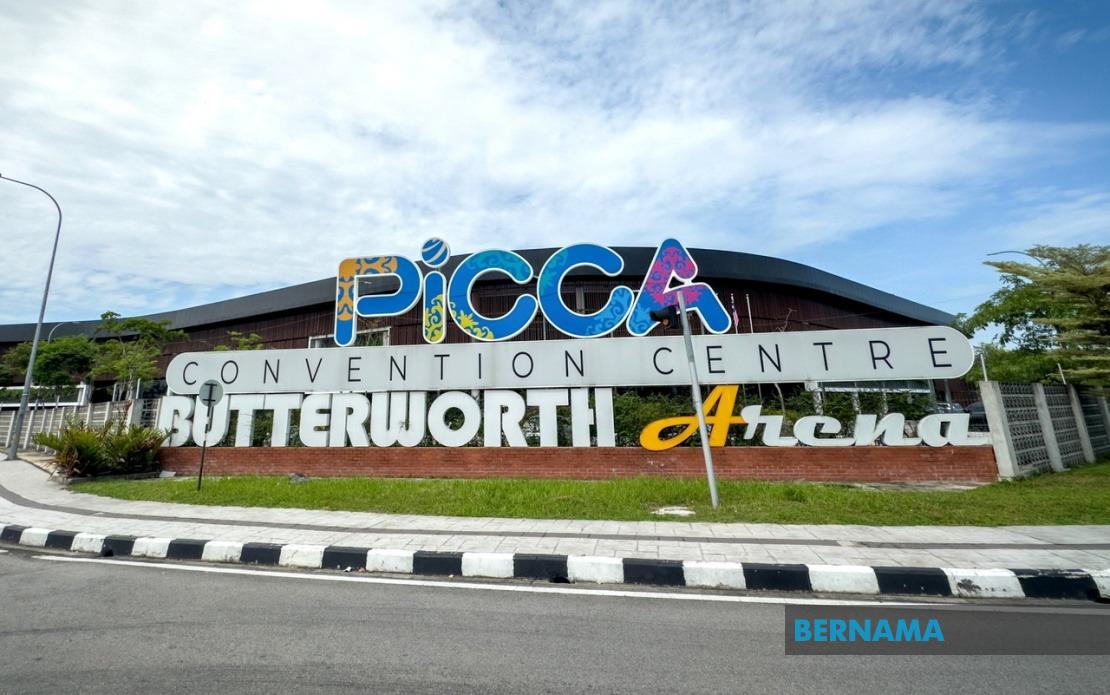
The Malaysian journalism community converges on Penang today for the grand finale of National Journalists' Day (HAWANA) 2026, a significant annual occasion that unites the country's media sector. Approximately 1,000 journalists, editors, and media professionals—both from Malaysia and abroad—will gather at the PICCA@Arena Butterworth Convention Centre to participate in the landmark event. The gathering represents one of the year's most important occasions for the fourth estate, providing a rare opportunity for practitioners across different outlets and countries to interact, share experiences, and reflect on their collective mission to inform the public.
Prime Minister Datuk Seri Anwar Ibrahim will officiate the proceedings at 3 pm, lending considerable weight and governmental endorsement to the occasion. His presence underscores the administration's recognition of journalism's pivotal role in democratic governance and public accountability. Joining the Prime Minister will be Penang Chief Minister Chow Kon Yeow and Communications Minister Datuk Fahmi Fadzil, alongside senior officials from the Communications Ministry and Malaysian National News Agency (Bernama). The calibre of attendees reflects the formal importance accorded to media practitioners within Malaysia's institutional framework.
This year's celebration operates under the thematic banner 'Media Integrity Strengthens Credibility', a message that resonates deeply amid global concerns about misinformation and public trust in news institutions. The theme positioning integrity as foundational to credibility speaks to ongoing challenges facing journalism across Southeast Asia and worldwide. By emphasising this connection, the organisers signal commitment to professionalising the field and reinforcing standards that protect public discourse from degradation by falsehoods and propaganda.
The centrepiece of today's programme involves the Prime Minister distributing HAWANA Awards and Special HAWANA Awards to individuals whose careers have substantially advanced the journalism profession and influenced public understanding. These accolades recognise not merely journalistic achievement but contributions to nation-building through responsible, ethical reporting. Additionally, the Tabung Kasih@HAWANA contributions will be presented to media veterans facing financial hardship, demonstrating the sector's commitment to supporting its elder members. Such welfare provisions acknowledge journalism's physical and psychological demands, which often leave practitioners vulnerable in retirement.
International participation adds meaningful dimension to this year's celebration, reflecting journalism's transnational character and Southeast Asia's media interconnectedness. Delegations from Indonesia's Antara News Agency, Vietnam News Agency (VNA), and China's Xinhua News Agency will attend, alongside representatives from the Indonesian Journalists Association and the Malaysia-Indonesia Journalists Friendship Association (ISWAMI). This international presence facilitates knowledge exchange on media standards, professional ethics, and emerging challenges like artificial intelligence's impact on newsrooms—issues affecting journalists regionally rather than merely domestically.
Parallel to the official ceremonies, the RIUH Pi HAWANA Carnival provides public engagement dimensions often absent from institutional celebrations. Operating for three days at the PICCA Convention Centre parking area, the carnival features performances by established Malaysian artists including Exists, Bunkface, Masdo, Sakura Band, Budak Nakal Hujung Simpang, and Chelsea Ng. The entertainment component serves to elevate HAWANA's profile beyond professional circles, making journalism visible to ordinary citizens and underscoring media's relevance to everyday life. Entertainment, however, comprises only one dimension of the carnival experience.
The carnival's commercial and educational offerings further broaden its appeal and utility. Over 24 local creative product brands operate alongside 20 food and beverage vendors, creating a marketplace that celebrates Malaysian creative industries whilst generating revenue for participating enterprises. Interactive workshops held throughout the three-day run offer visitors hands-on learning opportunities, potentially inspiring younger generations toward journalism careers. Such experiential components transform HAWANA from an insular professional gathering into a public festival celebrating journalism and information as collective goods.
The broader HAWANA 2026 programme extended well beyond today's culminating event, encompassing multiple components throughout the preceding weeks. The HAWANA 2026 Media Forum conducted on May 7 provided intellectual space for discussing professional challenges and developments. A strategic engagement session on June 4 facilitated dialogue between media organisations and potential collaborative partners. The HAWANA 2026 Fun Walk on June 14 mobilised community participation and demonstrated journalism's connection to civic life. This multi-faceted approach acknowledges that media's societal role transcends newsroom activities, extending into broader cultural and civic conversations.
HAWANA itself derives significance from deep historical roots within Malaysia's media narrative. Celebrated annually on May 29, the occasion commemorates the publication of Utusan Melayu newspaper's first edition on the same date in 1939. This historical anchoring connects contemporary journalism to pre-independence media activism, reminding practitioners of journalism's historical contribution to Malaysian nationalism and anti-colonial struggle. The date's symbolic weight elevates HAWANA beyond celebratory ritual, positioning it as moment for reflecting on journalism's evolving responsibilities within an independent nation.
The institutional framework surrounding HAWANA demonstrates how Malaysia's government supports media sector development and recognition. The Ministry of Communications organises the celebration with Bernama serving as implementing agency, suggesting integrated coordination between regulatory bodies and news infrastructure. This institutional embedding signals that media development constitutes governmental priority rather than peripheral concern. For Malaysian journalists, such sponsorship provides validation and resources that might otherwise depend on commercial media viability—increasingly uncertain globally as traditional advertising models deteriorate.
The emphasis on 'media integrity strengthens credibility' carries particular resonance for Southeast Asian journalists navigating increasingly complex information environments. The region faces concurrent pressures from state control, commercial pressures, and technologically-enabled misinformation that collectively threaten professional journalism's sustainability. By positioning integrity as credibility's foundation, HAWANA 2026 reaffirms journalism's epistemological role—journalists as reliable arbiters of truth in societies where information manipulation poses mounting risks. This positioning matters not merely professionally but democratically, as weakened journalism undermines citizens' capacity for informed participation in governance.
For Malaysian readers and the broader Southeast Asian media landscape, HAWANA 2026's emphasis on international collaboration and professional standards reflects journalism's transnational dimensions. Stories originating in one country increasingly affect publics across borders; journalistic standards therefore constitute regional rather than merely national concerns. Indonesia, Vietnam, and China's participation, alongside Malaysia's own commitment, suggests emerging recognition that media development requires regional coordination. This collaborative instinct, expressed through institutional mechanisms like HAWANA, offers hopeful counterweight to increasingly fragmented, nationalised information spaces that threaten regional understanding and cooperation.

%22%2F%3E%3C%2Fpattern%3E%3C%2Fdefs%3E%3Crect%20width%3D%22100%25%22%20height%3D%22100%25%22%20fill%3D%22url(%23ph2hy9vg)%22%2F%3E%3Crect%20width%3D%22100%25%22%20height%3D%22100%25%22%20fill%3D%22url(%23ph2hy9vp)%22%2F%3E%3Ctext%20x%3D%2250%25%22%20y%3D%2250%25%22%20text-anchor%3D%22middle%22%20dominant-baseline%3D%22central%22%20fill%3D%22rgba(255%2C255%2C255%2C0.95)%22%20font-family%3D%22Georgia%2C%20'Times%20New%20Roman'%2C%20serif%22%20font-weight%3D%22700%22%20font-size%3D%22272%22%20letter-spacing%3D%22-0.02em%22%3EAnwar%3C%2Ftext%3E%3C%2Fsvg%3E)