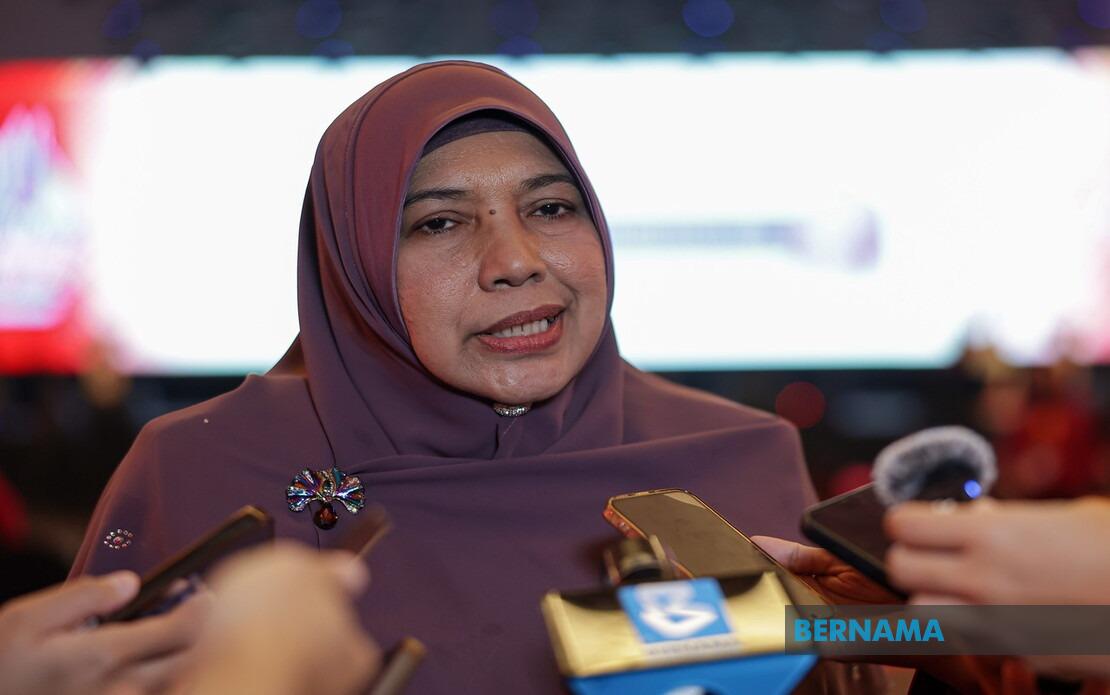
The Malaysian National News Agency (Bernama) has inaugurated a significant photographic exhibition at the HAWANA 2026 Summit in Butterworth that documents both the institutional growth of the National Journalists' Day celebration and the human stories behind its charitable mission. The gallery, unveiled ahead of tomorrow's main summit event at the PICCA Convention Centre @ Arena Butterworth, represents a carefully curated retrospective spanning from the initiative's inception in 2018 through 2025, offering journalists and media professionals a visual journey through nearly a decade of collective commemoration.
Datin Paduka Nur-ul Afida Kamaludin, chief executive officer of Bernama and chairperson of the HAWANA 2026 Working Committee, explained that the exhibition occupies two distinct conceptual spaces. The first segment traces the chronological development of HAWANA itself, showcasing how the celebration has evolved and expanded across Malaysia's regions. The second portion shifts focus entirely to the beneficiaries of Tabung Kasih@HAWANA, the fund established to provide financial and welfare assistance to journalists and media veterans facing health challenges or economic hardship. Together, these two narrative threads create a comprehensive portrait of HAWANA's dual purpose: professional recognition and humanitarian support.
For Bernama specifically, the exhibition serves as public acknowledgment of institutional contributions that typically remain peripheral to news production. As the secretariat managing both the Tabung Kasih@HAWANA fund and the broader HAWANA celebration infrastructure, Bernama has maintained a largely behind-the-scenes operational role in what has become a significant annual fixture in Malaysia's media calendar. Nur-ul Afida described the exhibition as a vital corrective to this invisibility, arguing that audiences need to understand the structural support systems enabling journalism's sustainability and the profession's collective responsibility toward its aging and vulnerable members.
The curatorial approach emphasizes accessibility and emotional resonance. Mohamad Bakri Darus, editor of the Bernama Photo Desk, highlighted that every photograph in the exhibition carries bilingual captions in both Malay and English, ensuring that visitors from diverse linguistic backgrounds can engage meaningfully with the visual narratives. This deliberate choice reflects an understanding that Malaysian journalism comprises multiple linguistic communities, and that the celebration's impact spans beyond purely English-language or Malay-language media professionals. The careful selection process itself demonstrated institutional commitment to authenticity and representativeness.
Geographically, HAWANA has established itself as a genuinely national initiative rather than a Kuala Lumpur-centric event. The exhibition documents the celebration's migration across Malaysian states, with previous iterations held in Kuala Lumpur (twice, in 2018 and 2025), Melaka in 2022, Ipoh in Perak during 2023, and most recently in Kuching, Sarawak in 2024. This geographical rotation carries symbolic importance, ensuring that regional and state-based journalists have opportunities to participate without traveling to the capital, thereby democratizing access to professional recognition and support services. The exhibition visually reinforces this commitment to decentralization.
Within each HAWANA celebration, a consistent programmatic structure has emerged. The exhibition's display materials reference the Strategic Partner Meeting, which facilitates dialogue between media organizations and government agencies; the Media Forum, which provides space for professional discourse; the HAWANA-DBP Pantun Festival, which celebrates Malaysia's traditional literary form; the carnival and exhibition components that add recreational and networking dimensions; and HAWANA Sports, which emphasizes collegial camaraderie through athletic competition. Collectively, these elements position HAWANA not merely as a ceremonial acknowledgment but as a comprehensive professional and social ecosystem.
The Tabung Kasih@HAWANA component warrants particular attention given Malaysia's evolving media landscape. As news organizations globally confront economic pressures, digital disruption, and precarious employment conditions, the fund addresses a fundamental vulnerability: journalists and media veterans who lack adequate safety nets face devastating consequences from illness, injury, or unemployment. By visually documenting the fund's beneficiaries—individuals whose faces and stories appear in the exhibition—HAWANA implicitly advocates for sector-wide solidarity and mutual obligation. This approach transforms charitable assistance from stigmatized dependency into normalized professional support.
The exhibition's timing, coinciding with the HAWANA 2026 Summit's impending opening, suggests deliberate strategic messaging. Prime Minister Datuk Seri Anwar Ibrahim's scheduled presence at tomorrow's inauguration signals government recognition of journalism's social significance and state commitment to supporting media professionals. The exhibition effectively frames this government engagement within a larger narrative of media institutional health and professional dignity rather than presenting it as exceptional patronage.
For Malaysian readers, the exhibition carries broader implications for understanding journalism's infrastructure and values. Media professionals often operate within institutional frameworks largely invisible to audiences; this gallery makes those frameworks tangible. The visual documentation of aid recipients reminds readers that journalism involves real human beings whose vulnerability—despite professional status—mirrors broader societal challenges around healthcare access, employment security, and social welfare. By humanizing journalists through their stories of hardship and recovery, the exhibition subtly cultivates more empathetic relationships between media professionals and their audiences.
The bilingual presentation strategy also reflects Malaysia's complex linguistic and communal landscape. Rather than privileging English or Malay exclusively, the exhibition acknowledges the reality that Malaysian journalism operates across multiple linguistic spheres, and that professional solidarity requires communication strategies that bridge these communities. This approach models an inclusive conception of Malaysian media identity that transcends language-based divisions.
Looking forward, the exhibition establishes a historical record that journalists and media organizations can reference and build upon. Eight years may seem modest, but HAWANA has already embedded itself sufficiently in Malaysia's professional calendar to warrant archival preservation. Future journalists encountering these photographs will understand that institutional memory and collective self-care constitute essential dimensions of professional journalism practice.
The HAWANA 2026 Summit itself, opening tomorrow at Arena Butterworth's PICCA Convention Centre, promises to extend this momentum. The exhibition serves as both prologue and testament—documenting where the celebration has traveled while inviting participants to envision where it might proceed. For a profession frequently scrutinized for its failures and limitations, HAWANA demonstrates journalism's capacity for institutional self-reflection, professional pride, and human solidarity.


%22%2F%3E%3C%2Fpattern%3E%3C%2Fdefs%3E%3Crect%20width%3D%22100%25%22%20height%3D%22100%25%22%20fill%3D%22url(%23ph2hy9vg)%22%2F%3E%3Crect%20width%3D%22100%25%22%20height%3D%22100%25%22%20fill%3D%22url(%23ph2hy9vp)%22%2F%3E%3Ctext%20x%3D%2250%25%22%20y%3D%2250%25%22%20text-anchor%3D%22middle%22%20dominant-baseline%3D%22central%22%20fill%3D%22rgba(255%2C255%2C255%2C0.95)%22%20font-family%3D%22Georgia%2C%20'Times%20New%20Roman'%2C%20serif%22%20font-weight%3D%22700%22%20font-size%3D%22272%22%20letter-spacing%3D%22-0.02em%22%3EAnwar%3C%2Ftext%3E%3C%2Fsvg%3E)