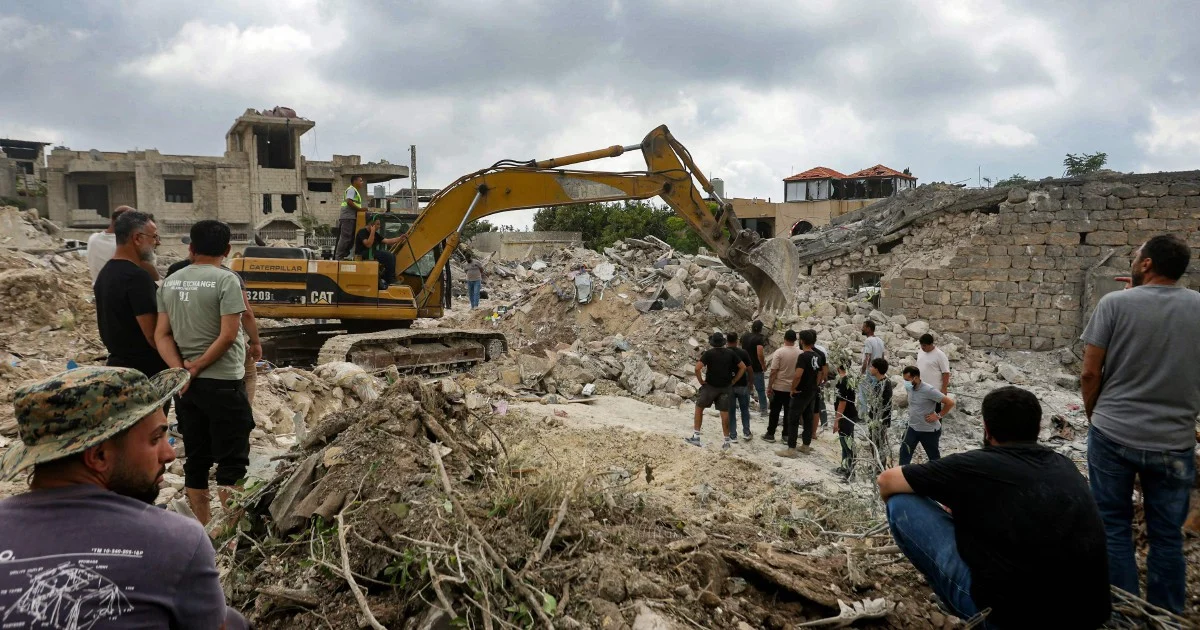
The latest escalation in the Lebanon-Israel dispute centres on fundamentally incompatible positions regarding military operations in southern Lebanon. Hizbollah chief Naim Qassem's unequivocal rejection of any Israeli security presence comes directly after Israeli Prime Minister Benjamin Netanyahu declared that his country's forces would maintain their deployment for an indefinite period, creating a standoff with profound implications for regional stability and the broader Middle Eastern peace landscape.
Qassem's statement carries significant weight within Lebanese political circles and internationally, as it reflects the militant organisation's core position on Israeli military activities within Lebanese territory. For Hizbollah, any formalised security zone represents not merely a temporary military arrangement but a potential precursor to long-term occupation and loss of sovereignty. The organisation's explicit rejection underscores the fundamental disagreement between Israeli security objectives and Lebanese national interests, with little apparent room for compromise on either side.
Netanyahu's commitment to maintaining troops in southern Lebanon indefinitely signals Israel's determination to establish lasting security guarantees against perceived threats emanating from the region. Israeli officials have justified such measures as necessary responses to cross-border militant activities and what they characterise as terrorism originating from Lebanese territory. This extended presence, however, directly contradicts international calls for a swift Israeli military withdrawal and raises questions about Israel's adherence to diplomatic agreements and United Nations resolutions regarding cross-border military operations.
The disagreement reflects deeper regional tensions that have characterised Israel-Lebanon relations for decades. Southern Lebanon has historically served as a contested space, with various militias and military forces operating within its borders at different periods. The presence of Hizbollah in this region, combined with Palestinian refugee camps and other armed groups, has made southern Lebanon a flashpoint for regional conflicts and a source of ongoing military confrontation. Netanyahu's statement suggests Israel views a security zone as essential to protecting its northern border, while Qassem's rejection indicates Lebanon considers such arrangements unacceptable infringements on national sovereignty.
For Malaysian and Southeast Asian observers, this dispute carries broader implications regarding territorial integrity and respect for national sovereignty in international relations. The situation demonstrates how regional powers continue to assert military presence beyond their own borders, often invoking security justifications that other nations view as occupation. Similar dynamics have played out across Asia and the Middle East, where stronger military powers have claimed extended deployments to counter perceived threats, raising questions about the consistency of international law enforcement and the protection of smaller nations' territorial rights.
The timing of this exchange suggests active peace negotiations or ceasefire discussions may be occurring, with both sides staking out their positions before any potential agreement. Hizbollah's forceful public statement appears designed to demonstrate to its supporters and Lebanese constituents that the organisation will not compromise on issues of national sovereignty. Simultaneously, Netanyahu's assertion of indefinite military presence may reflect domestic political pressures within Israel and the government's commitment to various constituencies regarding security matters.
Diplomatically, the confrontation highlights the absence of trust between the parties involved. Neither side appears willing to accept assurances from the other regarding security arrangements, force withdrawals, or long-term intentions. This mutual suspicion complicates mediation efforts by international actors, including the United States and United Nations representatives, who have attempted to broker arrangements that satisfy both Israeli security concerns and Lebanese sovereignty demands.
The humanitarian dimension cannot be overlooked in this dispute. Southern Lebanese residents face uncertainty regarding their future security, freedom of movement, and access to essential services. An extended Israeli military presence, regardless of stated intentions, affects civilian daily life, economic activities, and prospects for regional reconstruction. Meanwhile, Israeli communities near the Lebanese border similarly seek assurances about security and the elimination of cross-border threats, creating competing legitimate concerns that fuel the current impasse.
Looking forward, the positions articulated by both Qassem and Netanyahu suggest that any resolution will require significant compromise from both sides or intervention by powerful international actors capable of enforcing agreements. Regional dynamics, including the broader Israeli-Palestinian conflict, Iran's regional influence, and the involvement of various other armed groups in Lebanon, add layers of complexity to bilateral Israeli-Lebanese negotiations. The Lebanese government's role in enforcing agreements and controlling militant activities remains crucial to any potential settlement, though questions persist about Beirut's capacity to assert control over southern territories.
For the international community, including Southeast Asian nations with interests in Middle Eastern stability, the Israel-Lebanon dispute underscores ongoing challenges in resolving regional conflicts through diplomatic channels. The case demonstrates how security imperatives, national pride, and historical grievances can create seemingly unbridgeable gaps between neighbouring states. As negotiations continue, the positioning statements from both sides will likely harden before any diplomatic breakthrough becomes possible, suggesting a prolonged period of tension and uncertainty in the region.
%22%2F%3E%3C%2Fpattern%3E%3C%2Fdefs%3E%3Crect%20width%3D%22100%25%22%20height%3D%22100%25%22%20fill%3D%22url(%23ph4x2cg)%22%2F%3E%3Crect%20width%3D%22100%25%22%20height%3D%22100%25%22%20fill%3D%22url(%23ph4x2cp)%22%2F%3E%3Ctext%20x%3D%2250%25%22%20y%3D%2250%25%22%20text-anchor%3D%22middle%22%20dominant-baseline%3D%22central%22%20fill%3D%22rgba(255%2C255%2C255%2C0.95)%22%20font-family%3D%22Georgia%2C%20'Times%20New%20Roman'%2C%20serif%22%20font-weight%3D%22700%22%20font-size%3D%22226%22%20letter-spacing%3D%22-0.02em%22%3EPolice%3C%2Ftext%3E%3C%2Fsvg%3E)