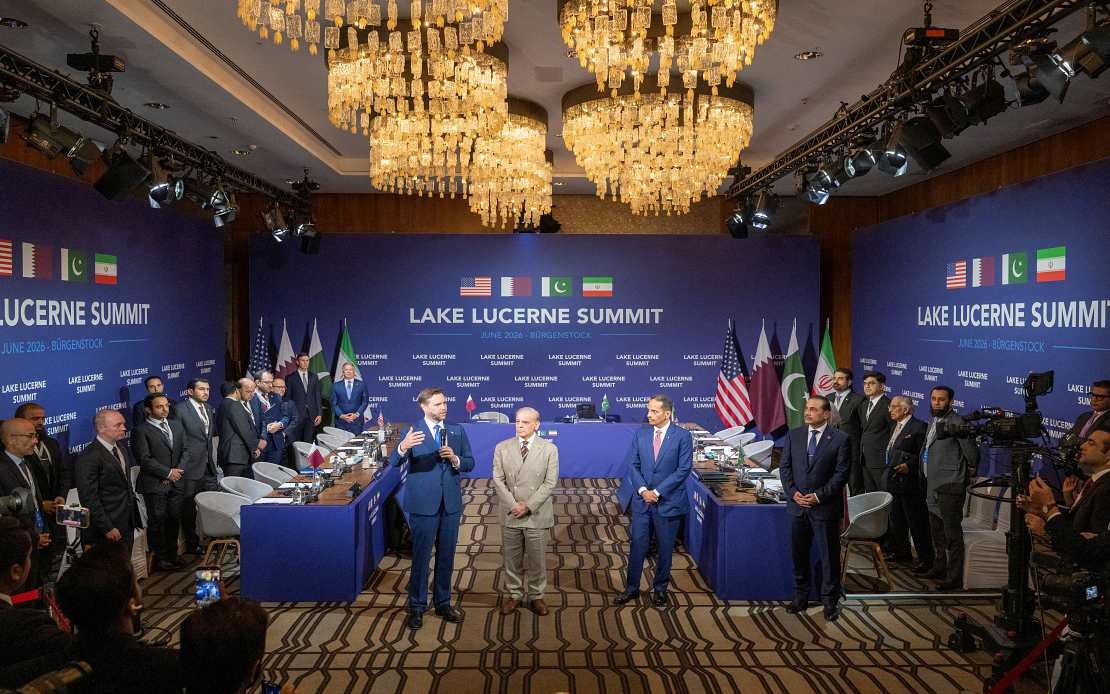
The first round of high-level negotiations between the United States and Iran has yielded what mediators are characterizing as meaningful diplomatic headway, according to a joint statement issued by Qatar and Pakistan following the conclusion of talks at the Lake Lucerne Summit in Switzerland. The announcement signals that carefully calibrated mediation efforts are bearing fruit, even as deep-seated tensions between Washington and Tehran continue to complicate regional security dynamics affecting Southeast Asian trade routes and energy markets.
The breakthrough centres on the establishment of operational machinery designed to sustain momentum in the technical discussions that have proven contentious for years. Notably, the two intermediary nations confirmed that a structured mechanism has been put in place to facilitate ongoing dialogue between negotiating teams, a development that previous rounds of talks had struggled to achieve. This infrastructure for continued engagement addresses a fundamental challenge that has plagued previous reconciliation attempts: the difficulty of maintaining dialogue when bilateral trust remains fragile.
EquallySignificant is the creation of a high-level political oversight committee tasked with shepherding the broader mediation process. This body will receive regular briefings from lead negotiators and supervise specialised working groups addressing three critical domains: the future trajectory of Iran's nuclear programme, the architecture of international sanctions affecting Iranian economic activity, and mechanisms for resolving disputes that might otherwise derail implementation of any eventual agreement. The multi-tiered approach reflects recognition that technical achievements in one area can unravel if political dimensions are neglected.
Particularly noteworthy for regional observers is the 60-day timeline established for reaching a comprehensive final agreement. This compressed schedule represents an attempt to prevent negotiating momentum from dissipating, a recurring problem in US-Iran diplomacy where extended timelines have historically allowed hardliners on both sides to undermine tentative progress. For Southeast Asian nations heavily dependent on stable transit through the Strait of Hormuz, such acceleration matters considerably: every additional month of unresolved tensions amplifies risks to shipping and energy security.
The negotiators have also prioritised establishing a dedicated communication channel between Washington and Tehran during the period specified in a memorandum of understanding signed the previous week. This direct line is explicitly designed to prevent misunderstandings and incidents that might otherwise spark military escalation. The emphasis on communications infrastructure reflects hard-won lessons from decades of near-misses in the Persian Gulf, where miscalculation or poor information flows have repeatedly brought the US and Iran to the brink of military confrontation.
The commitment to ensuring safe passage for commercial vessels transiting the Strait of Hormuz constitutes an implicit acknowledgment that maritime security in the gulf directly affects global energy markets and international trade. For Malaysia and other Southeast Asian economies reliant on stable oil supplies and unimpeded shipping corridors, this focus on maintaining commercial shipping safety represents a positive development. Disruptions to Hormuz traffic would immediately ripple through regional energy prices and supply chains, constraining economic growth across the region.
The establishment of specialised working groups focused on the Iranian nuclear programme indicates that technical experts will now operate within a clearer political framework. This separation of labour—allowing specialists to concentrate on technical feasibility while politicians handle broader diplomatic considerations—has proven effective in other complex international negotiations. However, the risk remains that technical compromises might prove unacceptable to hardline factions in either country.
For Malaysia's policymakers and business community, the implications extend beyond immediate Middle Eastern politics. Stability in US-Iran relations influences broader patterns of international engagement in the region, affects global energy pricing and supply reliability, and shapes the strategic environment in which Southeast Asian nations pursue their own diplomatic and economic interests. The current mediation effort, involving respected regional players like Qatar and Pakistan, suggests that multiple parties recognise the mutual costs of prolonged confrontation.
The joint statement's emphasis on a positive atmosphere during initial discussions, while necessarily cautious diplomatic language, nevertheless indicates that both delegations approached these talks with genuine intent to explore compromise. The achievement of concrete institutional outputs—the oversight committee, the working groups, the communication channels—demonstrates that rhetorical progress has translated into tangible structural arrangements that should facilitate continued engagement even if future rounds become contentious.
Yet significant obstacles remain. Deep disagreements persist regarding the scope of nuclear activities Iran may legitimately pursue, the pace and sequencing of sanctions relief, and verification mechanisms that would satisfy Western security concerns. The 60-day timeline, while ambitious, may prove insufficient for resolving such fundamental differences. Additionally, political pressures within both countries—from those opposed to any accommodation with the other side—could intensify as negotiations advance and specific compromises become apparent.
The role of Qatar and Pakistan as mediators reflects their own strategic interests in de-escalation and their accumulated diplomatic experience in managing US-Iran relations. Both nations maintain channels to Washington and Tehran, a positioning that enables them to credibly relay messages and build trust between parties that maintain no direct diplomatic relations. Their willingness to host and shepherd these talks indicates confidence that even limited progress serves regional stability interests.
Looking ahead, the performance of the newly established mechanisms will prove decisive. The oversight committee's ability to maintain productive dialogue, the working groups' capacity to generate technical solutions, and the communication channels' effectiveness in preventing misunderstandings will all determine whether this latest mediation effort sustains momentum or, like previous attempts, gradually loses traction. For Southeast Asian observers and policymakers, the next sixty days merit close attention, as their outcome will shape regional energy security and strategic stability for years to come.