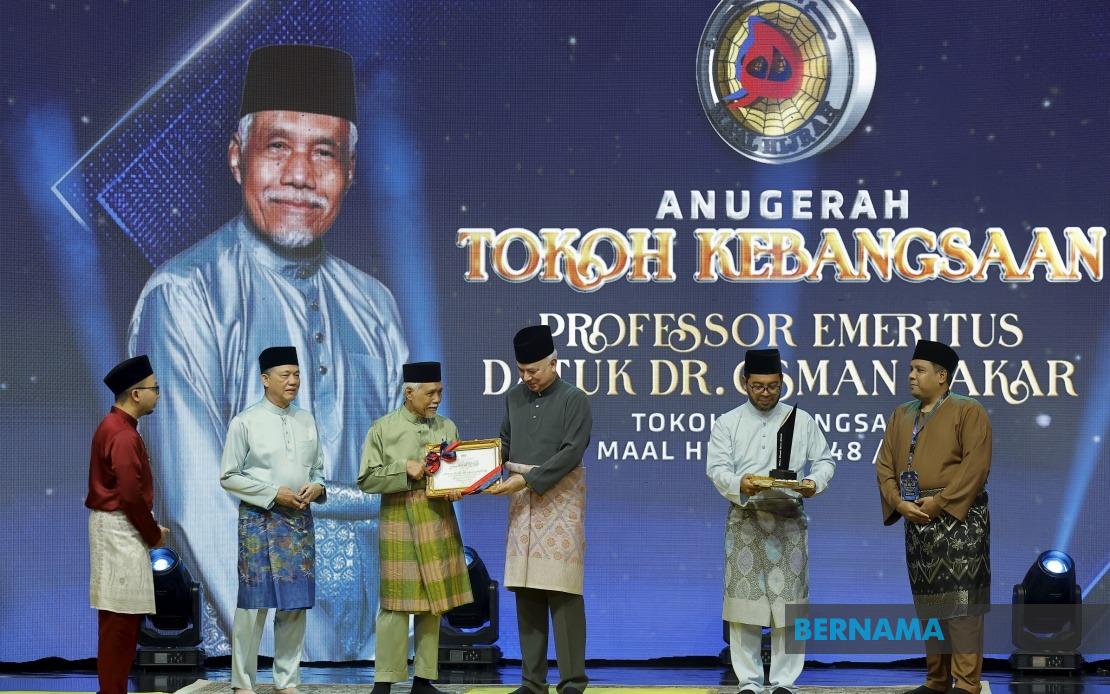
Prof Emeritus Datuk Dr Osman Bakar, the Rector of the International Islamic University Malaysia, received Malaysia's highest recognition in Islamic leadership when he was designated the National Tokoh Maal Hijrah at the national-level Maal Hijrah 1448H celebration held at Putra Mosque in Putrajaya on June 17. The honour acknowledges his lifetime of work advancing Islamic thought and higher education within Malaysia and the broader Muslim world.
The presentation ceremony, presided over by the Sultan of Perak Sultan Nazrin Shah, also bestowed the International Tokoh Maal Hijrah distinction upon Dr Ahmad Al-Raysuni, a prominent Islamic scholar based in Morocco. This dual recognition underscores Malaysia's commitment to celebrating intellectual leadership within both national and global Islamic communities. Both recipients were presented with cash prizes, trophies, and certificates of appreciation recognising their scholarly contributions and moral standing.
Maal Hijrah, which marks the Islamic New Year, carries profound spiritual and cultural significance throughout the Muslim world. The timing of this award during the Maal Hijrah celebration emphasises the connection between personal moral transformation and community progress—themes that resonate particularly with Malaysia's governance philosophy. By highlighting exemplars of Islamic learning and character during this significant occasion, the government reinforces the values it seeks to embed within society.
This year's celebration centred on the theme "MADANI Dihayati, Ummah Diberkati," which translates to embodying the MADANI framework while seeking blessings for the Muslim community. The theme reflects a deliberate policy direction emphasising compassion, social cohesion, and collective welfare. The selection of recipients who embody these principles demonstrates how Malaysia utilises cultural and religious occasions to reinforce governance narratives and national values.
Osman Bakar's recognition carries particular weight given IIUM's role as Malaysia's premier Islamic university and its influence across Southeast Asia. His academic trajectory has encompassed significant contributions to Islamic philosophy, interfaith dialogue, and educational reform. The award validates decades of institutional leadership during a period when Malaysian universities have increasingly sought to balance academic excellence with moral and religious education. For the institution itself, the honour elevates IIUM's standing as a centre of Islamic intellectual excellence.
The high-profile attendance at the ceremony underscored the government's investment in this recognition. Deputy Prime Minister Datuk Seri Fadillah Yusof and Minister in the Prime Minister's Department (Religious Affairs) Dr Zulkifli Hasan both attended, alongside their spouses. This ministerial presence signals that the government views the honouring of Islamic intellectual leaders as integral to its broader governance agenda and commitment to religious affairs management.
The inclusion of an international scholar in the award ceremony reflects Malaysia's aspirations as a bridge-builder within the Islamic world. By honouring Dr Al-Raysuni alongside a Malaysian recipient, the occasion positioned Malaysia as a venue where diverse Islamic scholarly traditions converge and receive mutual recognition. This approach aligns with Malaysia's diplomatic efforts to position itself as a moderate Islamic nation capable of engaging with Islamic thinkers across different traditions and geographies.
For Malaysian higher education more broadly, the recognition of an institutional leader during Maal Hijrah celebrations carries implicit messaging about the value placed on academic integrity and scholarly contribution. Universities across Southeast Asia often struggle to balance commercial pressures with intellectual mission; highlighting a rector's achievements offers counterweight to narratives that reduce higher education to mere credential production. It suggests that Malaysia's government recognises institutions like IIUM as vessels for moral and intellectual formation beyond conventional degree delivery.
The Maal Hijrah observance itself provides important context for understanding how Malaysia integrates religious practice with national celebration and governance messaging. Unlike secular national holidays, Maal Hijrah creates space for explicitly religious values to inform public discourse and institutional recognition. The deliberate choice to present these awards during the Islamic New Year rather than at secular state occasions reflects how Malaysia's governance structures accommodate religious identity as central to citizenship and national purpose.
For regional observers, the honouring of both Malaysian and Moroccan scholars demonstrates continuing efforts to position Malaysia as an intellectual hub within the Islamic world, particularly regarding Islamic philosophy and education. Morocco's prominence in Islamic scholarship history, combined with Malaysia's contemporary institutional capacity, creates a symbolic partnership relevant to broader Middle Eastern and North African engagement patterns. This positioning matters as Malaysia navigates its diplomatic relationships across the Arab world and wider Muslim communities.
The recognition also occurs within Malaysia's broader MADANI governance framework, which emphasises deliberative democracy, inclusivity, and social contracts based on ethical principles. By anchoring awards to themes explicitly centring on community blessing and ethical practice, the government links cultural recognition to its policy ambitions. This integration of religious calendars with governance narratives reflects how Malaysia operationalises Islamic frameworks within contemporary state structures.
For IIUM specifically, the award provides institutional validation at a moment when Malaysian universities broadly face questions about relevance and quality in competitive regional higher education markets. International scholarly recognition, coupled with national governmental acknowledgement, strengthens the university's positioning as a serious intellectual institution capable of contributing meaningfully to both Islamic thought and Malaysian society's development. This recognition may influence students' choices and enhance the institution's capacity to attract global talent.

%22%2F%3E%3C%2Fpattern%3E%3C%2Fdefs%3E%3Crect%20width%3D%22100%25%22%20height%3D%22100%25%22%20fill%3D%22url(%23ph2hy9vg)%22%2F%3E%3Crect%20width%3D%22100%25%22%20height%3D%22100%25%22%20fill%3D%22url(%23ph2hy9vp)%22%2F%3E%3Ctext%20x%3D%2250%25%22%20y%3D%2250%25%22%20text-anchor%3D%22middle%22%20dominant-baseline%3D%22central%22%20fill%3D%22rgba(255%2C255%2C255%2C0.95)%22%20font-family%3D%22Georgia%2C%20'Times%20New%20Roman'%2C%20serif%22%20font-weight%3D%22700%22%20font-size%3D%22272%22%20letter-spacing%3D%22-0.02em%22%3EAnwar%3C%2Ftext%3E%3C%2Fsvg%3E)