India's most crucial gateway examination for aspiring medical professionals is being administered anew on Sunday under extraordinarily tight supervision, after authorities were forced to cancel the original test in May due to a paper leak that exposed systemic vulnerabilities in one of the world's largest competitive examinations. The National Eligibility cum Entrance Test, commonly known as NEET, represents the sole pathway for millions of candidates seeking to secure one of just over 100,000 undergraduate places in Indian medical colleges, making it the most coveted and fiercely contested examination in the country.
The fallout from the initial examination breach has reverberated far beyond the testing halls, catalysing an unprecedented wave of public discontent that extended well beyond disappointed students and parents. Media reports documenting suicides among teenagers who either failed to receive their results or discovered compromised answer sheets amplified the crisis into a matter of national concern, with widespread demands for accountability reaching the highest levels of government. The scale of the security apparatus deployed for the retesting underscores how seriously Indian authorities are treating what has become both an examination crisis and a crisis of institutional credibility.
To prevent any repeat of the breaches that undermined public confidence in the original examination, the National Testing Agency has assembled an extensive security infrastructure that extends far beyond conventional invigilation practices. The deployment encompasses more than 200,000 officials drawn from police forces and other government agencies stationed across examination centres nationwide, creating a visible deterrent against potential attempts at organised cheating. Authorities have additionally imposed restrictions on Telegram, the encrypted messaging application that investigating agencies identified as the primary communication channel through which cheating syndicates distributed leaked examination materials to paying candidates.
The technological countermeasures introduced for this retesting represent a substantial escalation in examination security protocols. Biometric authentication mechanisms will verify the identity of each test-taker, preventing impersonation schemes that have historically plagued high-stakes examinations in India. Artificial intelligence-powered surveillance systems will monitor examination halls in real time, flagging suspicious behaviour patterns that might indicate unauthorised communication or material. GPS tracking of physical question paper bundles will create an auditable chain of custody, theoretically preventing papers from being accessed or leaked at any point between printing and distribution.
The original examination scandal revealed deeply troubling cracks in institutional oversight structures. Investigators traced the paper leak to a chemistry lecturer who authorities identified as the mastermind orchestrating the distribution of examination materials through underground networks that charged students substantial premiums for access to leaked questions. This discovery illustrated how India's intense competitive environment and vast coaching industry have created fertile ground for organised criminal enterprises that profit directly from undermining examination integrity. The sheer demand generated by millions of aspirants competing for limited places provides both motivation and customer base for such operations.
The breach itself triggered ramifications extending far beyond the medical entrance examination. Concurrently, authorities grappled with a separate crisis involving the online marking system deployed for high school examinations taken by nearly two million students, where numerous candidates alleged that their grades were either calculated incorrectly or attributed entirely to wrong individuals. The compound effect of these dual failures in examination administration inflamed public frustration and erosion of confidence in educational governance, transforming what might otherwise have remained a technical issue into a matter of widespread political significance.
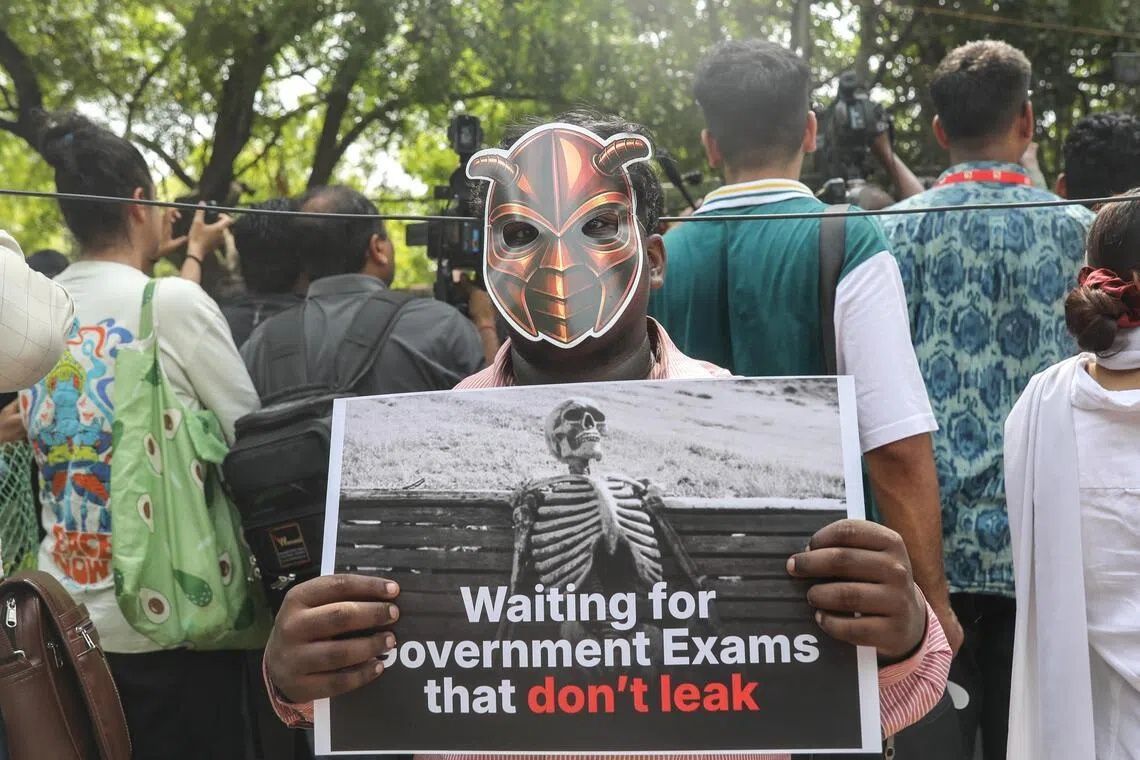
Youth anger crystallised into both traditional protests demanding Education Minister Dharmendra Pradhan's resignation and more unconventional expressions of dissent. The satirical "Cockroach People's Party", launched in May in response to the examination turmoil, rapidly accumulated millions of social media followers, functioning as a barometer of public sentiment regarding perceived systemic rot in institutional competence. Such movements, while ostensibly humorous in character, reflect genuine anxiety about whether India's examination systems can adequately serve as fair mechanisms for determining educational and professional advancement.
Telegram's response to the week-long restriction offers an interesting counterpoint to authorities' security approach. Pavel Durov, the application's chief, acknowledged that restricting the platform would prove largely ineffectual, contending that illicit communications would simply migrate to alternative encrypted messaging services. More fundamentally, Durov identified the root problem as the presence of insiders willing to leak examination materials in the first place—a structural challenge that no messaging app restriction can address. This analysis suggests that technological and administrative fixes, while necessary, may prove insufficient without addressing underlying incentives that motivate institutional actors to facilitate cheating.
The examination is scheduled to commence at 2:00 PM local time on Sunday, with authorities maintaining heightened vigilance throughout the testing period. For Malaysian observers and Southeast Asian educational administrators, the Indian examination crisis offers cautionary lessons regarding the escalating sophistication of examination fraud in an era when competitive pressures drive both students and criminal networks to extraordinary lengths. The incident underscores how even large, professionally administered testing organisations face mounting challenges in maintaining security when stakes are extraordinarily high and demand vastly outpaces available opportunities.
India's response—combining massive personnel deployment, technological surveillance, and restricted communications channels—represents perhaps the most comprehensive security framework ever assembled for a single examination administration in the region. Yet whether these measures will restore public confidence in the examination system, or whether they represent merely the latest escalation in an ongoing arms race between test administrators and those seeking to circumvent them, remains an open question as 2.2 million candidates prepare to demonstrate their medical knowledge under unprecedented scrutiny.