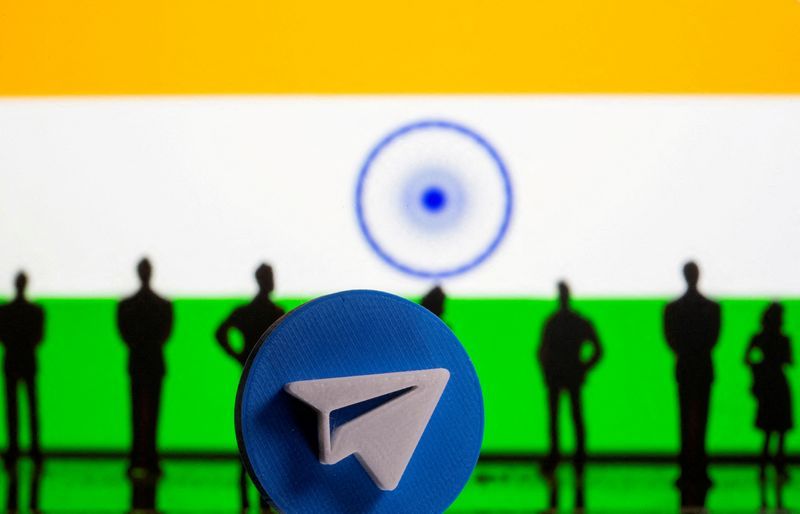
Prime Minister Narendra Modi's government imposed an unprecedented ban on the messaging application Telegram in mid-June, citing its alleged inaction against accounts trafficking in leaked question papers for India's National Eligibility-cum-Entrance Test, the nation's premier gateway to medical college admissions. The temporary blockade, valid until June 22, represents a dramatic escalation in disputes between New Delhi and technology companies operating in India, and has forced the platform to challenge the measure in the Delhi High Court. Behind the sudden enforcement action lies a fortnight of deteriorating communications and heated disagreements between Indian telecommunications authorities and Telegram's leadership, with both sides accusing the other of misrepresenting their positions and demonstrating little willingness to find common ground.
The chain of events leading to the ban originated in May when examination authorities cancelled the NEET results after discovering that question papers had been compromised. Rescheduling the test for June 21 created urgency within government circles to suppress any remaining leaks. Government investigators identified multiple Telegram channels with names such as "NEET PAPER LEAKED" and "Paper Leaked NEET" where accounts openly advertised the sale of full examination papers to prospective medical students. Official correspondence reviewed by news agencies shows that India's Information Technology ministry explicitly blamed Telegram for what it termed systematic "inaction" in removing these illicit channels, despite their transparent illegal purpose. The government's frustration intensified when it noted that fraudsters operating on the platform were explicitly demanding payment in exchange for access to stolen examination material, making their criminal intent unmistakable.
Telegram's response to New Delhi's accusations proved combative and dismissive. In emails exchanged during the escalating dispute, company representatives expressed bewilderment at what they characterised as baseless allegations, insisting they do not tolerate unlawful activities on their infrastructure. The messaging service countered that it actively removes content violating its terms of service and that government officials had misunderstood the technical and operational constraints involved in moderating content across such a vast user base. This fundamental disagreement over the platform's obligations and capabilities created an impasse that neither party seemed equipped or willing to bridge. Government officials and Telegram representatives never managed to align their understandings of what constitutes adequate content moderation, much less agree on specific remedial measures.
The particular vulnerability of Telegram to exam-related fraud stems from architectural features that distinguish it from competitors like WhatsApp. Telegram groups can accommodate up to 200,000 members simultaneously, dwarfing WhatsApp's limit of 1,024 users per group, enabling criminals to broadcast illicit merchandise to vastly larger audiences with minimal friction. The platform also permits users to participate in groups and channels without registering their phone numbers, providing anonymity that whistleblowers and privacy advocates prize but that also shields wrongdoers from easy identification. These design choices reflect deliberate trade-offs between user privacy and platform governance—priorities that technology companies and governments across Asia increasingly view through incompatible lenses. For India's administration, which inherited responsibility for protecting millions of medical school hopefuls from fraud, Telegram's structural permissiveness appeared unconscionable.
Contention escalated dramatically following a June 3 meeting between Indian officials and Telegram representatives. Divergent accounts of that conversation poisoned further discussions. The government's official minutes recorded Telegram as acknowledging that it possessed limited capacity for proactively detecting exam-related content leaks, which they categorised as "subjective" material distinct from clearly objective violations such as child sexual abuse imagery or pornography. Telegram's June 5 response vigorously objected to this characterisation, arguing that government officials had fundamentally misrepresented the company's position. The platform insisted it actually does employ proactive detection systems for examination-related content; the distinction it meant to convey, according to its clarification, concerned the degree of human moderation such subjective determinations necessarily require. This semantic disagreement, though perhaps minor, revealed how little mutual understanding had accumulated through weeks of dialogue.
Telegram's legal challenge to the ban, filed in the Delhi High Court, amplifies the company's objections by calling the government's meeting minutes a "one-sided and inaccurate account" that "deliberately" omitted crucial details about the platform's content moderation infrastructure. By elevating the dispute into the judiciary, Telegram has reframed the controversy from a technical disagreement into a constitutional question about governmental overreach and the protection of free expression. The company's founder, Pavel Durov, publicly derided the ban as a policy mistake that punishes ordinary users while failing to address underlying fraud, since criminals can simply migrate to alternative platforms. In a sharply sarcastic statement posted to social media, Telegram sardonically observed that governments theoretically committed to public welfare would need to ban water itself given its involvement in drowning incidents—a cutting illustration of what it views as the logical absurdity of shutting down entire platforms to prevent specific crimes.
The NEET examination occupies extraordinary significance within Indian society and politics. Over two million students compete annually for limited seats in the country's medical colleges, making the test a crucial marker of life trajectory for millions of families. When examination authorities cancelled the May sitting after discovering leaked papers, the scandal ignited demands across the political spectrum for the resignation of the education minister and comprehensive investigations into administrative lapses. In such a heated atmosphere, government officials faced intense pressure to demonstrate swift decisive action against any perceived threat to examination integrity. The Telegram ban, whatever its technical or legal merits, represented visible proof that the administration was mobilising its authority to combat fraud—a politically expedient response regardless of its efficacy.
The episode reflects a broader pattern of friction between tech platforms and the Modi administration over the past several years. In 2023 and 2024, the government engaged in protracted legal disputes with X, formerly Twitter, over content removal policies and governmental demands for specific deletions. These recurring conflicts expose fundamental incompatibilities between the regulatory philosophy of the Indian state, which increasingly expects platforms to function as quasi-governmental enforcers of public order, and the governance approaches favored by technology companies, which typically resist government pressure to serve as arbiters of speech and legality. For Telegram, which positions itself as uniquely committed to user privacy and resistant to censorship, confrontation with New Delhi represented a test of whether those principles could survive against the coercive power of a major state actor.
The implications of India's temporary Telegram ban extend across Southeast Asia and beyond. With approximately 150 million Indian users—constituting Telegram's largest single national market—the Indian government wielded significant leverage. A prolonged ban could have forced Telegram to fundamentally alter its operational model or accept reduced relevance within the world's most populous nation. Other regional governments monitoring the situation understood that India's willingness to invoke emergency telecommunications powers against a global platform could inspire comparable moves elsewhere. Malaysia, Indonesia, and other Southeast Asian nations have separately grappled with messaging app governance, making India's precedent potentially consequential for regional regulatory approaches.
Neither the Indian Information Technology ministry nor Telegram has responded to requests for additional comment on the dispute, leaving critical questions unresolved. How precisely should platforms balance rapid response to criminal content against the potential for overreach? What technical capacities should regulators legitimately expect companies to maintain? Can meaningful dialogue occur when both parties approach negotiations with entrenched positions and mutual suspicion? The temporary nature of the June 2024 ban—expiring on June 22—suggests a pause rather than permanent resolution. Telegram's court challenge and the government's need to address the medical entrance examination crisis created a discrete window for resolution, but fundamental questions about platform governance in India remain unresolved. The episode illustrates how technology, law, and governance intersect in ways that resist easy solutions.


%22%2F%3E%3C%2Fpattern%3E%3C%2Fdefs%3E%3Crect%20width%3D%22100%25%22%20height%3D%22100%25%22%20fill%3D%22url(%23ph2hy9vg)%22%2F%3E%3Crect%20width%3D%22100%25%22%20height%3D%22100%25%22%20fill%3D%22url(%23ph2hy9vp)%22%2F%3E%3Ctext%20x%3D%2250%25%22%20y%3D%2250%25%22%20text-anchor%3D%22middle%22%20dominant-baseline%3D%22central%22%20fill%3D%22rgba(255%2C255%2C255%2C0.95)%22%20font-family%3D%22Georgia%2C%20'Times%20New%20Roman'%2C%20serif%22%20font-weight%3D%22700%22%20font-size%3D%22272%22%20letter-spacing%3D%22-0.02em%22%3EAnwar%3C%2Ftext%3E%3C%2Fsvg%3E)