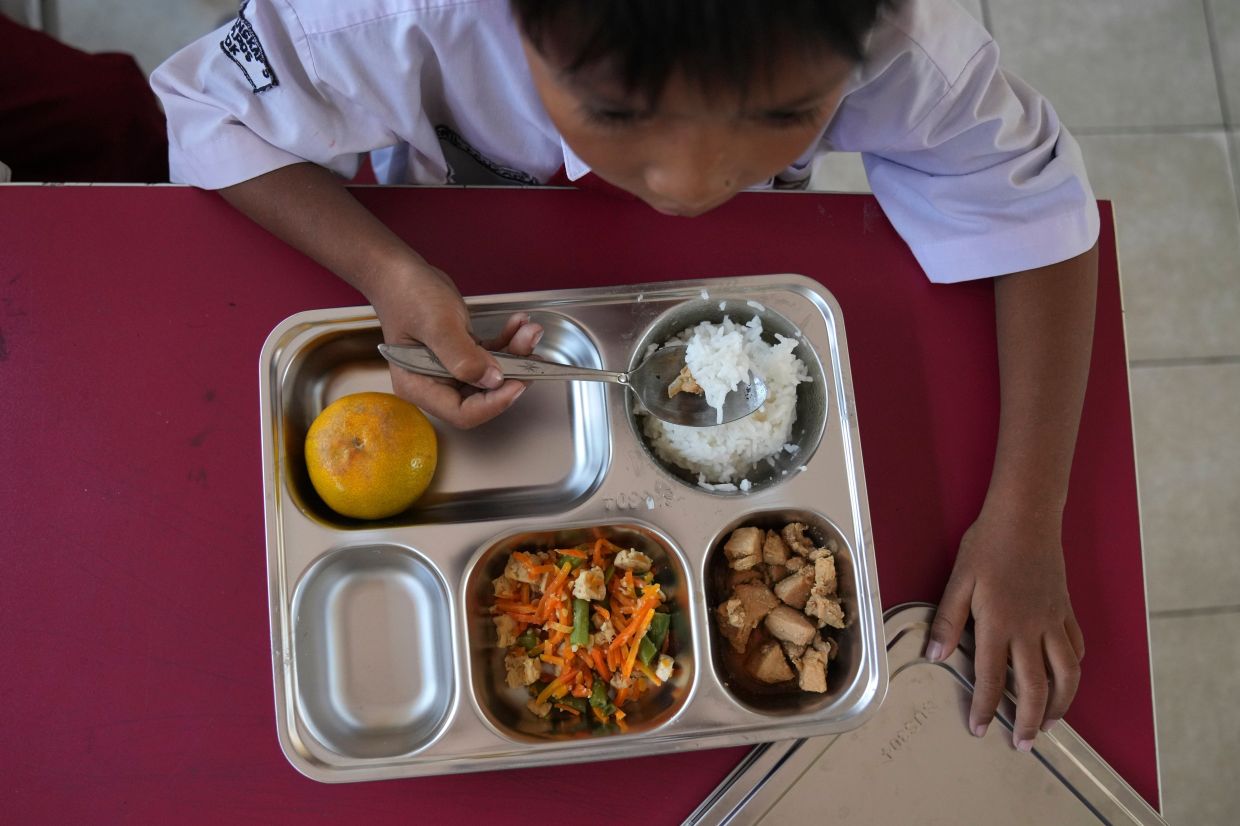
Indonesia's foremost anti-corruption advocacy group has demanded the government halt President Prabowo Subianto's expansive free meals initiative and significantly broaden its investigation into alleged graft within the programme, which currently feeds over 60 million people across the sprawling archipelago. The National Nutrition Agency, or BGN, should be dismantled entirely, according to Wana Alamsyah, head of legal and investigative affairs at Indonesia Corruption Watch, the influential civil society organisation pushing for accountability across political, legal and economic spheres.
The agency's former chief, Dadan Hindayana, was detained this month on suspicion of corruption, a day after his dismissal from the helm of what amounts to a roughly US$15 billion nationwide venture designed to combat malnutrition and poverty. Four additional individuals, including two of Hindayana's deputies, have been apprehended in connection with the investigation, yet Indonesia Corruption Watch maintains the scrutiny remains superficial. Created less than two years ago, the agency has already become Indonesia's largest welfare expansion in decades, yet its explosive growth appears to have outpaced institutional safeguards and oversight mechanisms.
Wana's demands extend beyond removing top administrators. He insists that law enforcement must examine the entire ecosystem benefiting from the programme's administrative weaknesses, including vendors supplying meals, procurement committee personnel, and other intermediaries who may have exploited governance gaps for private gain. The corruption watchdog argues that the initiative was hastily conceived and rolled out with inadequate planning, leaving the sprawling operation vulnerable to exploitation. Such concerns resonate particularly across Southeast Asia, where rapid welfare expansion programmes have historically struggled with implementation challenges and susceptibility to graft.
The programme's new leadership has signalled a strategic recalibration aimed at improving operational efficiency and reducing redundancy. Nanik S. Deyang, who assumed control of the agency this month, has outlined plans to spend considerably less than the 268 trillion rupiah budget allocated for the current year by concentrating resources on remote and underserved regions rather than pursuing universal coverage. Her reorientation prioritises nutritional quality over raw beneficiary numbers, targeting healthier, less processed meals rather than chasing the initial target of reaching 82.9 million recipients. This pivot suggests tacit acknowledgment that the original rollout lacked adequate foundational structure for sustainable operation.
President Prabowo has publicly stated his intolerance for corruption, declaring before thousands of programme stakeholders and officials that he will not permit the theft of public funds and that no circumstances justify malfeasance. His emphatic pronouncements, however, must contend with the investigative revelations already emerging from within his signature initiative, even as the detention list extends to executives at commercial enterprises contracted to supply motorcycles to the programme. The presidential reassurance rings hollow to critics who note the apparent tardiness of the crackdown despite widespread prior knowledge of operational deficiencies.
Public discontent has manifested in street protests, with students in Jakarta clashing with police on June 12 over the scheme's massive budgetary implications and calls for its complete abolition. Subsequent demonstrations erupted across major urban centres, prompting authorities to deploy over 6,000 police and military personnel in the capital alone. These protests underscore deeper anxieties about fiscal sustainability and the prioritisation of welfare spending amid competing budgetary pressures, particularly as rising international fuel costs intensify Iran-related subsidy burdens on Indonesia's already-stretched treasury.
Investor sentiment has deteriorated as bond markets and institutional capital managers scrutinise Indonesia's fiscal trajectory. Economists and research institutions openly question whether the ambitious free meals initiative will deliver the promised employment gains, health improvements, and broader economic multiplier effects. These reservations gain weight when measured against documented problems including food poisoning incidents, persistent complaints about meal quality and the prevalence of ultra-processed offerings, and concerns from development analysts that universal provision wastes resources by subsidising already-adequate nutrition in wealthier urban centres rather than targeting genuinely disadvantaged populations in impoverished rural areas.
Wana's analysis suggests the timing of the corruption crackdown reflects deeper fiscal imperatives rather than organic institutional self-correction. He observes that although social media and public discourse have long highlighted procurement irregularities and governance failures, the government delayed intervention until budgetary constraints forced recalibration. The detention of high-level officials may serve a necessary political function, he contends, allowing the administration to legitimise a scaled-back programme without facing accusations of abandoning Prabowo's flagship commitment. This dynamic reflects familiar patterns in developing democracies where anti-corruption action becomes instrumentalised to facilitate policy adjustment rather than driving genuine systemic reform.
Indonesia Corruption Watch has documented systemic vulnerabilities in the kitchen network underpinning meal distribution. A comprehensive report analysing 102 foundations operating kitchens across 38 provinces identified extensive connections between these organisations and politically-well-connected figures, including parliamentarians, bureaucrats, military personnel, law enforcement officials, and commercial interests. A separate Jakarta-based research institute found that 79 per cent of surveyed respondents identified potential conflicts of interest in vendor selection processes, while additional studies flagged risks of uneven geographic distribution, questionable nutritional standards, and budgetary inefficiencies that undermine programme integrity.
Deyang's announced moratorium on new kitchen construction attempts to interrupt the patronage dynamics embedded in facility expansion. By redirecting beneficiaries toward existing school canteens and institutional kitchens rather than building an entirely new infrastructure network, the reorganisation promises tighter vendor screening and reduced opportunities for politically-motivated contractor selection. Yet such administrative tightening cannot remedy the deeper structural question animating Indonesia Corruption Watch's call for suspension: whether an agency created without adequate institutional maturity can ever effectively manage welfare distribution at continental scale without recurring cycles of scandal and reform.
For Malaysia and other Southeast Asian economies, Indonesia's experience offers cautionary perspective on the governance prerequisites for large-scale social spending. While free meal programmes hold genuine potential for nutritional improvement and poverty reduction, their success depends fundamentally on institutional quality, procurement transparency, and beneficiary-focused design rather than ambitious targeting and rapid rollout. Indonesia's struggles demonstrate that noble welfare objectives require equally ambitious attention to the administrative and accountability frameworks that ensure resources reach intended beneficiaries rather than enriching intermediaries and connected interests.

%22%2F%3E%3C%2Fpattern%3E%3C%2Fdefs%3E%3Crect%20width%3D%22100%25%22%20height%3D%22100%25%22%20fill%3D%22url(%23ph2hy9vg)%22%2F%3E%3Crect%20width%3D%22100%25%22%20height%3D%22100%25%22%20fill%3D%22url(%23ph2hy9vp)%22%2F%3E%3Ctext%20x%3D%2250%25%22%20y%3D%2250%25%22%20text-anchor%3D%22middle%22%20dominant-baseline%3D%22central%22%20fill%3D%22rgba(255%2C255%2C255%2C0.95)%22%20font-family%3D%22Georgia%2C%20'Times%20New%20Roman'%2C%20serif%22%20font-weight%3D%22700%22%20font-size%3D%22272%22%20letter-spacing%3D%22-0.02em%22%3EAnwar%3C%2Ftext%3E%3C%2Fsvg%3E)