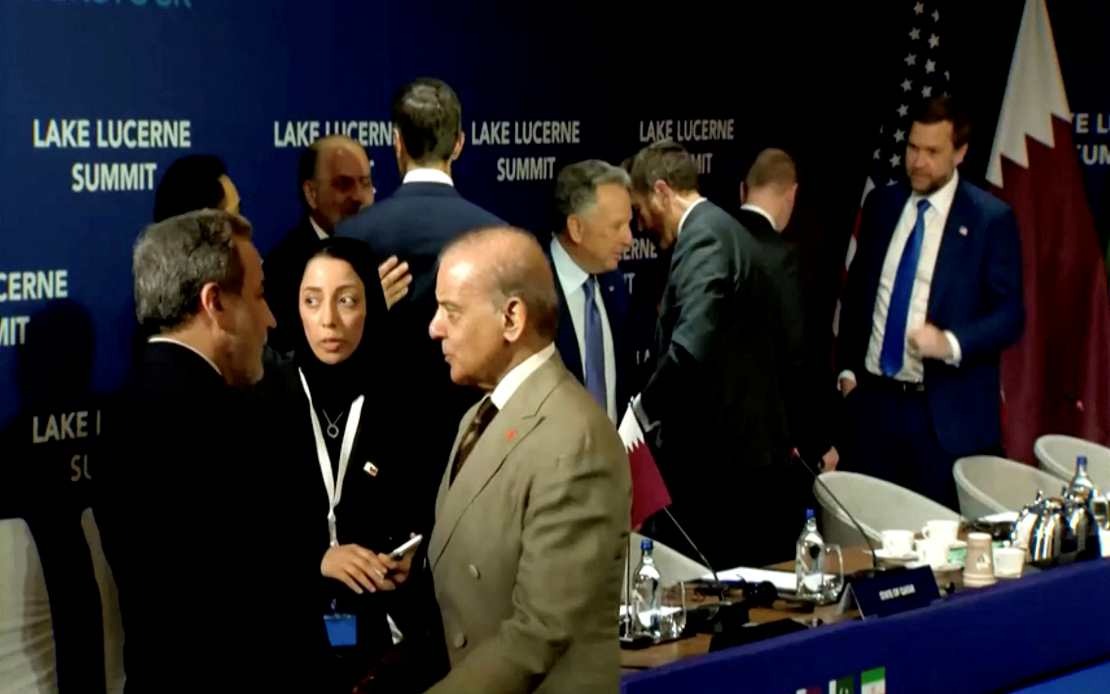
Iran and the United States have reached consensus on a draft agreement that would temporarily lift sanctions restricting Iranian oil exports, according to a senior Iranian negotiator, marking a significant milestone in their ongoing diplomatic engagement centred on broader regional stability. Hossein Ghorbanzadeh, a member of Iran's negotiating delegation, disclosed on Sunday that the technical framework for the oil sanctions relief had been finalised following intensive talks conducted at the Burgenstock resort in Switzerland. The announcement underscores the tangible progress made during formal negotiations held under the auspices of the recently signed Islamabad Memorandum of Understanding, a multilateral framework designed to create pathways toward ending the US-Israeli military campaign against Iran.
Crucially, Ghorbanzadeh emphasised that the implementation of the memorandum's remaining provisions would be contingent upon the achievement of a comprehensive final settlement that concludes the conflict in Lebanon, signalling that the framework's success depends on broader regional de-escalation rather than oil trade alone. This conditionality reflects the interconnected nature of Middle Eastern security arrangements, where progress on one front must align with simultaneous advancement on others. The Iranian negotiator's statement reveals the strategic architecture underlying the talks, in which temporary economic relief—particularly in the critical petroleum sector—serves as both an incentive and a practical tool for advancing comprehensive peace negotiations.
Beyond the headline breakthrough on oil sanctions, the Switzerland talks incorporated extensive technical deliberations that extended well beyond the plenary sessions, with specialists from both delegations addressing granular implementation questions. Ghorbanzadeh noted that these parallel technical meetings concluded with the completion of the draft language covering the phased or temporary reduction of sanctions on Iranian crude exports, indicating that both sides had invested considerable effort in crafting commercially and legally workable terms. For Malaysia and Southeast Asian nations dependent on stable global energy markets, the potential for increased Iranian oil supply—even on a temporary basis—carries implications for regional energy pricing and supply chain diversification, particularly given the strait of Hormuz's critical role in global energy transit.
The negotiating framework itself represents an extraordinary diplomatic development. On June 14, Iran and the United States announced they had reached a fourteen-point understanding, brokered through Pakistani mediation, intended to establish mechanisms for ending hostilities and resolving disputes through structured dialogue rather than military escalation. The agreement was formally entered into force on June 18 following electronic signatures from Iranian President Masoud Pezeshkian and US President Donald Trump, providing the institutional foundation for the Switzerland talks. This progression from high-level understanding to working-level technical negotiations demonstrates a deliberate methodology aimed at translating political will into operational agreements with actual economic and security consequences.
Among the memorandum's substantive provisions is a commitment to terminate hostile military operations across all fronts, with Lebanon specifically mentioned, reflecting the current intensity of proxy and direct conflicts in the region. The agreement also addresses the reopening of the Strait of Hormuz, one of the world's most critical chokepoints for energy transit, and the lifting of the US naval blockade imposed on Iranian shipping—measures that would fundamentally alter maritime commerce patterns throughout the Persian Gulf and beyond. The scope of these commitments illustrates that the framework extends far beyond bilateral US-Iran relations to encompass broader Middle Eastern security arrangements, making it relevant to international shipping, energy markets, and regional stability.
The parallel discussions regarding frozen Iranian assets, which Ghorbanzadeh mentioned occurred between Iranian and Qatari delegations, introduce another dimension to the negotiations. Qatar's involvement as a facilitating party reflects both its geographical position within the Gulf and its diplomatic standing as a neutral broker in regional disputes. The unfreezing of Iranian financial assets could represent a substantial economic stimulus for Tehran, potentially affecting currency markets, reconstruction efforts, and Iran's broader integration into regional trade networks. For Southeast Asian financial institutions and businesses with exposure to Iranian counterparts, such developments carry material implications for transaction flows and banking arrangements.
The sequencing and conditionality embedded within the framework reveal sophisticated strategic thinking about incentives and enforcement mechanisms. By tying the full implementation of the memorandum to a final settlement ending the Lebanon conflict, negotiators have created a mutual hostage mechanism whereby both Iran and the United States maintain leverage over each other's compliance. Temporary measures on oil sanctions serve as confidence-building steps that reward good faith engagement without requiring either side to surrender strategic depth before comprehensive peace is achieved. This graduated approach acknowledges the historical distrust between the parties while creating momentum toward broader objectives.
For regional observers including Malaysia, which maintains significant trade relationships throughout the Middle East and relies on open maritime corridors, the implications of successful implementation would be substantial. A reduction in sanctions on Iranian oil would increase global supply flexibility, potentially moderating petroleum price volatility that affects energy-dependent economies. The reopening of the Strait of Hormuz to normalised traffic patterns would enhance maritime security and reduce insurance premiums for shipping through one of the world's most strategically important waterways. Additionally, a more stable regional environment would create conditions for expanded trade relationships and investment opportunities throughout the Persian Gulf and beyond.
However, the framework's success remains contingent on achieving the elusive final settlement in Lebanon, where multiple armed groups, state actors, and external powers maintain competing interests. The Lebanese conflict represents perhaps the most intractable element of the regional equation, with deep historical roots and complex factional dynamics that resist simple diplomatic solutions. The conditioning of oil sanctions relief on Lebanon settlement therefore introduces an element of uncertainty into what might otherwise appear to be a straightforward commercial negotiation. This interdependence creates risks that progress in one area could be undermined by deadlock in another, potentially leaving the temporary measures suspended indefinitely.
The role of Pakistan in facilitating these negotiations deserves attention, as it underscores a broader pattern of non-Western mediation in major international disputes. Pakistan's successful brokering of the fourteen-point understanding represents a significant diplomatic achievement and reflects Islamabad's positioning as a bridge between Iran, the broader Islamic world, and global powers. The deployment of Swiss territory as the negotiating venue further demonstrates how neutral jurisdictions continue to serve essential functions in contemporary diplomacy, providing physical and diplomatic space where adversarial parties can engage without political complications attached to their home territories or traditional allies' capitals. These procedural dimensions, while seemingly technical, reflect larger shifts in how international negotiations are structured and conducted in a multipolar world order.
Moving forward, the test of the Islamabad Memorandum will rest on whether the temporary measures generate sufficient momentum and trust to enable the more difficult final settlement negotiations. The agreement on a draft framework for oil sanctions relief, while encouraging, represents an agreement to agree rather than implementation of actual policy change. Both sides will now face internal pressures and practical challenges in operationalising these commitments. Iran must manage expectations among its population and regional allies regarding the pace and extent of sanctions relief, while the United States navigates congressional oversight and domestic political considerations surrounding engagement with Iran. The next phase will determine whether the current diplomatic window can be converted into durable structural changes in Middle Eastern geopolitics.

%22%2F%3E%3C%2Fpattern%3E%3C%2Fdefs%3E%3Crect%20width%3D%22100%25%22%20height%3D%22100%25%22%20fill%3D%22url(%23phz7hyg)%22%2F%3E%3Crect%20width%3D%22100%25%22%20height%3D%22100%25%22%20fill%3D%22url(%23phz7hyp)%22%2F%3E%3Ctext%20x%3D%2250%25%22%20y%3D%2250%25%22%20text-anchor%3D%22middle%22%20dominant-baseline%3D%22central%22%20fill%3D%22rgba(255%2C255%2C255%2C0.95)%22%20font-family%3D%22Georgia%2C%20'Times%20New%20Roman'%2C%20serif%22%20font-weight%3D%22700%22%20font-size%3D%22272%22%20letter-spacing%3D%22-0.02em%22%3EAnwar%3C%2Ftext%3E%3C%2Fsvg%3E)