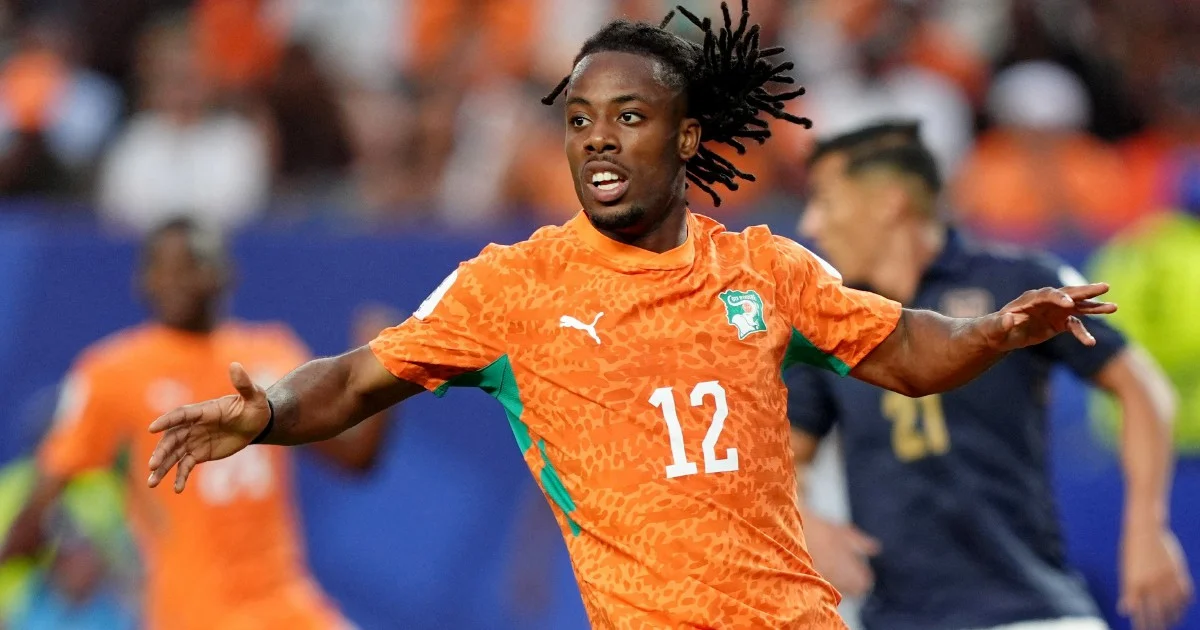
Ivory Coast striker Elye Wahi, who appeared in his country's World Cup fixture against Ecuador this past Sunday, faced detention in May as part of an ongoing French investigation into alleged spot-fixing in professional football, according to reporting by The Athletic released on Wednesday. The arrest marks a significant development in what authorities are treating as a serious breach of sporting integrity within French football.
The investigation into match-fixing represents a growing concern across European football leagues, where criminal syndicates have increasingly attempted to manipulate outcomes of low-profile matches to generate profits through betting markets. France's professional football authorities have intensified scrutiny of suspicious betting patterns and coordination with law enforcement agencies to identify players, officials, and external actors involved in such schemes. The involvement of an international player of Wahi's profile underscores how extensively these networks can operate across national boundaries.
Wahi's role in the Ivorian national team demonstrates the dual jurisdiction challenges these cases present. Players representing their countries while facing domestic legal proceedings create complex situations for both national federations and international governing bodies. The Ivory Coast Football Federation has not yet issued public statements regarding the matter, leaving questions about potential disciplinary measures or internal investigations by the continental African football authorities.
Spot-fixing—where specific moments within a match are predetermined rather than the overall result—has become a particular focus of law enforcement worldwide. Unlike match-fixing, which involves betting on final outcomes, spot-fixing is harder to detect because matches can proceed normally while individual plays are orchestrated. This opacity makes it especially attractive to criminal organisations seeking to profit from betting on granular events like corner kicks, yellow cards, or goal scorers.
The circumstances surrounding Wahi's detention remain partially unclear from publicly available information. The Athletic's reporting confirms the May arrest but does not reveal the specific allegations, evidence presented by investigators, or whether charges have been formally filed. Such investigations typically involve complex financial forensics examining betting transactions, communication records, and testimony from informants within football circles.
For Malaysian football enthusiasts, this situation resonates with broader concerns about match-fixing that have affected Southeast Asian leagues. Indonesia, Malaysia, and Thailand have all grappled with spot-fixing scandals in recent years, demonstrating that the problem transcends geographical boundaries and affects football at multiple competitive levels. The professionalism of French investigations provides a model, though imperfect, for how regional authorities might strengthen their own integrity frameworks.
The timing of the disclosure—nearly a month after the May arrest—suggests that investigators prioritised operational security and building their case before allowing details to enter public discourse. This approach is standard in major inquiries where premature media attention could compromise ongoing investigations, warn potential suspects, or jeopardise cooperation from witnesses in the sports world.
Wahi's presence in the Ecuador match raises questions about regulatory processes. If clubs, national federations, or FIFA were aware of the investigation, decisions about his inclusion in squad selection would have involved careful legal and administrative considerations. Different jurisdictions handle such situations differently, with some prioritising presumption of innocence while others implement precautionary suspensions.
The broader implications for French football extend beyond this single case. If multiple players or officials are implicated in the same investigation, as such probes often reveal, it could trigger substantial reforms to integrity systems within French clubs. Ligue 1 and lower divisions have invested considerably in monitoring technology and reporting mechanisms, yet criminal sophistication continues to evolve.
International football organisations including UEFA and FIFA maintain their own integrity units that coordinate with national authorities on fixing cases. Information sharing agreements help authorities identify patterns that might indicate organised criminal involvement versus isolated incidents. The European football community has become increasingly interconnected in combating these threats, though gaps remain in enforcement coordination.
For the Ivory Coast national team, the situation creates diplomatic and sporting complications. Depending on how the case develops, the player might face suspension from international competition if African confederation rules or FIFA regulations are applied. Such disciplinary measures can significantly impact squad planning for continental championships and World Cup qualifying campaigns.
The arrest also reflects evolving criminal tactics in football. As leagues invest in traditional corruption detection, organised crime groups adapt by targeting specific moments that are harder to scrutinise and require smaller financial commitments than orchestrating entire match outcomes. This evolutionary dynamic means that investigations must remain technologically sophisticated and well-resourced to maintain effectiveness.

%22%2F%3E%3C%2Fpattern%3E%3C%2Fdefs%3E%3Crect%20width%3D%22100%25%22%20height%3D%22100%25%22%20fill%3D%22url(%23ph2hy9vg)%22%2F%3E%3Crect%20width%3D%22100%25%22%20height%3D%22100%25%22%20fill%3D%22url(%23ph2hy9vp)%22%2F%3E%3Ctext%20x%3D%2250%25%22%20y%3D%2250%25%22%20text-anchor%3D%22middle%22%20dominant-baseline%3D%22central%22%20fill%3D%22rgba(255%2C255%2C255%2C0.95)%22%20font-family%3D%22Georgia%2C%20'Times%20New%20Roman'%2C%20serif%22%20font-weight%3D%22700%22%20font-size%3D%22272%22%20letter-spacing%3D%22-0.02em%22%3EAnwar%3C%2Ftext%3E%3C%2Fsvg%3E)