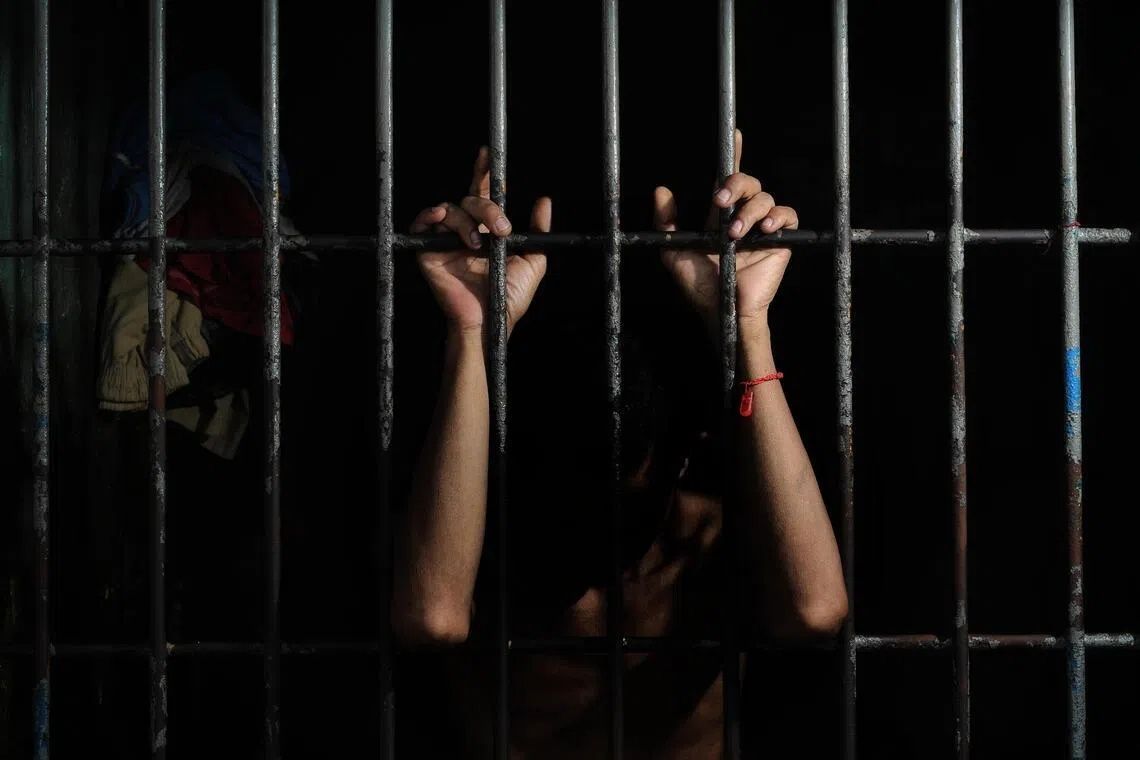
A grieving mother in western Japan has launched legal action against the state, seeking approximately 100 million yen in damages following the death of her teenage daughter, who succumbed to emaciation after enduring eighteen days in custody and intense police questioning. The case, filed at Kobe district court in June, represents one of the most stark illustrations yet of Japan's contentious criminal justice practices, where authorities are accused of using prolonged detention as leverage to extract confessions from suspects regardless of guilt. The girl, referred to as Runa in legal documents, weighed just 20 kilograms when she died in December, barely five months after her release from custody.
The ordeal began when Runa, then employed at a disability care facility in Hyogo Prefecture, was arrested on suspicion of assaulting a resident during a Valentine's Day celebration. Authorities alleged she had caused injury to the patient, yet the teenager consistently maintained her innocence, explaining through her lawyer that she had merely attempted to prevent the individual from biting another person by gently applying pressure to their chin. Despite her denials and the lack of corroborating evidence, the police and prosecutors kept her detained, engaging in a gruelling process that fundamentally altered her physical and psychological state. Within weeks of her release following the abandonment of charges, she developed acute stress disorder, eating disorders, and post-traumatic stress disorder as diagnosed by medical professionals.
Japan's criminal justice system operates under principles that fundamentally differ from Western legal traditions, particularly regarding the presumption of innocence. Critics have long flagged that the burden of proof tilts heavily toward confessions, with the police and prosecutorial system treating such admissions as virtually essential for conviction. This structural reality has given rise to the term "hostage justice," a phrase that encapsulates the coercive dynamics whereby suspects face extended pre-trial detention unless they capitulate to interrogators' demands. Remaining silent or persisting in denial can result in weeks of confinement in isolation, where access to family is severely restricted and contact with legal representation is monitored. The system effectively penalises those who assert their innocence, creating perverse incentives to confess regardless of actual culpability.
Runa's treatment during her confinement exemplified these troubling patterns. According to her lawyer Masahiro Sasaki, interrogators repeatedly pressured the teenager with threats, including suggestions that she would be sent to a reformatory and would not be permitted to see her mother unless she confessed. Interrogators reportedly employed manipulative language, repeatedly asserting "You did it, didn't you? Just tell the truth," despite her consistent denials. The journal she maintained whilst detained documented the psychological toll of these tactics, revealing the systematic erosion of her mental state under custody. She was denied family contact, restricted in her communication rights, and subjected to repeated questioning sessions designed to break her resistance and elicit a false admission.
The prosecutor's office compounded the injustice by requesting extensions of her detention on two separate occasions whilst simultaneously blocking her lawyer's requests to have a judge terminate the custody. Only after Runa vomited, collapsed physically, and required emergency medical treatment at an outside hospital did authorities finally relent, releasing her without pressing charges. Her lawyer has questioned the fundamental legality of her arrest, noting that the alleged assault—even if it had occurred—was of an "extremely trifling" nature and that her age should have made detention permissible only under the most exceptional circumstances. Moreover, there existed no reasonable basis to suspect that a teenager with no history of delinquency and living under parental supervision would flee jurisdiction or tamper with evidence.
The implications of Runa's case resonate far beyond her family's individual tragedy. International human rights organisations, including bodies affiliated with the United Nations, have repeatedly condemned Japan's "hostage justice" practices as incompatible with modern standards of due process and human dignity. The system disproportionately affects vulnerable populations including juveniles, foreign nationals, and those without access to experienced legal counsel. Japan's Supreme Court itself acknowledged in recent rulings that certain interrogation methods constitute "inhumane" treatment, yet the structural incentives for relying on confessions persist within the prosecutorial apparatus. The case of Iwao Hakamada, who served as the world's longest-serving death-row inmate before his 2024 exoneration, demonstrated how confessions extracted through improper interrogations can lead to wrongful convictions even in capital cases.
The lawsuit filed by Runa's mother carries broader significance for Japanese civil society and legal reform advocates. By pursuing compensation and public disclosure of what occurred during her daughter's detention, the mother is simultaneously demanding accountability and drawing attention to systemic failures that require legislative remediation. The case underscores the inadequacy of remedies available to those subjected to unlawful detention and coercive interrogation, as well as the psychological and physical devastation such experiences inflict. The fact that a teenager died from extreme malnutrition shortly after release suggests that the trauma of custody itself precipitated a cascade of physical deterioration that proved irreversible.
For Malaysian observers, Japan's criminal justice challenges offer instructive lessons regarding the importance of robust procedural safeguards and judicial independence. While Malaysia's legal system incorporates different structural elements, the principles of presumption of innocence and protection against self-incrimination remain foundational to rule of law across common law jurisdictions. The Japanese case illustrates how institutional practices can gradually erode these protections even within a developed democracy with sophisticated courts and legal institutions. The distinction between formally protecting individual rights and ensuring those protections function effectively in practice remains crucial.
The Kobe District Public Prosecutors Office declined to provide substantive comment on the filing, stating they had not yet formally received the complaint. This response itself reflects a troubling bureaucratic distance from accountability. What remains clear is that Runa's seventeen-year-old life was abbreviated by a criminal justice system that prioritised confession-extraction over truth-seeking, and that her mother's pursuit of justice represents both a personal necessity and a potential catalyst for broader examination of practices that have persisted in Japan for decades.


%22%2F%3E%3C%2Fpattern%3E%3C%2Fdefs%3E%3Crect%20width%3D%22100%25%22%20height%3D%22100%25%22%20fill%3D%22url(%23ph2hy9vg)%22%2F%3E%3Crect%20width%3D%22100%25%22%20height%3D%22100%25%22%20fill%3D%22url(%23ph2hy9vp)%22%2F%3E%3Ctext%20x%3D%2250%25%22%20y%3D%2250%25%22%20text-anchor%3D%22middle%22%20dominant-baseline%3D%22central%22%20fill%3D%22rgba(255%2C255%2C255%2C0.95)%22%20font-family%3D%22Georgia%2C%20'Times%20New%20Roman'%2C%20serif%22%20font-weight%3D%22700%22%20font-size%3D%22272%22%20letter-spacing%3D%22-0.02em%22%3EAnwar%3C%2Ftext%3E%3C%2Fsvg%3E)