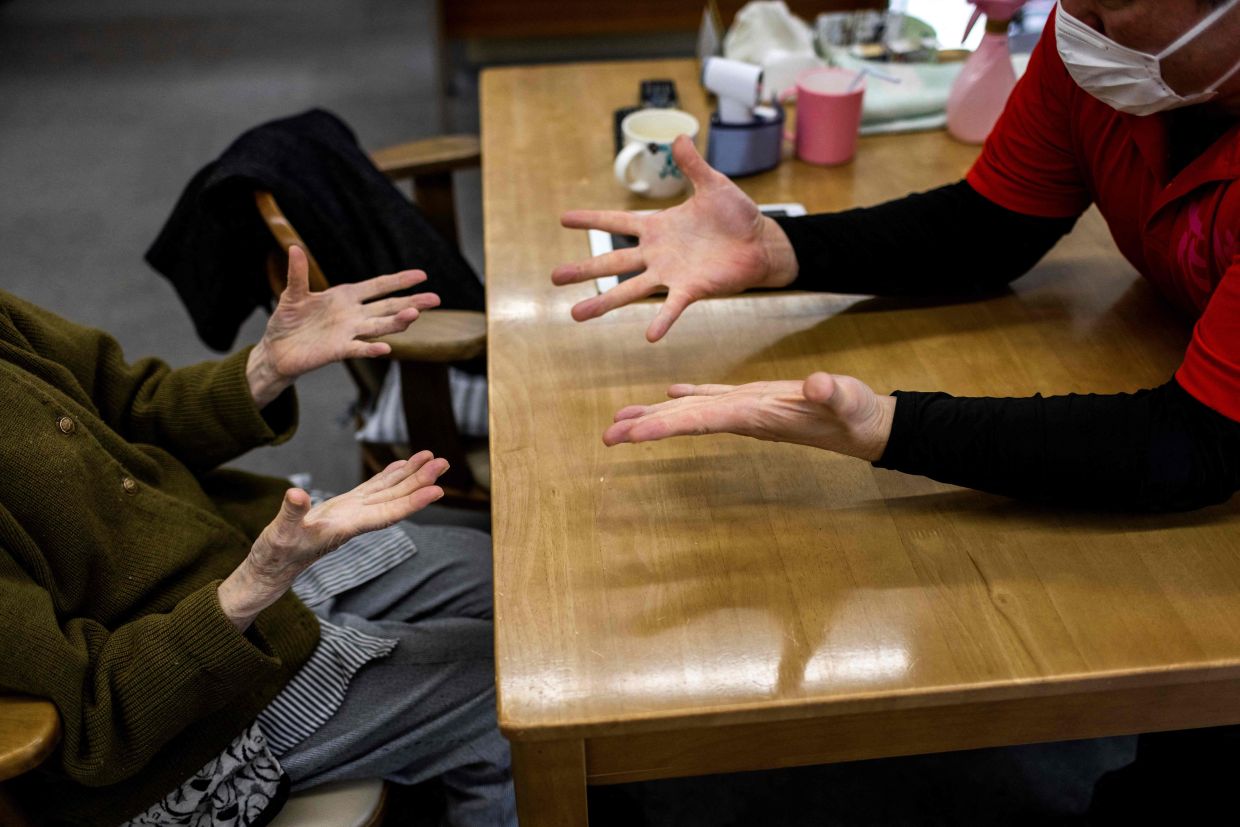
The premise is deliberately provocative: in a nation grappling with one of the world's oldest populations, what if removing the useless limbs of severely disabled elderly patients could relieve the crushing strain on an already fragile care system? This is the uncomfortable central argument of Yo Kusakabe's 2003 novel "Haiyoshin (Useless Body)", now adapted into a film that has shocked Japanese audiences since its theatrical release last month and forced an uncomfortable national reckoning with the realities of caregiving in a rapidly ageing society.
Kusakabe, a 70-year-old former geriatric specialist based in Osaka, argues that his concept of "A-care (Amputation Care)" deserves serious consideration as Japan's eldercare infrastructure teeters on the brink of systemic failure. While the notion appears grotesque to Western sensibilities, the doctor frames it within a pragmatic lens: patients with paralysed limbs that provide no function become substantially lighter and easier to manage, reducing physical strain on carers and potentially diminishing the need for multiple care workers per patient. Speaking to AFP, he explained the calculus behind the idea, acknowledging that meaningful consent would be essential but nevertheless maintaining that the option merits discussion given the trajectory of Japan's demographics and care capacity.
The underlying crisis animating this debate is undeniably real. Nearly one in three Japanese citizens is now aged 65 or older, positioning the country as home to the world's second-oldest population. Government projections paint an alarming picture: by 2040, Japan faces a projected shortfall of approximately 570,000 care workers, a gap that will only widen as the number of elderly requiring intensive support continues climbing. The care sector is not yet collapsing, Kusakabe acknowledges, but the trajectory points inexorably toward a breaking point unless fundamental changes occur. This demographic cliff represents not merely a Japanese problem but a harbinger of challenges facing much of East and Southeast Asia as populations age rapidly.
The human toll of this care crisis manifests in ways both subtle and tragic. Japanese media has coined the term "kaigo satsujin" (caregiving murders) to describe homicides committed by overwhelmed, desperate carers—a phenomenon common enough to warrant regular news coverage. A 2016 investigation by the public broadcaster NHK revealed that such tragedies were occurring roughly once every two weeks, indicating that the psychological and physical burden on carers has reached dangerous levels. Kusakabe believes that without intervention, abuse and homicides will only intensify, potentially normalising even more radical approaches like his proposed amputation care. The implication is both a warning and a challenge: Japan's society must either fundamentally restructure elderly care or accept increasingly extreme measures as desperation grows.
Curiosity about the film version of "Haiyoshin" has been driven partly by its shocking premise and partly by how thoroughly rejected it was when first conceived. For more than two decades, the novel languished in development hell, deemed essentially unfilmable by mainstream Japanese cinema. The successful adaptation has unleashed a cascade of online commentary ranging from the visceral—reviewers labelling it "shocking" and "the year's most controversial film"—to the thoughtfully critical. Yet notably, some viewers have engaged with the underlying logic rather than dismissing it outright. One commenter on the cinema website eiga.com observed that while amputation might seem ruthless and unethical, the film made an argument with substantive merit. This grudging intellectual engagement suggests the work has transcended sensationalism to provoke genuine ethical reflection.
Kusakabe's fictional treatment explores the potential benefits of amputation with surprising nuance. In his novel, patients themselves welcome the removal of limbs that serve no purpose beyond generating pain and obstruction. Before amputation, many experience the constant throb of paralysed limbs, involuntary convulsions, and the indignity of being forcibly clothed despite their inability to control their bodies. Post-amputation characters in the film gain unexpected mobility and independence—they manipulate wheelchairs with dexterity, play with balloons using their remaining limbs, and, most tellingly, experience relief from chronic pain. This portrayal reframes amputation not as mutilation but as liberation, forcing audiences to confront uncomfortable questions about bodily autonomy and quality of life in the context of severe disability.
The philosophical heart of Kusakabe's argument centres on what end-of-life dignity actually entails. He poses a deliberately destabilising question: is true dignity found in the painful, often futile effort to dress an immobilised person, or in the elimination of suffering through amputation? If a patient genuinely desires the procedure, if it substantially eases the physical and emotional burden on family carers, and if all parties consent freely, on what moral grounds should society intervene? This inverts conventional bioethical frameworks that emphasise bodily integrity and bodily autonomy in the abstract, instead privileging concrete relief from suffering and the practical preservation of family relationships. The challenge to Western bioethicists is implicit: how do they reconcile their reverence for bodily wholeness with their commitment to autonomy when a fully-informed person requests amputation?
Japan's current approach to elderly care reveals the tensions underlying Kusakabe's proposal. Insurance systems heavily subsidise feeding tubes and intravenous nutrition for patients aged 75 and older, creating economic incentives to prolong life mechanically rather than allowing natural death. Families, driven by cultural imperatives to "do something" and often unconscious of the suffering they inadvertently cause, frequently demand aggressive interventions for dying relatives. This stands in sharp contrast to Scandinavian best practice, where palliative care philosophy dictates that patients who cease eating should not be force-fed, allowing natural death with dignity. Kusakabe argues that Japan's inability to embrace such rational, harm-reducing approaches—its insistence that keeping severely impaired elderly alive is categorically right regardless of their suffering—ironically creates conditions where more radical solutions like his proposal might eventually gain traction.
Yet even Kusakabe doubts whether Japan's cultural context would actually permit A-care to flourish despite its theoretical merits. The society's profound aversion to ending life, combined with Confucian values emphasising filial duty and the preservation of the body, suggests that proposing amputation would encounter insurmountable resistance from medical ethics boards, patient advocates, and the public. The novel itself explores this trajectory: initial enthusiasm for elective amputation is ultimately shattered when a tragedy devastates the protagonist's faith in the procedure's efficacy. This narrative arc reflects Kusakabe's own pessimism about whether Japan can embrace the kind of bold, rational rethinking of elderly care that circumstances increasingly demand.
What the film and novel accomplish, however, is forcing a broader conversation about the unsustainability of current approaches. By presenting amputation not as a horror but as a logical (if extreme) response to a genuine crisis, Kusakabe has created a thought experiment that makes incremental reforms seem more acceptable by contrast. Japan might not adopt A-care, but the existence of such a radical proposal could galvanise political will for more realistic solutions: increased immigration of care workers, higher wages for the sector, subsidisation of robotic assistance, or a fundamental reorientation toward palliative rather than life-prolonging medicine. For Malaysian readers, the film offers a cautionary tale about the costs of inaction—Singapore and South Korea face similar demographic time bombs, and Malaysia's own ageing population will confront equivalent dilemmas within decades.
The controversy surrounding "Haiyoshin" ultimately reflects not the feasibility of amputation but the desperation embedded within Japan's care sector and the willingness of some to consider previously unthinkable solutions. Kusakabe's work functions as a mirror held up to uncomfortable truths: that caregiving is physically and emotionally devastating, that the elderly sometimes suffer needlessly despite interventions intended to help, and that maintaining the status quo may be more cruel than exploring alternatives. Whether Japan adopts his specific proposal matters less than whether it recognises that the system requires fundamental transformation. The film's shocking reception suggests that appetite for serious reform may finally exist, even if the direction remains uncertain.


%22%2F%3E%3C%2Fpattern%3E%3C%2Fdefs%3E%3Crect%20width%3D%22100%25%22%20height%3D%22100%25%22%20fill%3D%22url(%23ph2hy9vg)%22%2F%3E%3Crect%20width%3D%22100%25%22%20height%3D%22100%25%22%20fill%3D%22url(%23ph2hy9vp)%22%2F%3E%3Ctext%20x%3D%2250%25%22%20y%3D%2250%25%22%20text-anchor%3D%22middle%22%20dominant-baseline%3D%22central%22%20fill%3D%22rgba(255%2C255%2C255%2C0.95)%22%20font-family%3D%22Georgia%2C%20'Times%20New%20Roman'%2C%20serif%22%20font-weight%3D%22700%22%20font-size%3D%22272%22%20letter-spacing%3D%22-0.02em%22%3EAnwar%3C%2Ftext%3E%3C%2Fsvg%3E)