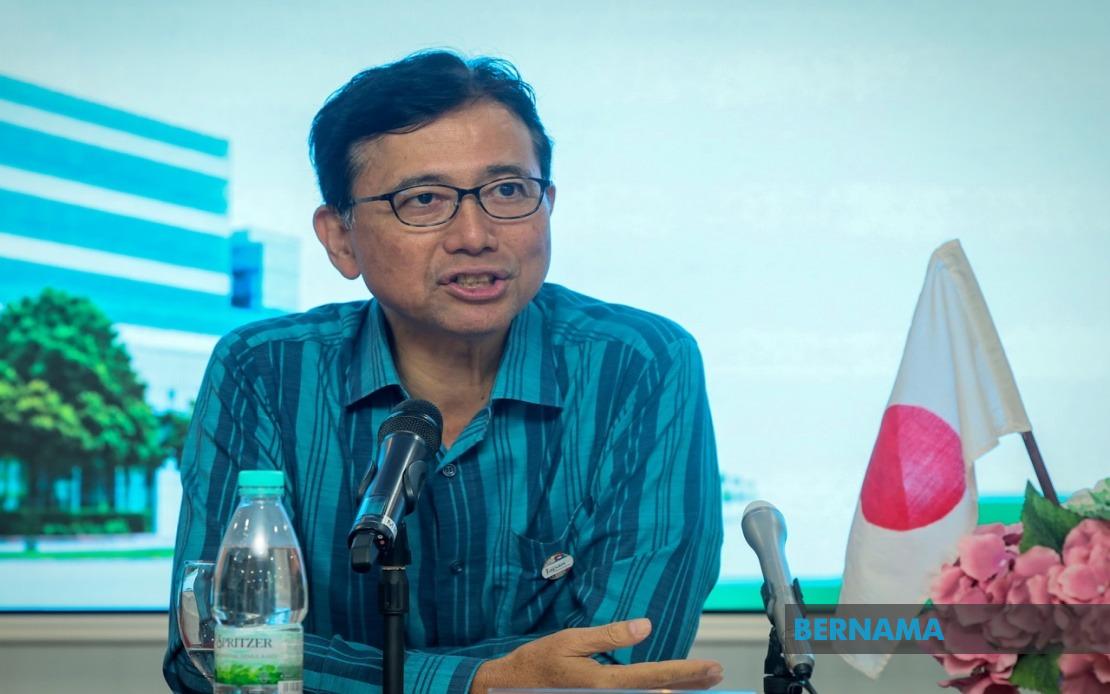
Malaysia stands to gain significantly from Japan's recalibrated approach to regional engagement, according to Japanese Ambassador to Malaysia Noriyuki Shikata. The updated Free and Open Indo-Pacific (FOIP) framework announced by Prime Minister Sanae Takaichi in May represents a meaningful shift in how Tokyo intends to deepen partnerships across Southeast Asia, moving beyond traditional aid relationships towards collaborative innovation and shared economic prosperity. For Malaysia specifically, this realignment creates a timely opening to accelerate its ambitions as a premier regional hub for digital technologies and advanced manufacturing.
Originally introduced by former Prime Minister Shinzo Abe in 2016, the FOIP was designed to foster stability and growth throughout the Indo-Pacific region, with Japan positioning itself as a strategic architect of this vision. The latest iteration marks a pragmatic recalibration, shifting emphasis away from broadly aspirational goals towards concrete initiatives in emerging technology sectors. Shikata characterised the refresh as a natural evolution that retains Japan's commitment to regional prosperity while adopting a more economically grounded, results-oriented methodology suited to contemporary geopolitical and technological realities.
The updated framework prioritises capacity development and cooperation in fields central to future competitiveness, including artificial intelligence systems, secure international data movement, undersea cable infrastructure and satellite communications networks. These domains directly address critical dependencies that regional economies face as they modernise their digital infrastructure. For Malaysian stakeholders, this emphasis signals that Japan recognises the region's potential and is prepared to support the institutional and technical capabilities required to unlock it.
Central to Japan's commitment is the POWERR Asia initiative, backed by a US$10 billion financial commitment. This Partnership on Wide Energy and Resource Resilience Asia programme extends targeted support to ASEAN member states seeking to strengthen energy security, replenish strategic fuel reserves and diversify critical material supply chains. The initiative reflects an understanding that technological advancement cannot be divorced from broader economic resilience, a lesson underscored by recent global supply chain disruptions. Malaysia's strategic location and existing manufacturing base make it a natural beneficiary of such programmes.
The alignment between Japan's revised FOIP and Malaysia's existing priorities was not accidental. Shikata explicitly noted that the updated framework complements the ASEAN Outlook on the Indo-Pacific (AOIP), the region's own strategic vision for managing affairs in the Indo-Pacific. By positioning Japan's approach as complementary to AOIP rather than as a competing or external framework, Tokyo has positioned itself as a partner working within the region's preferred architecture rather than attempting to impose alternative structures. This diplomatic calibration matters considerably for ASEAN cohesion and for Malaysian policymakers balancing multiple partnership opportunities.
For the Japanese business community operating in Malaysia, the framework promises a more stable and predictable operational landscape. Japanese enterprises increasingly view Malaysia not as a destination for conventional manufacturing relocation but as a jurisdiction ripe for partnership in high-value sectors. The shift reflects broader industrial trends, as developed Asian economies seek to move upstream towards innovation and design rather than competing in labour-intensive production. This transition creates complementary opportunities, as Malaysia aims to develop local expertise in advanced sectors rather than remaining locked into lower-margin activities.
Malaysia's emergence as a significant semiconductor hub particularly interests Japanese investors. Shikata highlighted Japanese corporate interest in expanding local engagement across advanced chip packaging, AI computational infrastructure and cloud services architecture. These sectors represent the future of regional manufacturing competitiveness and offer paths to higher-value employment and export revenue. Japanese firms possess both the technological sophistication and capital to meaningfully boost Malaysian capabilities in these domains, making partnership mutually beneficial.
The bilateral relationship has formally entered a new phase through the Comprehensive Strategic Partnership (CSP) established in December 2023. This arrangement consciously moves beyond the legacy of the Look East Policy, which for decades defined the Japan-Malaysia relationship primarily through industrial development and technology transfer in conventional manufacturing. The CSP framework permits deeper engagement across innovation ecosystems, knowledge exchange and strategic joint ventures. Prime Minister Datuk Seri Anwar Ibrahim's recent engagements with major Japanese corporations including Mitsubishi Corporation, ENEOS, DENSO, IBM and Marubeni during his Japan visit demonstrated serious commitment to translating partnership rhetoric into concrete business relationships and investment flows.
These high-level corporate conversations signal anticipated directions for Malaysia's next industrial phase. Shikata predicted closer cooperation between Japanese technology leaders and Malaysia's expanding technology sector in developing artificial intelligence and quantum computing solutions. Such collaboration would position both nations more competitively within the Asia-Pacific innovation landscape, where technological capabilities increasingly determine economic standing and geopolitical influence. Joint initiatives aimed at protecting critical infrastructure and supply chains were also emphasised, reflecting mutual recognition that economic security and technological resilience have become inseparable.
The implications extend beyond bilateral relations. A deeper Malaysia-Japan partnership, particularly one centred on advanced technologies and digital infrastructure, could influence broader Southeast Asian development trajectories. Malaysia's success in attracting Japanese investment and expertise in cutting-edge sectors would demonstrate a viable pathway for comparable ASEAN members, potentially catalysing regional efforts to move beyond traditional manufacturing into innovation-driven economies. Japanese technology transfer and capital deployment in Malaysia could generate technological spillovers benefiting the wider region.
However, realising these opportunities requires active engagement from Malaysian policymakers and the business community. Attracting and retaining Japanese investment in advanced sectors demands competitive regulatory environments, reliable infrastructure, skilled talent pools and clear intellectual property protections. The framework announced by Takaichi provides the strategic architecture and financial backing, but Malaysia must ensure its domestic policy settings and business ecosystem can deliver the stability and opportunity that Japanese investors increasingly demand.
Shikata's characterisation of Japan as Malaysia's most reliable and forward-looking partner reflected a broader repositioning by Tokyo within Southeast Asia. As geopolitical competition intensifies and regional states seek to strengthen their technological capabilities and economic independence, Japan is repositioning from aid provider to innovation partner. For Malaysia, this shift opens avenues to accelerate its digital transformation while strengthening ties with a technologically advanced democracy that shares strategic interests in maintaining regional stability and open economic systems.


%22%2F%3E%3C%2Fpattern%3E%3C%2Fdefs%3E%3Crect%20width%3D%22100%25%22%20height%3D%22100%25%22%20fill%3D%22url(%23ph2hy9vg)%22%2F%3E%3Crect%20width%3D%22100%25%22%20height%3D%22100%25%22%20fill%3D%22url(%23ph2hy9vp)%22%2F%3E%3Ctext%20x%3D%2250%25%22%20y%3D%2250%25%22%20text-anchor%3D%22middle%22%20dominant-baseline%3D%22central%22%20fill%3D%22rgba(255%2C255%2C255%2C0.95)%22%20font-family%3D%22Georgia%2C%20'Times%20New%20Roman'%2C%20serif%22%20font-weight%3D%22700%22%20font-size%3D%22272%22%20letter-spacing%3D%22-0.02em%22%3EAnwar%3C%2Ftext%3E%3C%2Fsvg%3E)