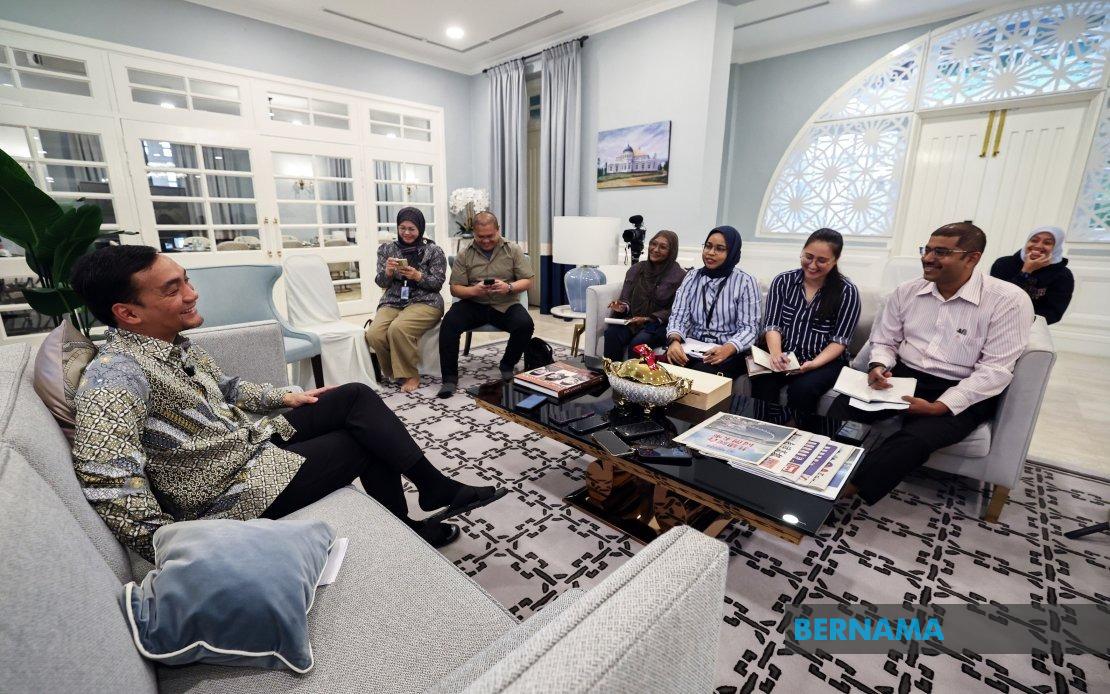
As Johor prepares for its state election on July 11, Menteri Besar Datuk Onn Hafiz Ghazi has delivered a reassuring message to party activists disappointed by their omission from the Barisan Nasional candidate slate. Speaking from his official residence in Saujana, the Johor BN chairman acknowledged the frustration that naturally accompanies candidate selection but framed non-selection as a temporary setback rather than a rejection of party service.
The reality of contested elections means that the BN coalition cannot accommodate all aspirants within its candidate roster, a constraint Onn Hafiz addressed candidly during his media engagement. He reminded members that alternative avenues for contribution exist within both the political and organizational structures of the party. Those bypassed for state assembly seats might secure positions as parliamentary candidates in federal elections, while others could take on crucial roles within party machinery that, though less visible than electoral contests, remain fundamental to the coalition's operational strength. This tiered approach to party participation reflects the complexity of managing expectations within a large, multi-faceted political organization.
Critically, Onn Hafiz stressed that the candidate selection process remains fluid. With approximately 80 per cent of the slate confirmed at the time of his statement, the possibility of movement persisted. He emphasized a crucial procedural detail: nothing becomes immutable until candidates physically receive their watikah, or letters of appointment. Historical precedent, he noted, shows instances where previously issued appointment letters have been rescinded, underscoring the dynamic nature of final arrangements leading up to nomination day on June 27. This flexibility may provide some solace to those currently excluded, though it also reflects the intricate negotiations between party factions and leadership that characterize such processes.
The selection framework Onn Hafiz outlined reveals the BN coalition's stated priorities in evaluating potential candidates. Professional diversity represents a key consideration, ensuring that representatives come from varied vocational backgrounds rather than clustering within a narrow demographic. Age, contrary to common political assumptions, does not function as a disqualifying factor either positively or negatively. Instead, the emphasis falls on grassroots connection and community standing. Candidates must maintain genuine roots within their target constituencies, enjoying recognition and acceptance among local residents. This localist emphasis aligns with the previously articulated WALI principle—winnable, acceptable, and likeable—that has guided BN's candidate philosophy.
The underlying logic of this selection approach acknowledges that electoral success depends not merely on party machinery or national campaign resources, but on the personal credibility and legitimacy that individual candidates carry within their communities. A candidate may boast impressive credentials or youthful energy, yet these attributes prove meaningless if constituents perceive them as outsiders or question their commitment to local concerns. Conversely, an older candidate deeply embedded in community networks and trusted by residents can mobilize constituencies more effectively than nominal party representatives parachuted in from elsewhere. This recognition reflects lessons learned from previous electoral cycles across Malaysia and the region.
Governance decisions regarding candidate selection do not rest with Onn Hafiz alone, a procedural protection designed to balance power within the coalition structure. Final approval requires endorsement from BN president and UMNO president Datuk Seri Dr Ahmad Zahid Hamidi, along with additional senior party leadership. This multi-layered authorization system mitigates concerns about autocratic decision-making and ensures that candidate slates reflect broader coalition consensus rather than narrow factional preferences. For members contemplating their exclusion, this institutional framework offers some assurance that their non-selection involved deliberation among multiple decision-makers rather than arbitrary dismissal.
Looking beyond the immediate candidate selection process, Onn Hafiz identified young voters as a demographic force critical to determining electoral outcomes in Johor. Residents below 40 years of age comprise between 20 and 40 per cent of the state's population, a substantial proportion that cannot be ignored in any serious electoral analysis. The Menteri Besar claimed that BN's elected representatives have actively engaged with this cohort and understand the dependency on their electoral support. This acknowledgment of youth voter importance reflects broader Southeast Asian political trends, where demographic shifts have elevated younger age groups' bargaining power and forced parties to recalibrate messaging and policy priorities accordingly.
Voter mobilization campaigns have emphasized the constitutional right and civic responsibility of all eligible Johoreans to participate in the electoral process. Notably, Onn Hafiz extended this appeal to Johoreans working in Singapore, recognizing this cross-border demographic's continued interest in their home state's governance. Higher voter turnout, he contended, generates more legitimate and representative outcomes, a principle that transcends partisan interest and appeals to democratic values. The scheduling of early voting on July 7 provides additional flexibility for those with occupational constraints, potentially facilitating broader participation than would occur with a single polling day.
Under Onn Hafiz's leadership since assuming the Menteri Besar position, the Johor state government has pursued what he characterizes as performance-oriented governance, with delivery of tangible benefits to constituents as the primary metric. He positioned the upcoming election as a referendum on this record and an opportunity for renewed mandate. The invocation of 'Bangsa Johor'—a concept emphasizing Johor identity and shared interests transcending narrow partisan divisions—suggests that the BN's campaign strategy attempts to frame the election within a broader framework of state-level patriotism and developmental continuity.
For unselected candidates and disappointed party members, Onn Hafiz's message ultimately asks for sacrifice framed as contribution to a larger cause. By remaining engaged in party struggle despite personal disappointment, members theoretically invest in the coalition's broader success, which could eventually yield personal opportunities. This appeal relies on party solidarity and longer-term thinking rather than immediate gratification. Whether such exhortations successfully retain the loyalty of those excluded remains uncertain, particularly if the BN coalition experiences electoral setbacks or if rival parties actively recruit disaffected members. The test will come following the July 11 polling, when the coalition's electoral fortunes become clear and intra-party dynamics potentially shift.


%22%2F%3E%3C%2Fpattern%3E%3C%2Fdefs%3E%3Crect%20width%3D%22100%25%22%20height%3D%22100%25%22%20fill%3D%22url(%23ph2hy9vg)%22%2F%3E%3Crect%20width%3D%22100%25%22%20height%3D%22100%25%22%20fill%3D%22url(%23ph2hy9vp)%22%2F%3E%3Ctext%20x%3D%2250%25%22%20y%3D%2250%25%22%20text-anchor%3D%22middle%22%20dominant-baseline%3D%22central%22%20fill%3D%22rgba(255%2C255%2C255%2C0.95)%22%20font-family%3D%22Georgia%2C%20'Times%20New%20Roman'%2C%20serif%22%20font-weight%3D%22700%22%20font-size%3D%22272%22%20letter-spacing%3D%22-0.02em%22%3EAnwar%3C%2Ftext%3E%3C%2Fsvg%3E)