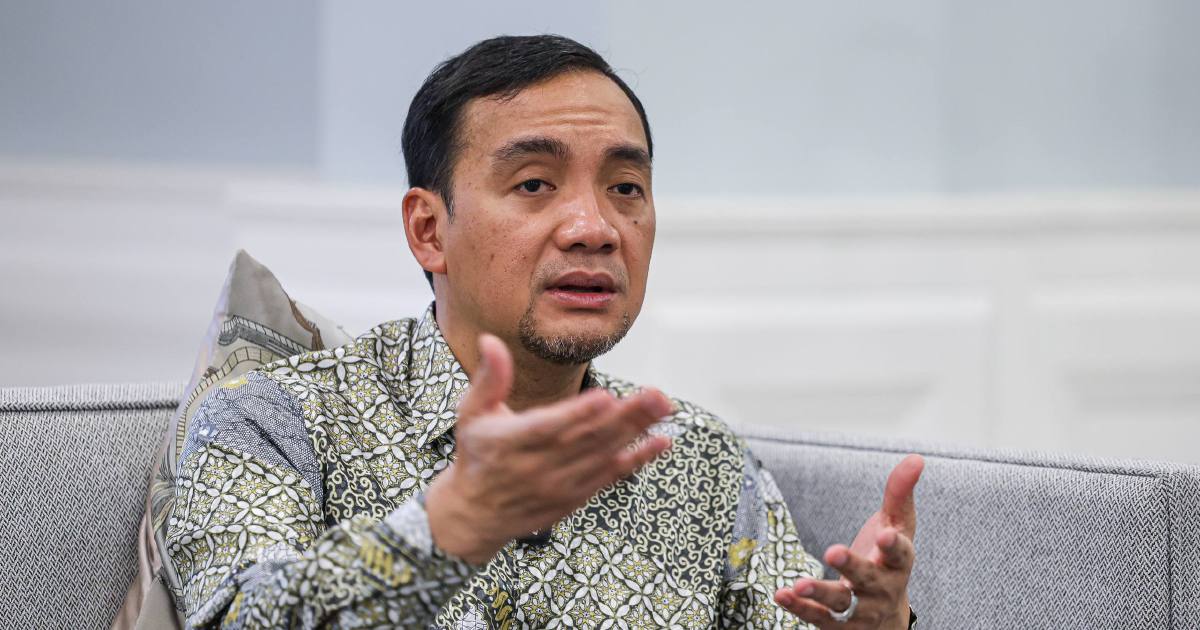
The royal leadership of Johor has issued a formal appeal to all political contenders to conduct themselves with restraint and professionalism during the forthcoming state election campaign. His Majesty Sultan Ibrahim, the King of Malaysia, alongside Tunku Mahkota Ismail, the Regent of Johor, has publicly cautioned against the use of personal attacks and behaviour deemed uncivil in political discourse. The message, conveyed through Johor Barisan Nasional chairman Datuk Onn Hafiz Ghazi, underscores the monarchy's growing concern about the tenor of electoral competition in the state.
The timing of this royal intervention carries particular significance given the cyclical nature of Malaysian politics, where state elections often serve as barometers for national sentiment and party strength. Johor, as the nation's second-largest state by population and a longstanding stronghold of BN, has historically wielded disproportionate influence over federal-level politics. Any deterioration in electoral civility within the state could set a precedent affecting campaigns elsewhere in Malaysia, making the palace's stance both a statement of principle and a pragmatic political calculation about maintaining institutional stability.
Royal counsel on electoral conduct reflects a broader pattern of constitutional monarchies intervening to preserve democratic norms when they perceive them under threat. In Malaysia's context, the Yang di-Pertuan Agong and state rulers occupy a unique constitutional position as guardians of institutional propriety and guardians of national unity. Their ability to articulate expectations of political behaviour, while formally non-partisan, carries considerable weight with voters and party members alike, who view the monarchy as representing the nation's collective interests above factional politics.
The emphasis on avoiding personal attacks suggests the palace has observed rising temperatures in recent electoral campaigns across Malaysian states. Personal vilification and character assassination, rather than issue-based debate, have increasingly characterised some recent contests, particularly during federal elections. By explicitly calling out this behaviour, the Johor monarchy signals that such tactics undermine the legitimacy of electoral outcomes and erode public confidence in democratic institutions themselves.
For Johor BN specifically, the palace statement provides both a restraining force and a rhetorical advantage. Should opposition parties engage in uncivil campaigning, they risk appearing disrespectful of royal guidance, a serious transgression in Malaysian political culture. Conversely, BN politicians must ensure their own conduct meets the standard articulated by the palace, as any violation would be particularly damaging given their position as the implied beneficiaries of this royal admonishment. The statement thus creates a framework within which BN can claim the moral high ground in subsequent campaign exchanges.
Opposition parties, particularly DAP and Amanah components within the Pakatan Harapan coalition, will need to calibrate their campaign messaging carefully. While they may contest the substance of BN policies and track record, the palace's intervention effectively narrows the acceptable spectrum of rhetorical aggression. This dynamic reflects the enduring asymmetry in Malaysian politics, where institutional actors retain significant capacity to shape the parameters of legitimate political discourse even in ostensibly competitive electoral systems.
The Regent's specific involvement in this statement warrants attention. Tunku Mahkota Ismail has gradually assumed greater public prominence in recent years, stepping into various ceremonial and consultative roles as his father Sultan Ibrahim navigated the complexities of elevated kingship. This dual-voiced intervention—involving both the reigning Sultan and his Regent—suggests the Johor palace views electoral civility as sufficiently important to warrant an unusually coordinated statement, signalling serious concern about the direction of campaign conduct.
For Malaysian voters and civic observers, the palace statement embodies an implicit tension: it advocates for high standards of democratic engagement whilst operating from outside the competitive arena itself. The monarchy cannot contest elections or articulate partisan positions, yet its preferences inevitably influence political outcomes. This raises ongoing questions about the appropriate boundaries of royal intervention in electoral politics, even when motivated by genuine institutional interest in preserving democratic norms.
The statement also carries implications for social media-driven campaigning, which has become increasingly prevalent in Malaysian elections. Digital platforms enable rapid dissemination of uncivil content by candidates, party machinery, and citizen supporters, creating challenges for institutional actors seeking to encourage restraint. The palace's intervention, while addressing traditional campaign conduct, implicitly extends to online spaces where personal attacks and inflammatory rhetoric often proliferate beyond traditional editorial gatekeeping.
Historically, Johor's electoral outcomes have shaped national political trajectories. If the state election proceeds with heightened civility, it could establish a template for future contests, enhancing democratic quality across Malaysia. Conversely, should candidates of any party ignore the palace's guidance and engage in escalating personal attacks, the reputational cost will likely be significant, both immediately and in the longer term.
The challenge now lies in implementation and accountability. While the palace has articulated expectations, mechanisms for enforcing civility remain diffuse, relying primarily on voter judgment and media scrutiny. Political parties must translate royal guidance into concrete internal codes of conduct, ensuring candidates and supporters understand that personal attacks carry real electoral consequences. Without such institutional follow-through, the palace's well-intentioned plea risks becoming merely symbolic, undermining its intended impact on campaign behaviour.


%22%2F%3E%3C%2Fpattern%3E%3C%2Fdefs%3E%3Crect%20width%3D%22100%25%22%20height%3D%22100%25%22%20fill%3D%22url(%23ph2hy9vg)%22%2F%3E%3Crect%20width%3D%22100%25%22%20height%3D%22100%25%22%20fill%3D%22url(%23ph2hy9vp)%22%2F%3E%3Ctext%20x%3D%2250%25%22%20y%3D%2250%25%22%20text-anchor%3D%22middle%22%20dominant-baseline%3D%22central%22%20fill%3D%22rgba(255%2C255%2C255%2C0.95)%22%20font-family%3D%22Georgia%2C%20'Times%20New%20Roman'%2C%20serif%22%20font-weight%3D%22700%22%20font-size%3D%22272%22%20letter-spacing%3D%22-0.02em%22%3EAnwar%3C%2Ftext%3E%3C%2Fsvg%3E)