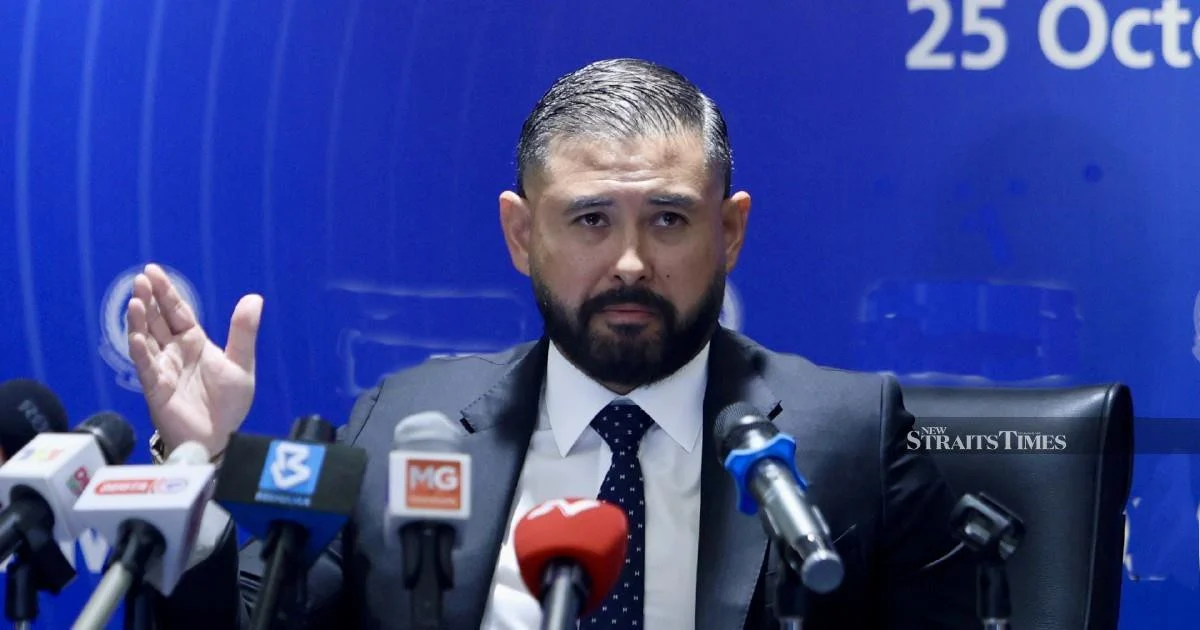
Johor's ruler, Tunku Ismail Sultan Ibrahim, has directly contested the prime minister's recent characterization of Johor as a prosperous state undermined by substantial financial leakages. Rather than accepting the premise that internal mismanagement or corruption within Johor is the primary obstacle to state development, the regent has reframed the narrative entirely, positioning the federal government as the true impediment to the state realizing its full economic potential.
The disagreement centres on competing explanations for why Johor, despite its considerable natural resources and economic assets, has not translated its wealth into proportional fiscal returns for state-level development. The prime minister's comments suggested that leakages—typically understood to mean funds lost through inefficiency, corruption, or improper allocation—were a defining characteristic of Johor's financial management. This framing carries significant political implications, as it places responsibility for Johor's challenges squarely on state-level governance and administration.
Tunku Ismail Sultan Ibrahim's counter-argument represents a fundamentally different perspective on the state's fiscal relationship with Kuala Lumpur. By asserting that the federal government is actively draining Johor's revenue rather than allowing it to circulate within the state economy, the regent is directing attention toward the mechanisms through which federal taxation, royalties, and resource extraction policies affect the state's bottom line. This distinction is crucial: the regent is not denying that revenue leaves Johor, but rather emphasizing that the destination and control of these funds rest with federal authorities rather than with local leakage-prone processes.
Johor's economic significance to Malaysia cannot be overstated. As a major contributor to federal revenues through its resources, port operations, and industrial activities, the state's relationship with the federal government involves substantial financial flows. The debate over whether Johor receives adequate returns on its economic contributions intersects with longstanding questions about Malaysia's fiscal federalism and how resources are distributed among states. A state that feels it is not receiving fair compensation for its wealth creation may struggle to fund essential services, infrastructure maintenance, and development initiatives that could further strengthen its economy.
The timing of this public disagreement is noteworthy. Such direct challenges to the prime minister's statements from a royal institution indicate underlying tensions in federal-state relations that go beyond routine political discourse. When state rulers become vocal about grievances related to resource distribution and federal policy, it suggests that conventional channels of negotiation may not be yielding satisfactory results. The regent's willingness to publicly dispute the federal narrative suggests deeper concerns about Johor's long-term economic autonomy and development trajectory.
From a governance standpoint, the regent's framing raises important questions about transparency and accountability in how federal revenue from states is accounted for and returned. If the regent's assertion is accurate—that federal mechanisms are responsible for revenue not returning to Johor—then this points to structural issues within Malaysia's revenue-sharing arrangements that may warrant examination. These could include how royalties on natural resources are calculated, what proportion of federal taxes collected within Johor remain in the state, or how federal allocations to states are determined relative to their economic contributions.
For Malaysian investors and businesses operating in Johor, this public disagreement has practical implications. The state's development capacity depends on the fiscal resources available to its government. If substantial revenue is directed to federal coffers with limited return to the state, this could constrain Johor's ability to invest in infrastructure, education, and economic diversification initiatives that private sectors depend upon. The regent's public intervention suggests that Johor may be escalating its demands for a more favorable fiscal arrangement with the federal government.
The broader context of Malaysian federalism matters here as well. Malaysia's constitutional framework divides fiscal powers and responsibilities between federal and state governments in ways that have been debated since independence. The federal government's control over income taxation and major revenue sources has historically concentrated wealth at the centre, while states with significant resource wealth have periodically sought to maximize returns from their natural advantages. Johor's position as both a major economic contributor and a state with substantial resource potential puts it in a relatively strong negotiating position compared to other Malaysian states.
The regent's public stance also reflects broader questions about how Malaysia manages its subnational politics and the role of royal institutions in mediating federal-state disputes. In Malaysia's constitutional monarchy, state rulers occupy unique positions that allow them to articulate state interests without following the same political constraints as elected officials. This gives Tunku Ismail Sultan Ibrahim a distinctive platform from which to challenge federal narratives and advocate for Johor's interests.
Moving forward, this disagreement will likely influence discussions about Johor's fiscal arrangements with the federal government. Whether the immediate outcome involves revisions to revenue-sharing formulas, negotiations over resource royalties, or broader policy changes remains uncertain. However, the regent's intervention has clearly signaled that Johor intends to press its case for what it views as fairer federal treatment, and that the state is unwilling to accept characterizations that deflect responsibility from federal policy choices.
The exchange between the regent and prime minister serves as a reminder that Malaysia's economic geography and federal structure create inherent tensions between states with substantial wealth and the federal government's centralizing fiscal powers. Johor's willingness to publicly contest the federal narrative suggests that these tensions will remain a feature of Malaysian politics and governance, particularly as states continue to evaluate whether their economic contributions yield proportional returns in the form of development resources.