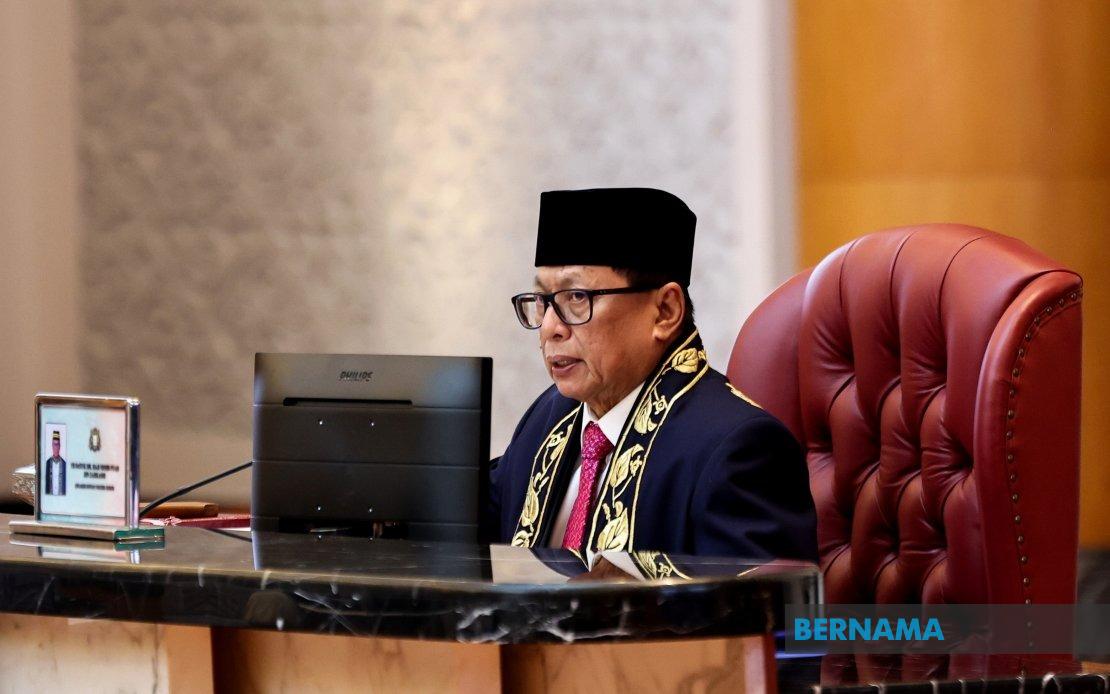
Datuk Dr Mohd Puad Zarkashi, the incumbent Rengit assemblyman and Speaker of the Johor State Legislative Assembly, has announced he will not seek re-election when voters go to the polls on July 11. The decision, made a year prior but only formally communicated to party leadership within the past two weeks, represents a significant moment in Johor politics as an experienced legislator voluntarily steps aside to create space for fresh blood within UMNO's ranks.
Mohd Puad informed UMNO president Datuk Seri Dr Ahmad Zahid Hamidi and Johor UMNO chairman Datuk Onn Hafiz Ghazi of his intention through private channels before making the announcement public via social media. This measured approach reflects both respect for the party hierarchy and a deliberate strategy to frame his withdrawal as a constructive contribution to succession planning rather than a forced exit. At 69 years old, Mohd Puad articulated age as the primary consideration behind his withdrawal, explaining that projecting his trajectory five years forward would place him at 74—an age he deems unsuitable for contesting state elections.
His candidness about age stands in notable contrast to typical Malaysian political narratives, where such transitions are often presented through euphemism or remain unspoken. By directly addressing the generational question, Mohd Puad has implicitly endorsed a broader modernisation agenda within his party. He explicitly advocated that candidates aged 50 and below should be prioritised for nomination, effectively calling for a generational reset that could reshape UMNO's parliamentary and state assembly composition across the country. This public articulation of age-based succession principles may influence similar decisions within other state chapters and divisional structures.
The timing of this decision carries particular significance for Johor politics. Datuk Onn Hafiz, the state Menteri Besar, will now have greater flexibility in assembling a revitalised team for the election campaign and subsequent state government formation. By voluntarily stepping aside, Mohd Puad removes a potential complication in candidate distribution and eliminates any perception that senior figures are blocking advancement for younger aspirants. This facilitation of leadership renewal could bolster Onn Hafiz's positioning as a reformist administrator willing to modernise party structures and governance approaches.
Mohd Puad secured the Rengit seat during the 2022 state election with a 1,920-vote majority, demonstrating electoral credibility in his constituency. His decision to relinquish this secured seat rather than defend it one final time suggests genuine commitment to his succession philosophy rather than performative gestures. The majority margin was relatively modest, however, which may have factored into calculations regarding whether the seat would remain competitive under his continued incumbency or potentially be better served by a revitalised candidate with deeper community integration among younger voters.
Beyond his withdrawal announcement, Mohd Puad articulated criteria he believes should guide future candidate selection. Emphasising education, moral character, commitment to party struggle, and comprehension of national direction, he outlined standards that reflect concerns about candidate quality and ideological coherence. These principles align with broader discussions within UMNO and the Barisan Nasional coalition regarding institutional renewal and combating public perception of entrenched self-interest in Malaysian politics. His public articulation of these standards may establish benchmarks that UMNO leadership will find difficult to ignore during nomination deliberations.
The Rengit assemblyman indicated he would attend to unfinished constituency matters before nomination day on June 27, suggesting a staggered handover process rather than abrupt departure. This responsible transition management reflects his legislative experience and understanding of constituent expectations. The two-week window between his formal notification to party leaders and public announcement permitted internal deliberation and likely candidate identification, minimising potential instability or the appearance of sudden vacancy.
Mohd Puad also extended gratitude to His Majesty Sultan Ibrahim, King of Malaysia, for consenting to his appointment as Johor speaker. This acknowledgement underscores the constitutional dimension of his assembly role and reaffirms respect for established protocols around high office. His expression of appreciation to Rengit constituents for their electoral support frames his exit as conducted with grace and civic responsibility toward the communities he has represented.
The Johor election on July 11 will take place across a political landscape where both established figures and emerging candidates compete for positions in a state that remains strategically important to national coalition stability. The nomination deadline of June 27 will reveal how thoroughly UMNO has prepared alternative candidates and whether Mohd Puad's succession recommendations influence the party's choices. His precedent may encourage other senior figures contemplating retirement to handle transitions constructively, potentially reducing late-cycle drama in Malaysian electoral cycles.
This development also provides context for broader analysis of UMNO's generational composition and competitive positioning. The party has faced criticism regarding the age profile of its elected representatives and questions about institutional renewal. Mohd Puad's voluntary step-down, articulated through principled reasoning rather than external pressure, demonstrates that internal mechanisms for managed succession can function when individual leaders prioritise party modernisation. Whether this approach becomes a pattern or remains an exception will significantly influence UMNO's trajectory and electoral appeal to younger voters seeking generational change.

%22%2F%3E%3C%2Fpattern%3E%3C%2Fdefs%3E%3Crect%20width%3D%22100%25%22%20height%3D%22100%25%22%20fill%3D%22url(%23ph2hy9vg)%22%2F%3E%3Crect%20width%3D%22100%25%22%20height%3D%22100%25%22%20fill%3D%22url(%23ph2hy9vp)%22%2F%3E%3Ctext%20x%3D%2250%25%22%20y%3D%2250%25%22%20text-anchor%3D%22middle%22%20dominant-baseline%3D%22central%22%20fill%3D%22rgba(255%2C255%2C255%2C0.95)%22%20font-family%3D%22Georgia%2C%20'Times%20New%20Roman'%2C%20serif%22%20font-weight%3D%22700%22%20font-size%3D%22272%22%20letter-spacing%3D%22-0.02em%22%3EAnwar%3C%2Ftext%3E%3C%2Fsvg%3E)