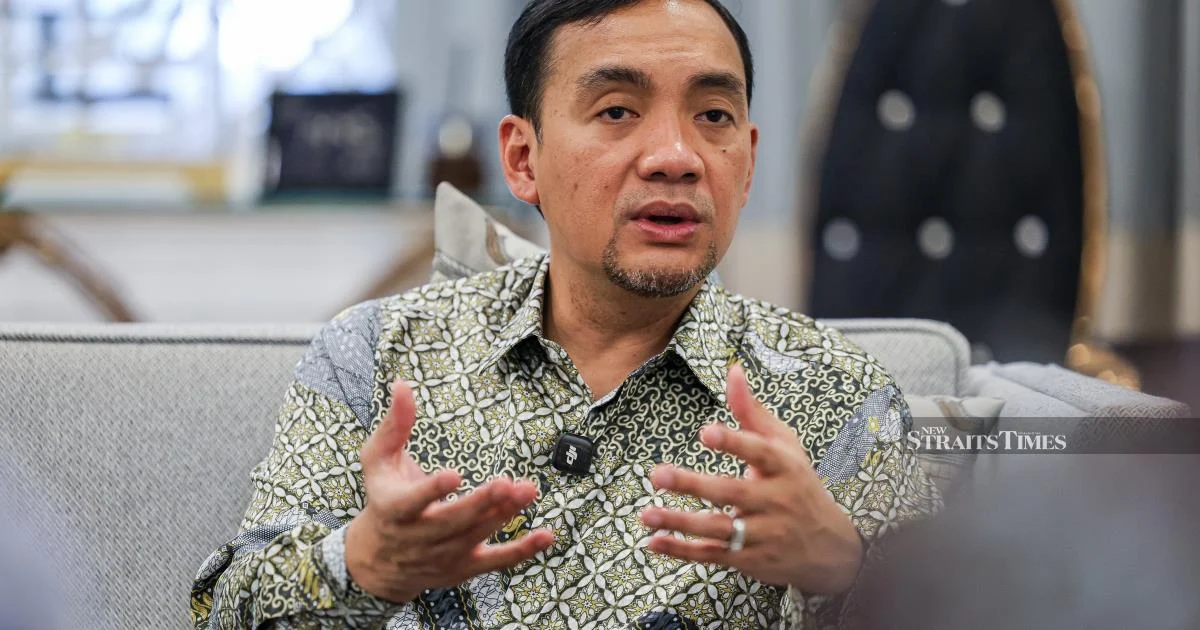
Johor's caretaker Menteri Besar Datuk Onn Hafiz Ghazi has drawn a clear line on coalition negotiations, declaring that Barisan Nasional will not explore partnership arrangements with the Democratic Action Party should voters return the coalition to power in the state. His categorical rejection marks a significant positioning statement ahead of potential electoral contests and reflects deeper tensions within Malaysia's fractious multi-party landscape.
The explicit nature of Onn Hafiz's stance underscores the principled objections that persist between traditional Barisan components and the DAP, despite recent years of pragmatic cooperation in federal governance. Whereas critics might dismiss such declarations as electoral posturing, the Johor leader has grounded his position in what he characterises as fundamental incompatibilities between the two coalitions' core value systems. This framing extends beyond simple political rivalry to touch upon questions of governance philosophy and national direction.
For Malaysian readers following state-level politics, Onn Hafiz's comments carry particular weight given Johor's status as the country's second-largest state and a traditional bastion of Barisan strength. The state's political dynamics have grown increasingly complex in recent years, with shifting voter preferences and emerging urban-rural divides creating unpredictable electoral outcomes. Understanding where major political leaders draw their alliance boundaries becomes essential for anticipating post-election coalition-building scenarios and government formation possibilities.
The invocation of ideology as the decisive factor distinguishes Onn Hafiz's argument from purely strategic calculations about parliamentary mathematics or seat distribution. By emphasising philosophical rather than tactical objections, he positions the rejection as one of principle—suggesting that working relationships with DAP would compromise core commitments held by Barisan Nasional or its component parties. This rhetorical choice resonates within Malaysia's political culture, where appeals to principle and ideology carry persuasive weight among key constituencies.
Historically, Barisan Nasional and DAP have occupied opposing poles in Malaysia's political system, with the former anchored to traditional establishment structures and the latter representing a more progressive, urban-oriented challenge to the status quo. Their brief cooperation at federal level following the 2018 general election proved contentious and ultimately unstable, offering little evidence that fundamental differences could be bridged through power-sharing arrangements. Johor's particular context—where Barisan retains substantial organisational capacity and electoral appeal—may explain why Onn Hafiz feels confident ruling out compromise solutions.
The timing of such declarations matters significantly in Malaysian electoral politics. As voters contemplate which coalition to support, clear signals about post-election coalition possibilities influence their calculations. Opposition parties supporting DAP might mobilise supporters differently if aware that certain states will be unavailable for coalition-building regardless of electoral outcomes. Conversely, Barisan supporters receive reassurance that their preferred coalition will not dilute its principles through pragmatic alliances they view as unacceptable.
Regional considerations add another layer of complexity to understanding Onn Hafiz's position. Southeast Asia's broader political evolution has witnessed growing polarisation between progressive and conservative political movements, mirroring patterns visible in Malaysia. Johor's political trajectory within this regional context—its relationship to federal governance, its role in national political stability, and its distinctive demography—all inform how local leaders calculate their strategic options. An ideologically-grounded rejection of DAP partnership reflects local assessments about what Johor voters will accept and reward electorally.
The statement also carries implications for Barisan component parties themselves, particularly UMNO, which dominates the coalition in Johor. By publicly ruling out DAP collaboration, Onn Hafiz signals that party discipline and coalition unity remain intact even as federal-level politics has generated unprecedented configurations and unexpected partnerships. This matters because internal party cohesion directly affects government stability—a lesson Malaysia learned through multiple federal government transitions since 2018.
Forward-looking political observers will watch whether this ideological line hardens or softens as actual electoral contests approach. Public declarations serve important signalling functions, but political realities on the ground—voter preferences, seat distributions, coalition arithmetic—sometimes compel recalculation. The question facing Johor voters becomes whether they believe these commitments will endure or whether they represent negotiating positions subject to revision should circumstances warrant pragmatic adjustment.
The underlying tension between ideology and pragmatism defines much of contemporary Malaysian politics. Onn Hafiz's intervention contributes to a broader conversation about whether political movements should maintain principled boundaries or embrace flexibility in pursuit of governing mandates. For Johor specifically, his rejection of DAP partnership suggests that Barisan will contest the state as a clearly differentiated choice offering voters an alternative vision to progressive urban-oriented politics, rather than seeking a broad coalition encompassing the political spectrum.

%22%2F%3E%3C%2Fpattern%3E%3C%2Fdefs%3E%3Crect%20width%3D%22100%25%22%20height%3D%22100%25%22%20fill%3D%22url(%23ph2hy9vg)%22%2F%3E%3Crect%20width%3D%22100%25%22%20height%3D%22100%25%22%20fill%3D%22url(%23ph2hy9vp)%22%2F%3E%3Ctext%20x%3D%2250%25%22%20y%3D%2250%25%22%20text-anchor%3D%22middle%22%20dominant-baseline%3D%22central%22%20fill%3D%22rgba(255%2C255%2C255%2C0.95)%22%20font-family%3D%22Georgia%2C%20'Times%20New%20Roman'%2C%20serif%22%20font-weight%3D%22700%22%20font-size%3D%22272%22%20letter-spacing%3D%22-0.02em%22%3EAnwar%3C%2Ftext%3E%3C%2Fsvg%3E)