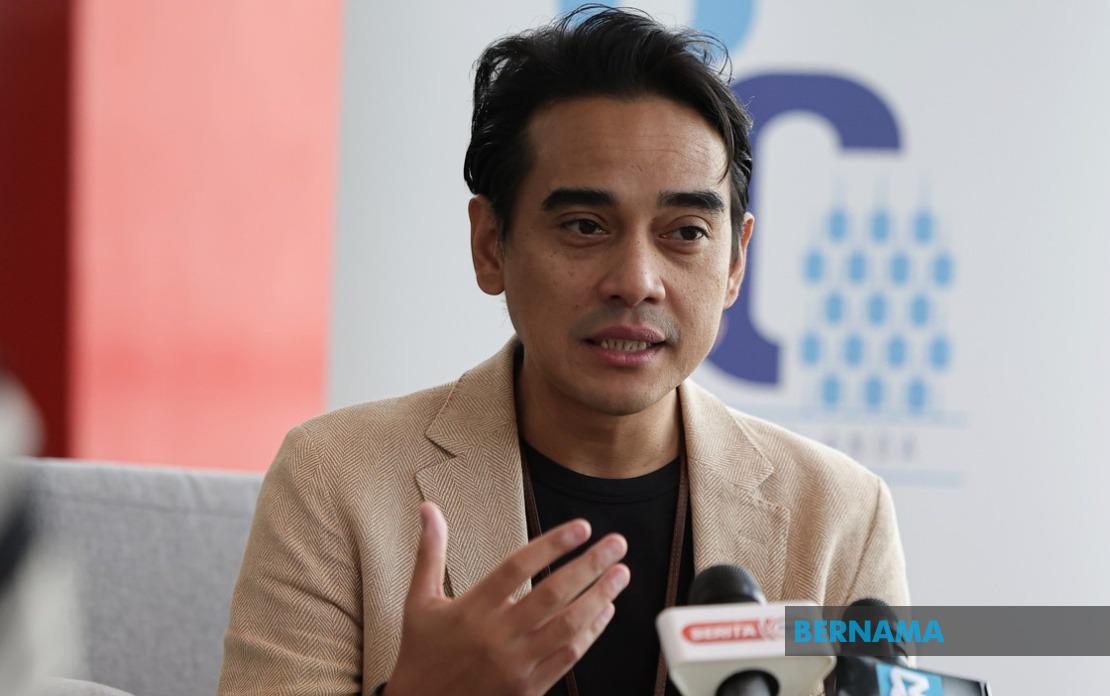
The Malaysian media industry faces a critical inflection point as artificial intelligence reshapes newsroom operations and reporting capabilities. Director-General of Broadcasting Ashwad Ismail has issued a pointed warning to journalism practitioners: those who fail to develop proficiency with AI tools risk being sidelined by competitors who master these technologies. Speaking during a recent broadcast, Ashwad articulated a vision where AI functions as an amplifier of journalistic talent rather than a replacement for human reporters, a distinction that carries profound implications for how newsrooms should strategically position themselves in the coming years.
Ashwad's message directly challenges the anxiety that pervades many newsrooms across Southeast Asia, where staff reductions and automation have become synonymous with technological transition. Rather than resign themselves to obsolescence, journalists should view AI as a complementary instrument that enhances their capacity to investigate, verify, and analyse information more rapidly and comprehensively. The core argument rests on a simple but powerful premise: the competitive advantage will flow to practitioners who understand how to leverage these tools effectively, not to the tools themselves. This reframing is particularly relevant for Malaysian journalists, who operate within a competitive regional media market where innovation increasingly determines market share and audience engagement.
The risk of technological displacement looms large across the media sector globally, and Malaysia is not insulated from these pressures. Ashwad identified adaptation to rapid technological change as one of his foremost concerns, noting that many media organisations have not developed adequate strategies for upskilling their workforce. The potential for job losses within the industry remains a legitimate concern, yet the Director-General suggests that strategic adoption of AI could actually create new roles and responsibilities rather than simply eliminating positions. Newsrooms that deploy AI thoughtfully might expand their investigative capacity, improve fact-checking protocols, and produce more personalised content for different audience segments—all developments that would theoretically demand human editorial judgment and creative direction.
However, Ashwad recognises that unfettered deployment of AI in newsrooms poses its own risks. The broadcasting chief stressed the necessity for clear operational guidelines that govern how media organisations integrate these technologies into their editorial processes. Such frameworks would ensure that AI enhancement serves journalistic integrity rather than compromising it through algorithmic bias, automated misinformation, or the erosion of the human editorial judgment that distinguishes serious journalism from mere content production. The establishment of responsible AI governance in newsrooms represents a crucial responsibility for media leaders across Malaysia and the broader ASEAN region, where regulatory frameworks for AI remain underdeveloped.
The guidelines Ashwad advocates for would function as guardrails ensuring that AI augments human capability rather than displacing it. Media organisations must retain absolute clarity about which editorial decisions require human oversight and which operational tasks can be safely automated. This might include using AI for preliminary data analysis, initial fact-verification, story structuring suggestions, or audience analytics, while keeping human journalists in charge of investigative decision-making, source protection, and ethical judgment calls. The implementation of such boundaries would require newsroom leaders to think carefully about their editorial values and which aspects of journalism are fundamentally irreplaceable by machines.
Beyond the technological dimension, Ashwad emphasised that rebuilding public trust in journalism demands a return to foundational professional practices. The media's credibility crisis, evident across Malaysia and globally, cannot be solved through technological innovation alone. Instead, newsrooms must invest in hyperlocal reporting that addresses the specific concerns and information needs of communities. This hyper-local approach creates direct accountability between journalists and the communities they serve, establishing the kind of personal connection that automated or distant reporting cannot provide. The human element—the capacity to listen, understand nuance, and demonstrate genuine concern for local issues—remains central to journalism's social function.
The strategic emphasis on community engagement represents a sophisticated response to the decline in media trust that has characterised recent years. Algorithms and data analytics can identify what stories matter to audiences, but only human journalists can adequately represent the complexity, dignity, and distinctiveness of local communities. For Malaysian newsrooms serving diverse populations across different regions with distinct concerns and languages, this localised approach holds particular significance. Media organisations that combine AI-driven efficiency gains with deepened community relationships may discover a competitive advantage that more distant, algorithm-driven competitors cannot replicate.
The broader context for these discussions extends to the upcoming HAWANA 2026 conference, which will convene media practitioners and ASEAN delegates to deliberate on regional journalism challenges and opportunities. Prime Minister Datuk Seri Anwar Ibrahim is scheduled to officiate the event at PICCA Convention Centre @ Arena Butterworth in Penang on June 20, underscoring the government's recognition that media evolution constitutes a matter of national importance. With over 1,200 expected attendees including media professionals from across Southeast Asia, the conference will likely become a venue for deeper exploration of how AI, community engagement, and professional standards can coexist within a sustainable journalism ecosystem.
The transition period ahead will undoubtedly prove challenging for media organisations that have not yet confronted the implications of AI integration. Journalists accustomed to traditional reporting workflows may find the introduction of new tools disorienting, particularly if they lack adequate training and support. Media leaders therefore bear a responsibility to approach this transformation as an extended professional development process rather than a sudden technological imposition. This might include workshops on AI literacy, experimentation periods where journalists can test these tools in lower-stakes environments, and candid conversations about which AI applications actually improve editorial outcomes versus which merely serve efficiency metrics.
For Malaysian readers and media consumers, the implications of this transition will manifest in the changing nature of news coverage and information availability. If newsrooms successfully integrate AI while maintaining human editorial oversight and community connection, the result could be more comprehensive, faster, and more localised news coverage. Conversely, if organisations deploy AI primarily to reduce costs while cutting editorial staff and local operations, audiences may experience a degradation in news quality and relevance. The outcome depends substantially on the choices that media leaders make in the coming months and years about how to balance technological capability with professional values and community service.
Ashwad's intervention in this debate carries weight given his position within Malaysia's media governance structure. His insistence that AI represents an opportunity rather than merely a threat may encourage constructive rather than defensive responses from news organisations. Yet translating this perspective into actual newsroom practices requires sustained commitment from media owners, editors, and journalists working in concert. The alternative—allowing anxiety about technological disruption to paralyse decision-making—would leave Malaysian journalism increasingly uncompetitive relative to digital-native news operations and regional competitors who have already embraced AI integration.
Ultimately, the question facing Malaysian journalism is not whether to adopt AI, but how to do so in ways that strengthen rather than undermine journalism's core mission of serving democratic discourse and community information needs. The path forward demands simultaneous progress on multiple fronts: developing AI literacy among journalists, establishing responsible governance frameworks, deepening community connections, and maintaining the human editorial judgment that transforms raw information into meaningful journalism. Media organisations that succeed in this multifaceted transition may discover that AI, properly integrated, enhances rather than diminishes journalism's relevance and value in society.


%22%2F%3E%3C%2Fpattern%3E%3C%2Fdefs%3E%3Crect%20width%3D%22100%25%22%20height%3D%22100%25%22%20fill%3D%22url(%23ph2hy9vg)%22%2F%3E%3Crect%20width%3D%22100%25%22%20height%3D%22100%25%22%20fill%3D%22url(%23ph2hy9vp)%22%2F%3E%3Ctext%20x%3D%2250%25%22%20y%3D%2250%25%22%20text-anchor%3D%22middle%22%20dominant-baseline%3D%22central%22%20fill%3D%22rgba(255%2C255%2C255%2C0.95)%22%20font-family%3D%22Georgia%2C%20'Times%20New%20Roman'%2C%20serif%22%20font-weight%3D%22700%22%20font-size%3D%22272%22%20letter-spacing%3D%22-0.02em%22%3EAnwar%3C%2Ftext%3E%3C%2Fsvg%3E)