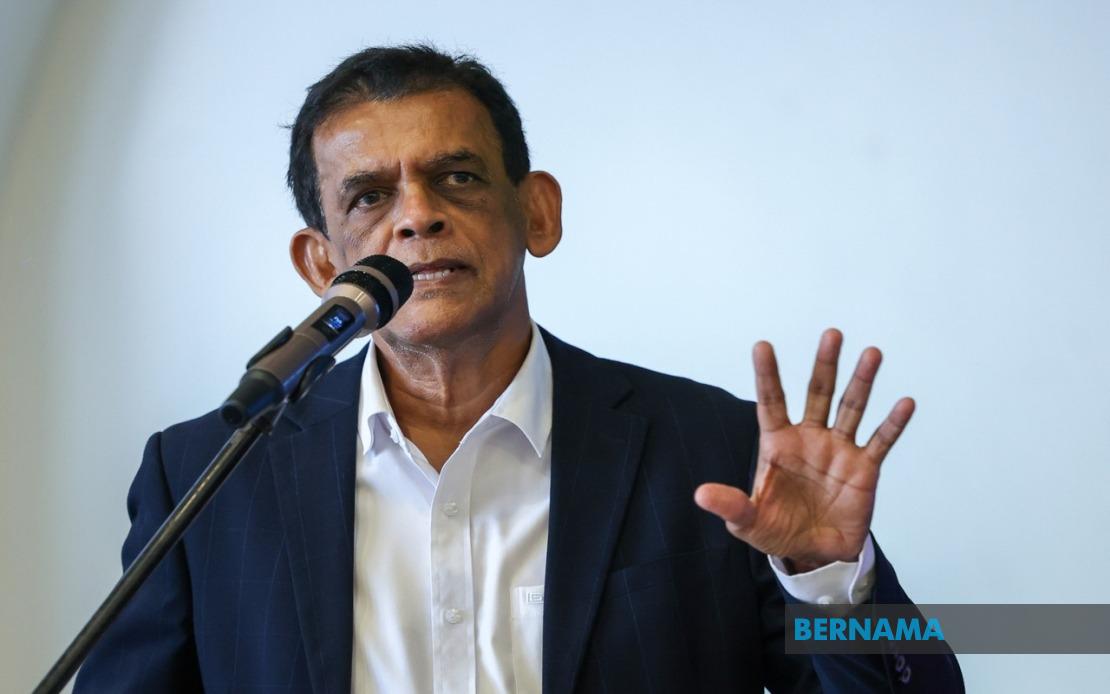
The Malaysian Artistes' Association (Karyawan) is preparing a comprehensive set of policy proposals to present to the Prime Minister in the aftermath of a major industry convention scheduled for Sunday, June 21, at Saloma Restaurant in Kuala Lumpur. The memorandum will emerge from discussions anticipated to involve more than 200 music industry participants and performing artistes, who will convene to address systemic challenges that have plagued Malaysia's music sector. According to Karyawan president Datuk Freddie Fernandez, the resolutions represent a culmination of wide-ranging consultation with stakeholders spanning the creative spectrum, from established practitioners to emerging talent navigating an increasingly complex professional landscape.
Freddie underscored the urgency of the initiative by reflecting on troubling patterns he has observed throughout his two decades of engagement with the industry. He characterised the current state as requiring fundamental rejuvenation, with particular emphasis on identifying structural deficiencies that hinder sustainable growth. The convention itself serves a dual purpose: it functions both as a strategic planning exercise and as a democratic forum where practitioners can articulate grievances, pose questions about ambiguous policies, and seek clarity on contentious matters that continue to create uncertainty within professional circles. This inclusive approach signals Karyawan's intention to ground its advocacy in the lived experiences of its constituency rather than relying solely on institutional perspectives.
The forthcoming memorandum is expected to materialise roughly seven days following the convention and will encompass multiple dimensions of industry concern. Primary among these are mechanisms for industry development, the integration and ethical deployment of artificial intelligence technologies, revitalisation of royalty distribution frameworks, enhanced financial and structural support for artistes, modernisation of music education curricula, and the creation of transparent career progression pathways for professionals seeking sustainable livelihoods in the sector. This breadth of focus indicates that Karyawan recognises the interconnectedness of Malaysia's music ecosystem, rejecting siloed approaches in favour of holistic reform.
The royalty question represents perhaps the most pressing grievance. Freddie drew attention to a deeply troubling disparity revealed through analysis of industry financial records spanning 2002 to 2017. During this 15-year window, record companies collected approximately RM700 million in total revenues, yet disbursed merely RM20 million to artistes' representative bodies. This stark 35-to-1 ratio illustrates a fundamental imbalance in value distribution that has long frustrated creators and performers. The persistence of this issue across two decades demonstrates the inadequacy of existing mechanisms for ensuring fair compensation reaches those whose creative labour generates the underlying commercial value. For Malaysian musicians competing in a digital era where traditional revenue streams have fragmented, addressing royalty structures has become existential to maintaining a viable professional class.
Artificial intelligence presents an emerging challenge requiring immediate attention before industry practices become calcified around potentially exploitative applications. Freddie acknowledged that AI deployment demands thorough examination leading to the establishment of protective guidelines that simultaneously permit technological innovation while safeguarding the economic interests and creative autonomy of music practitioners. This balancing act proves particularly delicate in a regional context where enforcement capacity may be limited and where international platforms already operating within Malaysia's digital space may resist localized restrictions. The convention offers an opportunity to develop consensus positions that Karyawan can advocate through formal channels, positioning Malaysian musicians' concerns within broader Southeast Asian labour discussions.
The recruitment of distinguished panellists reflects Karyawan's commitment to grounding discussions in both grassroots experience and intellectual rigour. Music activist Joe Lee brings community-level advocacy perspective, composer Dr Moja Salim contributes academic and creative expertise, while Live Nation managing director Para Rajagopal represents the perspective of major international promoters operating within the Malaysian market. This configuration promises substantive debate rather than ceremonial proceedings, creating space for productive tension between commercial operators and artist advocates.
Freddie explicitly signalled openness to legislative interventions, indicating that Karyawan may recommend formal regulatory frameworks alongside enhanced government support mechanisms for artist development. This represents a significant stance in an era where industry representatives often default to market-based arguments against regulation. The recognition that current voluntary frameworks have demonstrably failed to protect musicians' interests suggests that Karyawan's leadership has concluded that legislative approaches merit serious consideration as policy tools.
For Malaysian readers and creative practitioners, these developments carry substantial implications. The music industry contributes measurably to Malaysia's cultural soft power and creative economy, yet persistent structural inequities have caused brain drain as talented musicians migrate to more remunerative jurisdictions. Addressing royalty distribution, creating clearer career pathways, and developing AI governance frameworks could help retain domestic talent while potentially attracting regional musicians to Malaysia as a creative hub. Additionally, the emphasis on music education reform addresses a critical pipeline issue, as inadequate training infrastructure limits the emergence of technically proficient and entrepreneurially sophisticated new cohorts.
The timing of this initiative within broader Southeast Asian trends is notable. Regional governments increasingly recognise creative industries as legitimate economic drivers, yet Malaysia has moved more slowly than competitors like Thailand and Indonesia in implementing supportive infrastructure. Karyawan's advocacy, if successful, could position Malaysia more competitively within regional creative networks while demonstrating that business case arguments supporting artists' interests align with national economic development objectives.
The convention commences at 10 a.m. on Sunday, June 21, with formal submission of resolutions to the Prime Minister anticipated within approximately two weeks thereafter. The success of this effort will depend partly on bureaucratic receptiveness, but equally on Karyawan's ability to frame musician welfare as integral to Malaysia's broader national interests rather than as a sectional plea from one professional community. By grounding advocacy in concrete data regarding royalty disparities, international competitiveness concerns, and documented industry trends, Karyawan enhances prospects for meaningful policy engagement.

%22%2F%3E%3C%2Fpattern%3E%3C%2Fdefs%3E%3Crect%20width%3D%22100%25%22%20height%3D%22100%25%22%20fill%3D%22url(%23ph2hy9vg)%22%2F%3E%3Crect%20width%3D%22100%25%22%20height%3D%22100%25%22%20fill%3D%22url(%23ph2hy9vp)%22%2F%3E%3Ctext%20x%3D%2250%25%22%20y%3D%2250%25%22%20text-anchor%3D%22middle%22%20dominant-baseline%3D%22central%22%20fill%3D%22rgba(255%2C255%2C255%2C0.95)%22%20font-family%3D%22Georgia%2C%20'Times%20New%20Roman'%2C%20serif%22%20font-weight%3D%22700%22%20font-size%3D%22272%22%20letter-spacing%3D%22-0.02em%22%3EAnwar%3C%2Ftext%3E%3C%2Fsvg%3E)