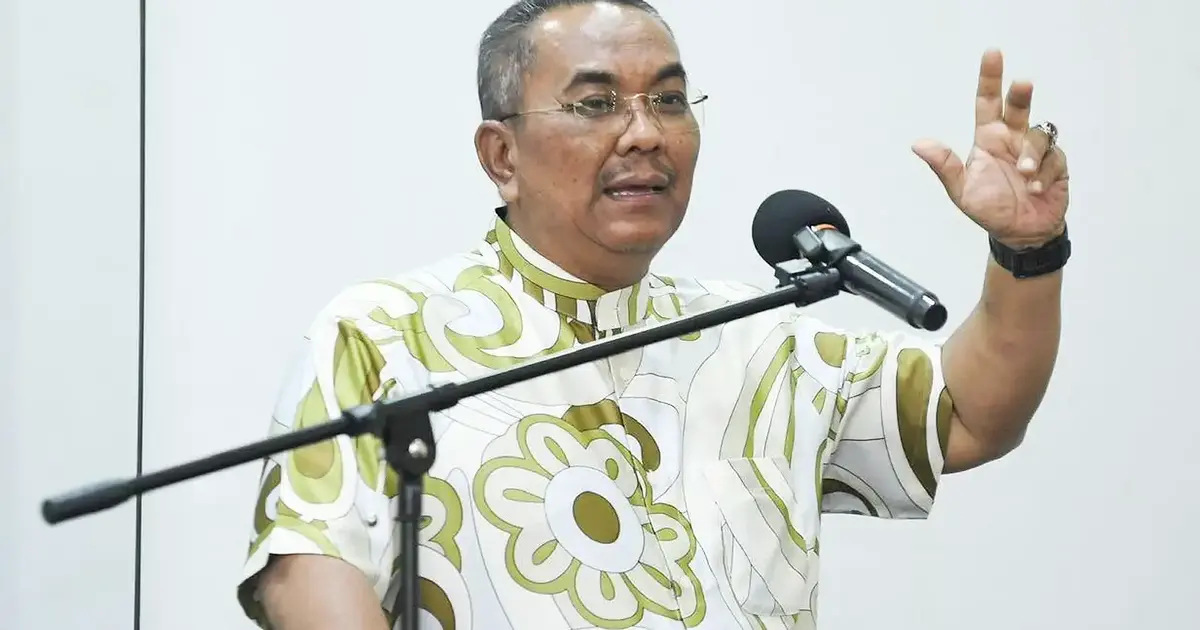
The political partnership underpinning Perikatan Nasional in Kedah faces mounting strain as tensions between coalition partners PAS and Bersatu threaten to derail what might otherwise be a clean electoral victory for Menteri Besar Muhammad Sanusi Md Nor. Political analyst Awang Azman Pawi has raised concerns that the internal friction between the two parties could prove costly during campaign season, potentially fragmenting the opposition vote and creating openings for rival factions.
The unease within PN's Kedah machinery reflects broader ideological and strategic differences that have simmered beneath the surface of the partnership. While both parties share anti-establishment credentials and have benefited from their alignment, their grassroots operations and electoral interests do not always align seamlessly. These friction points have occasionally surfaced publicly, though party leadership typically attempts to downplay such disputes to maintain coalition cohesion. The looming electoral contest has apparently intensified these underlying tensions, as both parties jockey for positioning and candidate selection in key battlegrounds.
Awang Azman's analysis suggests that voter confusion stemming from mixed messaging or perceived conflict between PN components could significantly diminish the coalition's vote share in certain constituencies. Malaysia's electoral landscape has demonstrated that swing voters and undecided electorates are particularly sensitive to perceptions of internal party discord. When voters perceive division within a coalition, they may either abstain from voting or cast ballots for alternatives they view as more unified and coherent. This dynamic becomes especially consequential in tight three-way or four-way contests where seat distribution could hinge on relatively small margins.
The potential loss of Bersatu's electoral machinery in some constituencies represents a tangible threat to PN's objectives. Bersatu, despite its relatively recent formation, has developed organised grassroots networks in certain areas, and its withdrawal of active campaigning support would create vacuums that PAS alone might struggle to fill. Conversely, PAS maintains deep institutional roots in Kedah given its historical presence in the state, but focusing exclusively on PAS machinery could alienate Bersatu-sympathetic voters or create the impression of an unequal partnership where one party dominates. This delicate balance has become increasingly difficult to maintain under current pressures.
The Kedah electoral situation carries implications extending well beyond a single state contest. As one of PN's strongholds, results there could set the tone for coalition performance across other states. A less-than-dominant showing in Kedah might signal that the coalition's structural weaknesses are more serious than party strategists have publicly acknowledged. Conversely, PN successfully navigating these internal tensions and achieving strong results would validate its claims to represent a viable governing alternative, potentially strengthening its hand in subsequent negotiations with other political actors.
Muhammad Sanusi's political standing as Menteri Besar also intersects with these coalition dynamics in complex ways. A comprehensive electoral mandate would solidify his position and buttress his authority within both PAS and the broader PN framework. However, if results fall short of expectations due to internal coalition friction, questions may arise regarding his leadership capacity and ability to manage complex political partnerships. Such scrutiny could have consequences for his trajectory within state and national politics, particularly as various factions within PAS eye future leadership positions.
The timing of this analysis reflects a broader pattern whereby Malaysian political contests increasingly hinge not on competition between clearly defined ideological poles, but rather on the management of internal coalition dynamics. Modern Malaysian electoral competition occurs as much within coalitions as between them. PN's capacity to present a unified front while accommodating the distinct interests and organisational needs of member parties has emerged as perhaps the central operational challenge facing the coalition. Failure to manage these tensions effectively across multiple elections could gradually erode PN's credibility and electoral performance.
From a Southeast Asian perspective, Malaysia's coalition politics demonstrates how multi-party arrangements face inherent stability challenges that rival parties can potentially exploit. Countries throughout the region managing similar coalition arrangements observe these dynamics closely, as the Malaysian experience offers instructive lessons regarding the sustainability of multi-party political partnerships. The Kedah situation thus represents a case study in coalition governance under electoral pressure.
Observers within Kedah political circles acknowledge that while public statements from both PAS and Bersatu leadership emphasise unity and commitment to PN's agenda, private discussions reflect genuine concerns about resource allocation, candidate selection, and post-election power distribution. These conversations rarely receive comprehensive media coverage, yet they profoundly shape the actual electoral campaign and ground-level political operations. Awang Azman's intervention in highlighting these tensions represents an attempt to bring these usually-obscured dynamics into public discourse where voters and analysts can properly evaluate coalition viability.
Moving forward, PN leadership faces pressure to demonstrate that the PAS-Bersatu relationship can withstand electoral competition without fragmenting. Achieving this requires sophisticated negotiation regarding campaign messaging, candidate placement, and clear understanding regarding post-election arrangements. Should these negotiations fail or prove inadequate, the analyst's warnings regarding a diminished electoral outcome may prove prophetic, fundamentally reshaping assessments of PN's capacity to function as an effective governing coalition.

%22%2F%3E%3C%2Fpattern%3E%3C%2Fdefs%3E%3Crect%20width%3D%22100%25%22%20height%3D%22100%25%22%20fill%3D%22url(%23ph2hy9vg)%22%2F%3E%3Crect%20width%3D%22100%25%22%20height%3D%22100%25%22%20fill%3D%22url(%23ph2hy9vp)%22%2F%3E%3Ctext%20x%3D%2250%25%22%20y%3D%2250%25%22%20text-anchor%3D%22middle%22%20dominant-baseline%3D%22central%22%20fill%3D%22rgba(255%2C255%2C255%2C0.95)%22%20font-family%3D%22Georgia%2C%20'Times%20New%20Roman'%2C%20serif%22%20font-weight%3D%22700%22%20font-size%3D%22272%22%20letter-spacing%3D%22-0.02em%22%3EAnwar%3C%2Ftext%3E%3C%2Fsvg%3E)