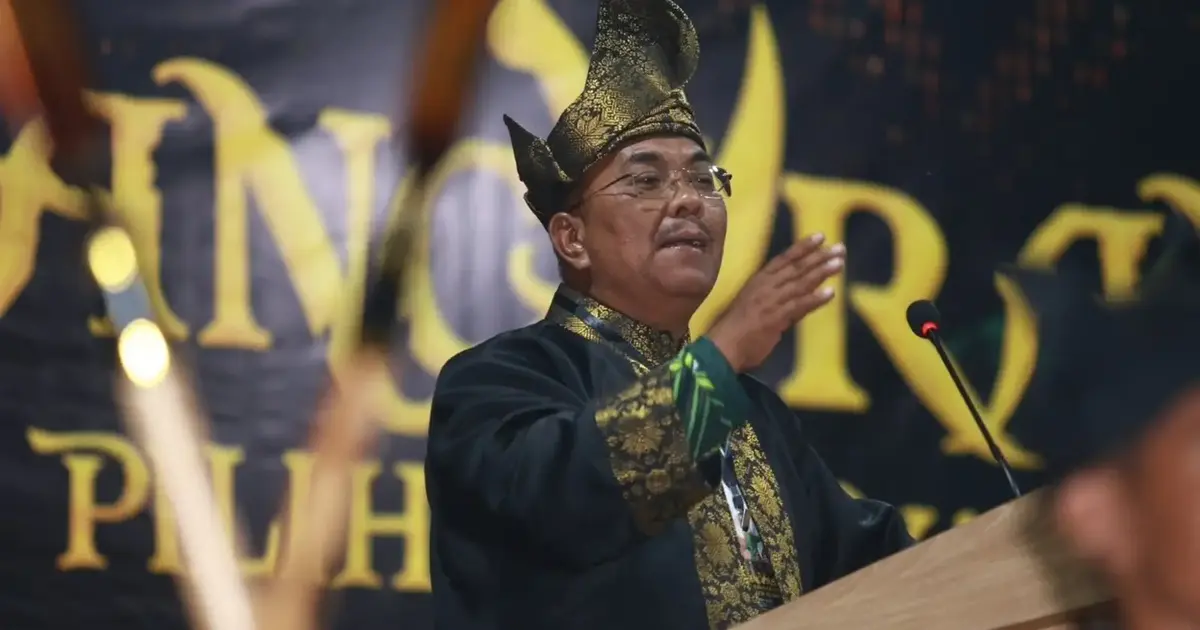
Menteri Besar Muhammad Sanusi Md Nor's ambitions for a decisive electoral mandate in Kedah face considerable scepticism from opposition politicians, who dispute claims that the PAS-PN coalition enjoys insurmountable momentum heading into the next state election. Two prominent Pakatan Harapan representatives have challenged the narrative of an inevitable Sanusi victory, instead pointing to the primacy of administrative performance and the volatility of electoral sentiment in determining electoral outcomes.
PKR's Bau Wong Bau Ek articulated a position centred on voter rationality and pragmatism. Rather than succumbing to broader political waves or momentum-based narratives, the lawmaker contended that constituents fundamentally assess governments through the lens of tangible delivery and results. This perspective reflects a broader PKR strategy of framing electoral contests not as predetermined outcomes driven by sentiment or coalition dynamics, but as contests determined by a state government's capacity to translate policy commitments into concrete improvements in citizens' lives. The emphasis on performance-based evaluation suggests opposition strategists believe the Sanusi administration remains vulnerable on governance grounds, despite apparent organisational coherence within the ruling coalition.
DAP's Teh Swee Leong took a complementary but analytically distinct approach by directly questioning the depth and durability of the so-called PAS-PN electoral wave. Rather than accepting the premise that the ruling coalition commands an overwhelming groundswell of public sentiment, Teh suggested that external depictions of PAS-PN political strength may overstate actual popular support. This framing attempts to puncture what opposition figures perceive as an artificially inflated narrative of inevitable victory, one that may have calcified in media coverage and political commentary without genuine corresponding support among voters. The distinction between perceived momentum and actual electoral readiness represents a fundamental contestation over Kedah's political trajectory.
The disagreement between Sanusi's coalition and opposition voices reflects deeper tensions within Malaysia's regional political landscape, where state-level contests increasingly diverge from national trends. Kedah has historically swung between different coalitions, and the state's electoral volatility suggests that neither stability nor momentum can be assumed in advance. The PAS-PN administration's hold on Kedah, while currently secure, exists within a broader context of shifting voter preferences and changing demographic calculations that resist simple linear projections.
For PKR and DAP, challenging the notion of Sanusi's inevitable sweep serves multiple strategic purposes. It sustains opposition morale by delegitimising claims of predetermined outcomes, allowing opposition parties to project a narrative of competitive electoral possibility. This approach also implicitly invites voters to evaluate the Sanusi government's record critically rather than accepting coalition unity as sufficient justification for continued power. In Malaysian politics, where perception often influences voter calculation, the opposition attempt to reframe the electoral conversation around performance metrics rather than momentum reflects tactical thinking aimed at reclaiming agency within the electoral narrative.
The Kedah political arena has witnessed considerable fluidity in recent years, with the state having experienced multiple changes in leadership and coalition alignment. This historical record of volatility provides empirical foundation for opposition claims that no electoral outcome can be considered settled before campaigns formally commence. The state's economic conditions, infrastructure development, and social cohesion record become relevant benchmarks against which voters will ostensibly judge the current administration's worthiness for another term.
Sanusi himself has emerged as a nationally prominent PAS figure, raising his profile beyond typical state leadership parameters. His political trajectory and statements regarding national governance have attracted attention from political observers tracking potential shifts within PAS and broader Islamist political movements in Malaysia. However, national prominence does not automatically translate into state-level electoral supremacy, a reality opposition figures appear confident enough to emphasise.
The Malaysian electoral landscape has consistently demonstrated that coalition governments cannot take voter support for granted, particularly at state level where local grievances and administrative performance carry disproportionate weight. Opposition parties in Kedah are attempting to position themselves as custodians of voter interests and critical evaluators of government performance, roles that resonate when public dissatisfaction emerges regarding service delivery, economic opportunity, or infrastructure quality.
For regional observers and Malaysian political analysts, the tension between ruling coalition confidence and opposition scepticism in Kedah represents a microcosm of broader democratic contestation. The disagreement fundamentally concerns what determines electoral outcomes: structural factors and momentum, or voter assessment of actual governance performance. This epistemological divide shapes how different political actors understand and prepare for electoral competition, influencing campaign strategies, resource allocation, and messaging priorities across the political spectrum in this consequential state.


%22%2F%3E%3C%2Fpattern%3E%3C%2Fdefs%3E%3Crect%20width%3D%22100%25%22%20height%3D%22100%25%22%20fill%3D%22url(%23ph2hy9vg)%22%2F%3E%3Crect%20width%3D%22100%25%22%20height%3D%22100%25%22%20fill%3D%22url(%23ph2hy9vp)%22%2F%3E%3Ctext%20x%3D%2250%25%22%20y%3D%2250%25%22%20text-anchor%3D%22middle%22%20dominant-baseline%3D%22central%22%20fill%3D%22rgba(255%2C255%2C255%2C0.95)%22%20font-family%3D%22Georgia%2C%20'Times%20New%20Roman'%2C%20serif%22%20font-weight%3D%22700%22%20font-size%3D%22272%22%20letter-spacing%3D%22-0.02em%22%3EAnwar%3C%2Ftext%3E%3C%2Fsvg%3E)