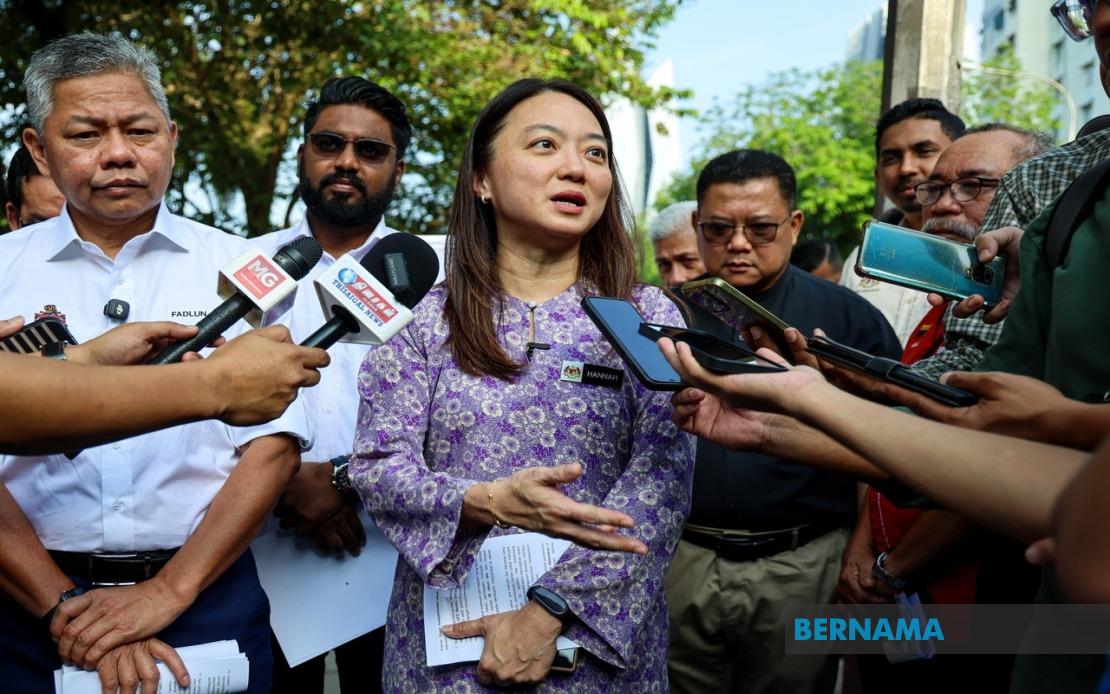
All local authorities across Malaysia must adopt a more proactive stance towards maintaining and repairing public infrastructure, with no excuses for allowing cleanliness and safety standards to deteriorate, according to Minister in the Prime Minister's Department (Federal Territories) Hannah Yeoh. Her remarks came as concerns have mounted over damaged public amenities in Putrajaya, including broken lifts and escalators that drew widespread criticism on social media platforms in recent weeks.
Speaking after an inspection of a hawker facilities upgrade initiative near the Urban Transformation Centre (UTC) Sentul in Kuala Lumpur, Hannah stressed that fundamental maintenance and regular upkeep must be continuous operations across all municipalities and city halls. She acknowledged that while significant infrastructure projects may demand substantial financial allocations, the responsibility to maintain existing public utilities cannot be postponed or deprioritised. The expectation is clear: local authorities should treat routine maintenance as an essential function rather than an afterthought.
Putrajaya, as a major tourism destination and the nation's administrative centre, faces particular scrutiny over its maintenance standards. Hannah noted that Putrajaya Corporation's leadership has begun executing necessary repair works after complaints surfaced online, but she cautioned that relying on viral social media exposure to trigger maintenance action represents an inadequate governance model. Instead, she called for all municipal bodies to conduct regular site inspections and monitoring programmes that would identify and address issues before they escalate into public controversies.
The minister's comments reflect growing frustration with the reactive rather than preventive approach that some local authorities have adopted. By waiting for complaints to circulate on social media before mobilising repair teams, municipal bodies essentially allow their public image to suffer and potentially compromise visitor experiences in key tourism zones. For a destination like Putrajaya that attracts both domestic and international tourists, such lapses can have broader implications for Malaysia's reputation for quality infrastructure and cleanliness.
Hannah's ministry has already engaged with Putrajaya Corporation management to expedite remedial measures, signalling direct intervention at the ministerial level. This escalation underscores the seriousness with which government leadership now views maintenance failures. The involvement of the Prime Minister's Department itself sends a message that public facility maintenance is no longer a matter local authorities can handle casually or defer indefinitely.
Beyond operational matters, Hannah also addressed the broader information ecosystem, cautioning social media users to approach viral complaints with greater critical thinking. She observed that videos and posts circulating online frequently present incomplete or one-sided narratives, potentially distorting public perception of actual conditions. Her point carries weight in an era where unverified claims can accumulate massive engagement within hours, sometimes triggering disproportionate public concern based on limited evidence.
Yet Hannah's dual messaging—simultaneously defending against what she characterised as sensationalised social media reporting while acknowledging legitimate maintenance failures—reveals a tension in modern public administration. Even if individual viral videos sometimes lack complete context, the underlying pattern of complaints about public facility deterioration suggests systemic issues requiring attention. Local authorities cannot simply dismiss all criticism as misinformation or incompleteness; they must distinguish between exaggerated concerns and genuine infrastructure problems.
For Malaysian municipalities and city halls, the implicit mandate is now clearer. Regular maintenance cycles, preventive inspections, and adequate budgeting for routine repairs must become operational norms rather than sporadic responses to crises. This shift towards proactive management would benefit not only tourism-dependent areas but all communities served by local authorities. Public facilities—from lifts and escalators to public toilets and walkways—directly affect residents' daily experiences and quality of life.
The appointment of responsibility also extends to elected officials and municipal leaders, who must champion consistent maintenance programmes and resist the temptation to divert resources from routine upkeep towards more visible capital projects. Political credit may seem easier to claim from inaugurating new facilities than from ensuring existing ones function properly, but public satisfaction ultimately depends more on reliable, well-maintained infrastructure than on constant expansion.
Looking forward, the effectiveness of Hannah's directive will depend on how comprehensively local authorities embed maintenance into their organisational cultures and budgeting processes. Some municipalities may interpret her call as a temporary push requiring compliance only until public attention fades. Others may recognise it as a fundamental shift in expectations, warranting structural changes to maintenance systems, staffing, and financial planning. The difference between these responses will determine whether complaints about deteriorating public facilities become less frequent or merely cycle through new viral moments.

%22%2F%3E%3C%2Fpattern%3E%3C%2Fdefs%3E%3Crect%20width%3D%22100%25%22%20height%3D%22100%25%22%20fill%3D%22url(%23ph2hy9vg)%22%2F%3E%3Crect%20width%3D%22100%25%22%20height%3D%22100%25%22%20fill%3D%22url(%23ph2hy9vp)%22%2F%3E%3Ctext%20x%3D%2250%25%22%20y%3D%2250%25%22%20text-anchor%3D%22middle%22%20dominant-baseline%3D%22central%22%20fill%3D%22rgba(255%2C255%2C255%2C0.95)%22%20font-family%3D%22Georgia%2C%20'Times%20New%20Roman'%2C%20serif%22%20font-weight%3D%22700%22%20font-size%3D%22272%22%20letter-spacing%3D%22-0.02em%22%3EAnwar%3C%2Ftext%3E%3C%2Fsvg%3E)