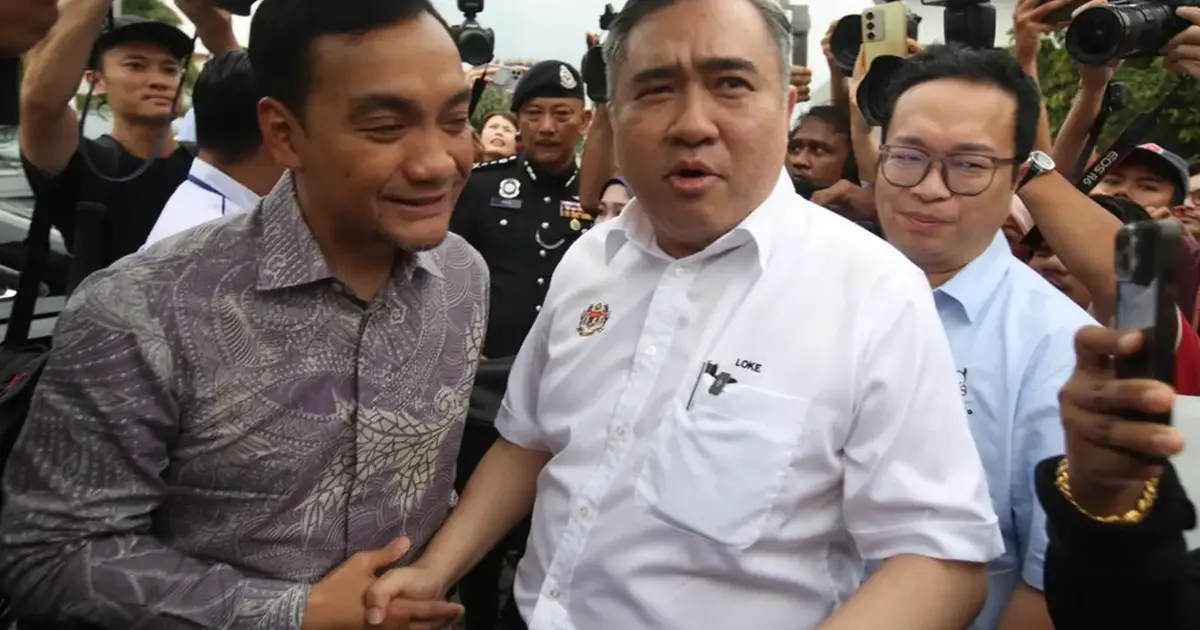
Transport Minister Anthony Loke and Johor Menteri Besar Onn Hafiz managed to maintain a facade of civility at their first public meeting following a recent disagreement that played out across social media platforms, though the encounter revealed the delicate balance both leaders must strike in Malaysia's complex political landscape.
The two political figures, representing different coalition camps, demonstrated the importance of preserving institutional courtesy even when personal or political differences surface. Their ability to interact professionally despite prior friction suggests an understanding that excessive public hostility could undermine their respective responsibilities and damage their standing with constituents who expect government leaders to cooperate on matters of mutual interest.
Onn Hafiz, who holds the influential position of Menteri Besar for Johor, made a subtle but pointed reference during his remarks at the event hosted by the transport ministry. He alluded to the inconvenience caused by the last-minute invitation, suggesting he had been forced to reorganise his already-scheduled commitments. This comment, while maintaining surface-level courtesy, served as a gentle reminder of any perceived lack of coordination or respect for his time, reflecting the underlying friction between the two leaders.
The context of their interaction extends beyond personal animosity to encompass broader political dynamics within Malaysia's ruling coalition. DAP, the party led by Loke, operates within the federal government while navigating complex relationships with component parties and state-level administrations. Johor, under Onn Hafiz's leadership, has become increasingly significant in national politics, and any friction between federal transport policies and state-level implementation can create operational challenges affecting ordinary Malaysians.
Such public meetings between high-ranking officials carry symbolic weight in Malaysian politics. The decision by both men to appear at the same event, engage with each other, and maintain basic courtesy sends important signals to their respective political bases and the general public. It demonstrates that disagreements, even when aired publicly online, need not preclude functional working relationships where governance is concerned.
The nature of their previous online disagreement likely stemmed from differing perspectives on policy matters affecting Johor, transport infrastructure, or broader coalition dynamics. Digital platforms have become increasingly important spaces where Malaysian politicians stake out positions and test public sentiment. However, as this meeting illustrates, wise leaders understand that online disputes should not escalate into personal feuds that compromise their capacity to serve the public interest.
Onn Hafiz's reference to rearranging his schedule was calculated diplomacy. By raising the logistical inconvenience without displaying anger or hostility, he registered his complaint while maintaining the veneer of professionalism. For Loke's part, accepting Onn Hafiz's presence and engagement at the transport ministry event—presumably without defensive counter-remarks—suggested a willingness to move past the disagreement and focus on constructive engagement.
The episode reveals how Malaysian politics operates across multiple registers simultaneously. Leaders must satisfy their core supporters who may view rivals with suspicion, while simultaneously demonstrating that they remain capable of reasonable discourse and productive collaboration. This balance is particularly important in coalition governments where different parties and state administrations must coordinate on infrastructure, economic development, and service delivery.
For Malaysian readers and regional observers, this interaction underscores an important reality: the health of Malaysian democracy depends not on the absence of disagreements among leaders, but on their willingness to conduct those disagreements through appropriate channels and still function effectively when governance demands it. The transport ministry event itself likely involved matters of national and state importance, making the professional engagement between Loke and Onn Hafiz more than just a courtesy.
Looking ahead, the relationship between the transport minister and the Johor Menteri Besar will continue to be watched, particularly if transport infrastructure projects involving federal and state coordination require their collaboration. The foundation laid by their cordial conduct at this meeting—despite reservations on both sides—creates space for productive engagement on future matters. How they manage such cooperation will provide insights into the broader functioning of Malaysia's coalition government structure.
The incident also reflects the reality that in Malaysia's political ecosystem, yesterday's public disagreement need not determine tomorrow's working relationship. Both Loke and Onn Hafiz, as experienced political operators, understand that their personal or party-political rivalries must be balanced against their responsibilities to their constituents and the nation. Their ability to achieve this balance, however imperfectly, remains crucial to Malaysia's political stability and effective governance.

%22%2F%3E%3C%2Fpattern%3E%3C%2Fdefs%3E%3Crect%20width%3D%22100%25%22%20height%3D%22100%25%22%20fill%3D%22url(%23ph2hy9vg)%22%2F%3E%3Crect%20width%3D%22100%25%22%20height%3D%22100%25%22%20fill%3D%22url(%23ph2hy9vp)%22%2F%3E%3Ctext%20x%3D%2250%25%22%20y%3D%2250%25%22%20text-anchor%3D%22middle%22%20dominant-baseline%3D%22central%22%20fill%3D%22rgba(255%2C255%2C255%2C0.95)%22%20font-family%3D%22Georgia%2C%20'Times%20New%20Roman'%2C%20serif%22%20font-weight%3D%22700%22%20font-size%3D%22272%22%20letter-spacing%3D%22-0.02em%22%3EAnwar%3C%2Ftext%3E%3C%2Fsvg%3E)