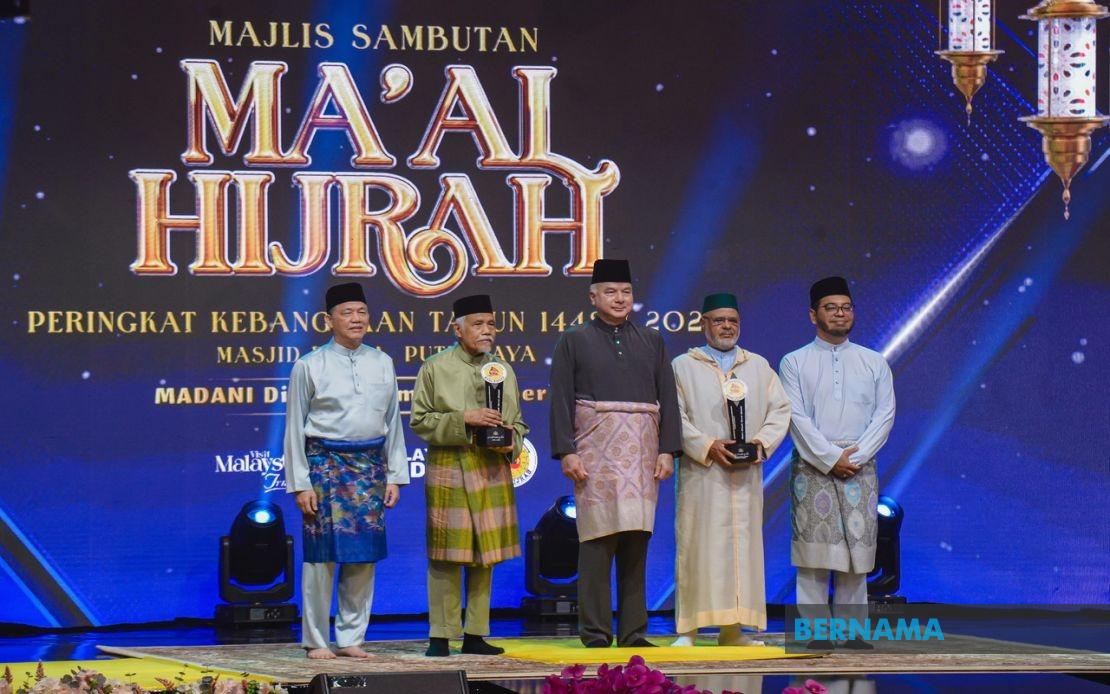
Malaysia's nationwide Maal Hijrah 1448H celebrations on June 17 underscored the spiritual significance of hijrah—the Islamic concept of migration and renewal—as a framework for national transformation and communal solidarity. The festivities, which brought together thousands of participants across multiple venues, centred on the notion that hijrah extends beyond historical migration to encompass positive personal and societal change. This contemporary interpretation resonates particularly in Southeast Asia's multi-faith context, where Islamic renewal movements emphasise ethical governance and inclusive community development as expressions of Islamic values rather than sectarian identity.
The nationwide observance carried the thematic banner "MADANI Dihayati, Ummah Diberkati", translating the Islamic new year into a platform for discussing governance quality and collective well-being. Senior government officials, including Deputy Prime Minister Datuk Seri Fadillah Yusof and Minister in the Prime Minister's Department (Religious Affairs) Dr Zulkifli Hasan, participated prominently in the main ceremony in Kuala Lumpur, which drew approximately 5,000 attendees. Their participation signalled official recognition that religious observances in Malaysia increasingly function as occasions for reaffirming government commitments to welfare, integrity and interfaith harmony. This alignment between religious celebration and governance messaging reflects Malaysia's ongoing effort to position Islamic leadership as compatible with modern development frameworks.
The ceremonial award presentations constituted the celebration's focal point, recognising individuals who embodied hijrah principles through sustained public service and scholarly contribution. Sultan Nazrin, also Sultan of Perak, conferred the National Tokoh Maal Hijrah Award upon Prof Emeritus Datuk Dr Osman Bakar, rector of the International Islamic University Malaysia (IIUM). Bakar's recognition highlighted the institutional role universities play in advancing Islamic scholarship that engages contemporary challenges. His award underscores Malaysia's aspiration to position itself as a centre for progressive Islamic thought within the Muslim world, a distinction increasingly important for attracting regional students and researchers.
The international dimension of the awards reflected broader Muslim solidarity and intellectual exchange networks. Moroccan Islamic jurisprudence scholar Dr Ahmad Al-Raysuni received the International Tokoh Maal Hijrah Award, acknowledging Morocco's respected position in Islamic legal tradition and signalling Malaysia's openness to learning from North African scholarly traditions. This cross-continental recognition suggests that Southeast Asia's Islamic communities are situating themselves within pan-Muslim intellectual circles, elevating their contributions to transnational Islamic discourse rather than viewing religion as primarily a national or regional concern.
Community-level ceremonies complemented the capital's main event, demonstrating how Maal Hijrah observance distributes across Malaysia's federal structure. In Sabah, approximately 1,000 participants gathered for festivities where Chief Minister Datuk Seri Hajiji Noor and organising committee chairman Datuk Dr Mohd Arifin Mohd Arif, the state's Local Government and Housing Minister, provided official leadership. Sabah's separate celebration reflected the state's substantial Muslim population and the devolved nature of Islamic administration within Malaysia's constitutional framework, where religious affairs remain partly under state jurisdiction. The Sabah gathering demonstrated how a single religious occasion accommodates multiple ceremonial sites without diminishing national unity messaging.
State and local award categories recognised individuals who had contributed through professional public service or community activism. Community activist Datuk Ag Sharin Alimin, formerly director of Sabah's Islamic Religious Affairs Department, received the male category Tokoh Maal Hijrah Award. His recognition bridged governmental religious administration and grassroots activism, suggesting that hijrah principles encompass both formal institutional work and civic engagement. Datuk Masnah Matsalleh, a former deputy state secretary, received the female category award, establishing that women occupy recognised leadership positions within Malaysia's administrative and communal hierarchies, reinforcing the inclusive character of the celebration.
Religious education, particularly Quranic scholarship, featured prominently as an embodiment of hijrah values. Ahmad Samsuri presented the Tokoh Maal Hijrah Award to 95-year-old Quran teacher Jusoh @ Muda Ismail, who carried the accumulated legacy of his adoptive father and mentor, the late Tuan Guru Haji Mat Lintar, a renowned Quranic scholar. This intergenerational transmission of Islamic knowledge, spanning nearly a century, illustrates how hijrah spirituality perpetuates through dedicated teaching relationships and scholarly lineages. Jusoh's recognition at 95 years old affirmed elder wisdom and lifelong commitment to religious education as expressions of Islamic virtue, countering stereotypes that position religious leadership exclusively with younger, more formally credentialed individuals.
The spiritual programming throughout the celebrations—Quranic recitations, religious lectures, and award ceremonies—constructed hijrah as an active, ongoing process rather than a historical event to commemorate passively. This framework invites contemporary Malaysians to interpret their own choices and careers as hijrah, whether in professional advancement, ethical refinement, or community contribution. For a diverse nation where Muslims constitute a significant but not exclusive population, portraying hijrah as a universal principle of positive transformation allows Islamic observances to communicate values of renewal and progress that resonate across communal boundaries.
The emphasis on leadership quality and civilisational building positioned Maal Hijrah celebrations within Malaysia's broader national development conversation. Officials highlighted that hijrah principles demand that leaders—whether in government, education, business or community work—prioritise public well-being and institutional integrity. This messaging addresses longstanding Malaysian concerns regarding governance standards and corruption, implicitly suggesting that Islamic renewal must manifest in administrative and professional ethics. By tying religious celebration to governance rhetoric, Malaysian officials attempted to demonstrate that Islam offers constructive frameworks for addressing contemporary development challenges rather than existing as a separate sphere of ritual and identity.
The national scale of observance, with coordinated ceremonies across federal territories and states, affirmed Maal Hijrah's status as a significant Malaysian public occasion comparable to secular national celebrations. Attendance figures—5,000 in Kuala Lumpur and 1,000 in Sabah—indicated genuine popular participation rather than purely official ceremony. This grassroots engagement suggests that hijrah concepts, particularly when framed around leadership and community transformation, carry authentic cultural resonance for Malaysian Muslims navigating contemporary realities. The celebrations ultimately positioned Islamic renewal not as opposition to modernisation but as a complementary pathway toward inclusive development and shared national purpose.


%22%2F%3E%3C%2Fpattern%3E%3C%2Fdefs%3E%3Crect%20width%3D%22100%25%22%20height%3D%22100%25%22%20fill%3D%22url(%23ph2hy9vg)%22%2F%3E%3Crect%20width%3D%22100%25%22%20height%3D%22100%25%22%20fill%3D%22url(%23ph2hy9vp)%22%2F%3E%3Ctext%20x%3D%2250%25%22%20y%3D%2250%25%22%20text-anchor%3D%22middle%22%20dominant-baseline%3D%22central%22%20fill%3D%22rgba(255%2C255%2C255%2C0.95)%22%20font-family%3D%22Georgia%2C%20'Times%20New%20Roman'%2C%20serif%22%20font-weight%3D%22700%22%20font-size%3D%22272%22%20letter-spacing%3D%22-0.02em%22%3EAnwar%3C%2Ftext%3E%3C%2Fsvg%3E)