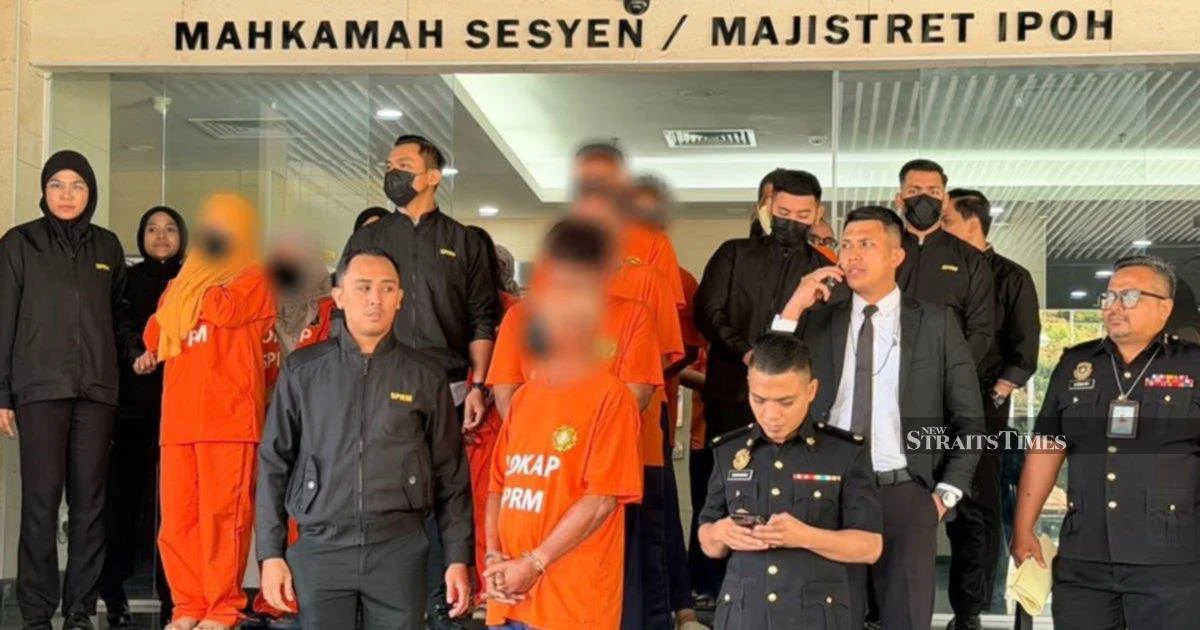
In a significant move against high-level corruption, the Malaysian Anti-Corruption Commission has taken into custody 13 individuals suspected of operating a systematic bribery operation valued at approximately RM2.5 million, with the dragnet extending to senior management ranks at a government agency. The sweep, which came to light in Ipoh, marks another high-profile graft investigation targeting officials positioned to influence major procurement decisions.
The investigation uncovered allegations that the suspects methodically solicited and pocketed substantial bribes in direct correlation with the allocation of lucrative government contracts. Such arrangements typically involve kickbacks flowing from contractors eager to secure work from government entities, with officials leveraging their authority over tender processes and contract awards to extract payments. The scale of the alleged illicit transfers—RM2.5 million—suggests a well-established arrangement rather than isolated incidents of individual malfeasance.
The inclusion of both a current director and a former director among those detained indicates that the suspected corruption may have persisted across administration changes, or that at least one successor inherited an existing scheme. This pattern is particularly troubling in Malaysian governance contexts, where institutional knowledge and procedural continuity sometimes enable corrupt practices to survive transitions in leadership. The fact that MACC moved decisively to detain figures at this tier reflects heightened institutional awareness of how corruption embedded in agency leadership can distort procurement systems and drain public resources.
Government procurement remains an area of persistent vulnerability across Southeast Asia. In Malaysia specifically, contract awards worth hundreds of millions of ringgit flow annually through federal and state agencies for infrastructure, supplies, and services. When officials controlling these processes become compromised, the consequences ripple outward: contracts go to less qualified bidders, projects experience cost overruns, quality suffers, and taxpayers ultimately bear the burden. The RM2.5 million identified here likely represents only a fraction of contracts that may have been distorted through the alleged arrangement.
The Ipoh location suggests the investigation may centre on a specific regional authority or agency with headquarters or significant operations in Perak. Whether the corruption was isolated to that entity or extended to other government bodies working with the same contractors remains to be determined as the investigation progresses. MACC's remand decision indicates sufficient preliminary evidence to justify extended custodial questioning, though remand does not equate to guilt or even charges at this stage.
For Malaysian businesses operating legitimately in the government contracting space, such investigations create both reassurance and frustration. They demonstrate enforcement efforts against corrupt officials, yet they also highlight vulnerabilities in the system that may favour connected firms willing to pay under the table. Honest bidders often find themselves at a disadvantage when procurement processes are compromised, potentially losing contracts to competitors offering illicit inducements rather than better value propositions.
The appointment of officials to positions overseeing procurement should ideally involve scrutiny of background, financial circumstances, and potential conflicts of interest, yet such vetting remains inconsistent across government agencies. MACC's ongoing investigations like this one generate pressure for stronger preventative measures, including asset declaration requirements that more transparently track sudden wealth accumulation among officials, rotation policies that limit entrenchment in procurement roles, and whistleblower protections for employees who report suspicious activity within their agencies.
International partners monitoring Malaysia's anti-corruption efforts will likely view this case as evidence of institutional capacity to pursue high-ranking officials, though observers also note that enforcement remains selective and that prosecution success rates for complex financial crime continue to face challenges. The credibility of anti-corruption work ultimately depends not only on high-profile arrests but on conviction rates and the recovery of public money, metrics that take years to fully materialize.
As MACC proceeds with interrogations during the remand period, investigators will typically focus on establishing the chain of payments, identifying which contractors paid which officials and in what sequence, and determining whether the alleged bribes corresponded to specific contracts awarded at inflated prices or to contracts that excluded more capable competitors. Bank records, communications, and testimony from contractors may prove pivotal in building a comprehensive prosecution case.
The detention of these 13 individuals sends a symbolic message that agency leadership remains within MACC's investigative remit, yet the practical impact depends on what unfolds in courtrooms. Successful prosecution would reinforce the principle that seniority offers no immunity from accountability. Conversely, if cases collapse due to evidentiary weaknesses or legal technicalities, public confidence in anti-corruption enforcement diminishes further, encouraging a fatalistic attitude that corruption at high levels inevitably goes unpunished.
Malaysian civil society and business groups have long advocated for structural reforms to government procurement—open bidding requirements, transparent evaluation criteria, and independent oversight bodies—as complementary to enforcement. This case illustrates why such reforms matter: even when officials face prosecution, the damage to public institutions and resource allocation has already occurred. Prevention through institutional design remains as important as punishment through criminal justice.


%22%2F%3E%3C%2Fpattern%3E%3C%2Fdefs%3E%3Crect%20width%3D%22100%25%22%20height%3D%22100%25%22%20fill%3D%22url(%23ph2hy9vg)%22%2F%3E%3Crect%20width%3D%22100%25%22%20height%3D%22100%25%22%20fill%3D%22url(%23ph2hy9vp)%22%2F%3E%3Ctext%20x%3D%2250%25%22%20y%3D%2250%25%22%20text-anchor%3D%22middle%22%20dominant-baseline%3D%22central%22%20fill%3D%22rgba(255%2C255%2C255%2C0.95)%22%20font-family%3D%22Georgia%2C%20'Times%20New%20Roman'%2C%20serif%22%20font-weight%3D%22700%22%20font-size%3D%22272%22%20letter-spacing%3D%22-0.02em%22%3EAnwar%3C%2Ftext%3E%3C%2Fsvg%3E)