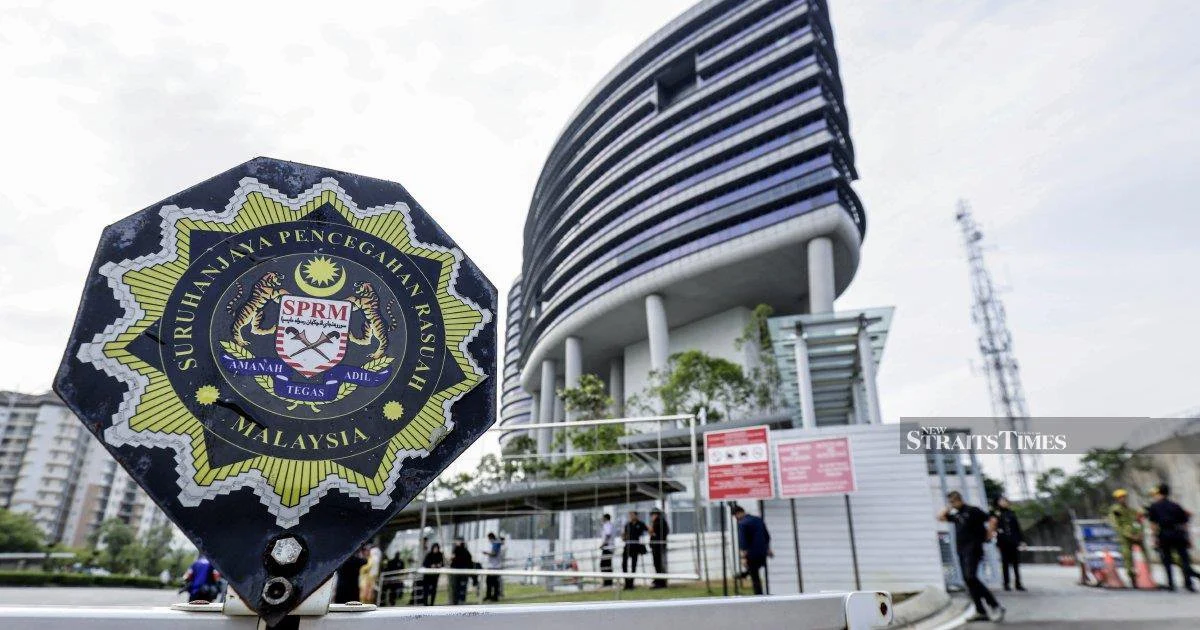
The Malaysian Anti-Corruption Commission will formally bring charges tomorrow against an individual at Shah Alam Sessions Court in connection with 158 separate counts of offences arising from Op Sutra, its targeted campaign addressing the misappropriation of government money. The scale of the allegations signals the expanding scope of the anti-corruption body's enforcement efforts in uncovering systemic breaches of public trust involving substantial sums.
Op Sutra represents one of MACC's significant investigative initiatives aimed at identifying instances where public resources have been diverted or improperly utilised by individuals in positions of authority or responsibility. The operation underscores growing scrutiny of how government allocations are managed and spent, particularly in an era when fiscal accountability has become a pressing concern for Malaysian policymakers and taxpayers alike. The 158 charges filed suggest a pattern of conduct rather than isolated incidents, indicating the commission's findings point to deliberate and systematic conduct that warrants prosecution.
The Shah Alam Sessions Court will serve as the venue for preliminary proceedings, where the defendant will face the allegations spanning multiple counts of misappropriation. Sessions courts in Malaysia handle serious criminal matters, and the choice of this particular court reflects the gravity the MACC has assigned to the case. The proceedings will likely involve detailed examination of financial records, audit trails, and documentary evidence establishing how public funds were allegedly diverted from their intended purposes.
Misappropriation cases of this magnitude typically reveal institutional vulnerabilities in financial oversight and control mechanisms across government agencies. The numerous charges filed suggest MACC investigators identified multiple instances of improper fund transfers, unauthorised expenditures, or diversions across different transactions or time periods. Such cases often expose gaps between policies governing fund management and their practical implementation within ministries and departments.
For Malaysian taxpayers, such prosecutions carry symbolic importance beyond the individual defendant. High-profile graft cases involving substantial sums reinforce the principle that public officials remain answerable for their custodianship of state resources. However, they also raise questions about broader systemic reforms needed to prevent similar conduct occurring elsewhere in the civil service or among elected representatives exercising spending authority.
The MACC's willingness to pursue matters involving numerous charges reflects resource allocation priorities within the anti-corruption body. Bringing charges on this scale requires investigative capacity, legal expertise, and prosecutorial coordination. The case against a single individual across 158 counts indicates significant investigative effort and confidence in the evidence gathered, though conviction on all counts remains subject to court proceedings and judicial assessment.
Regional observers view Malaysia's anti-corruption enforcement as an indicator of institutional credibility and democratic health. Periodic high-profile prosecutions demonstrate that no individual enjoys immunity from accountability based on status or position. Conversely, the frequency and outcomes of such cases also shape public perception of whether enforcement operates impartially or selectively across society's various sectors and demographic groups.
The Op Sutra designation suggests this case forms part of a named operation rather than routine investigation, implying MACC initiated a structured campaign targeting specific patterns or sectors identified as vulnerable to misappropriation. Named operations typically indicate coordinated effort over extended periods, often involving multiple investigators and specialists examining related transactions or interconnected schemes.
Public fund misappropriation carries particularly severe consequences in Malaysia's governance context, where government budgets support essential services including education, healthcare, and infrastructure development. Diverted resources represent direct losses to populations depending on those services. The economic impact extends beyond immediate victims, as reduced spending on productive investments affects broader economic growth and competitiveness.
The prosecution tomorrow represents a procedural milestone in a process that began with investigation, moved through charging decisions, and now enters the courts. Subsequent hearings will determine whether charges proceed to trial, and judicial proceedings will ultimately establish culpability. The eventual outcome will influence perceptions of MACC's effectiveness and whether conviction rates justify public investment in the anti-corruption commission's expanding operations and staffing.
For government agencies and officials themselves, such prosecutions serve as cautionary examples of consequences accompanying financial impropriety. Institutions implementing stronger internal audit functions, segregation of duties, and transparent procurement processes view graft cases as reinforcement that compliance investments protect their organisations' reputations and legitimacy. The Op Sutra prosecution thus carries implications extending across Malaysia's entire public sector regarding standards of financial stewardship and official conduct.
Stakeholders monitoring governance developments will observe how court proceedings unfold and whether the judiciary's handling of the case meets public expectations for swift, fair, and thorough justice. Anti-corruption enforcement ultimately depends on prosecutorial success and judicial confirmation that alleged conduct violated law. Cases involving numerous charges test both investigative capacity and courts' ability to manage complex financial litigation efficiently.

%22%2F%3E%3C%2Fpattern%3E%3C%2Fdefs%3E%3Crect%20width%3D%22100%25%22%20height%3D%22100%25%22%20fill%3D%22url(%23ph351qcg)%22%2F%3E%3Crect%20width%3D%22100%25%22%20height%3D%22100%25%22%20fill%3D%22url(%23ph351qcp)%22%2F%3E%3Ctext%20x%3D%2250%25%22%20y%3D%2250%25%22%20text-anchor%3D%22middle%22%20dominant-baseline%3D%22central%22%20fill%3D%22rgba(255%2C255%2C255%2C0.95)%22%20font-family%3D%22Georgia%2C%20'Times%20New%20Roman'%2C%20serif%22%20font-weight%3D%22700%22%20font-size%3D%22226%22%20letter-spacing%3D%22-0.02em%22%3EMADANI%3C%2Ftext%3E%3C%2Fsvg%3E)