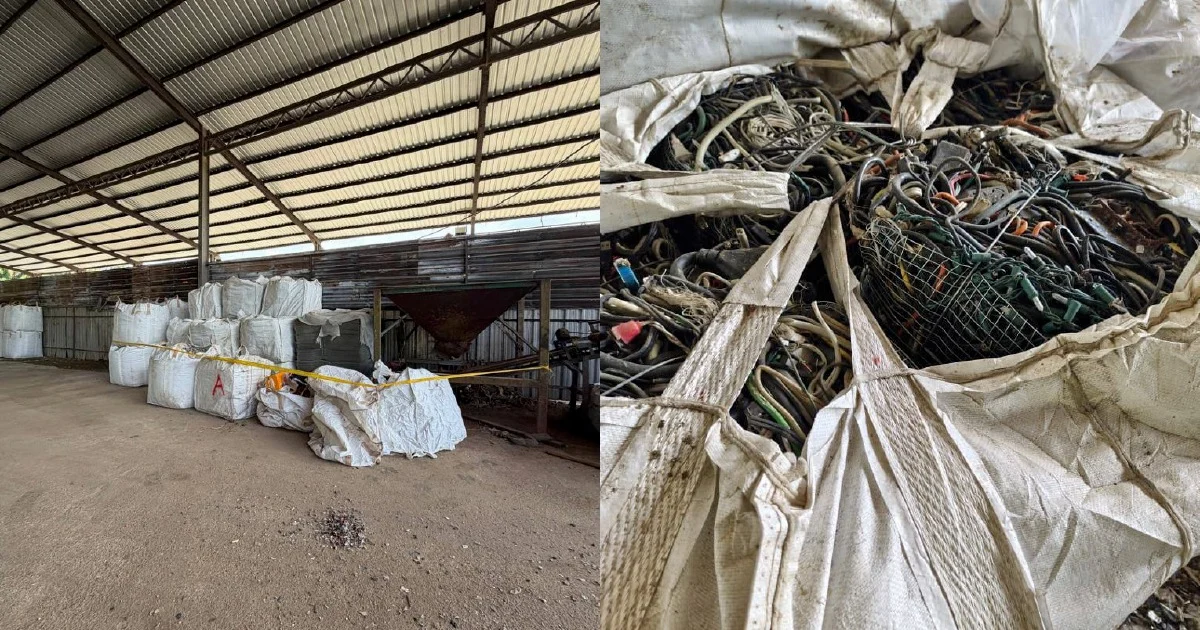
Environmental enforcement authorities have dismantled what appears to be a significant illicit electronic waste processing operation in Bukit Mertajam, culminating in the seizure of discarded electronic equipment and components worth approximately RM3 million. The dramatic enforcement action unfolded during a comprehensive raid on the facility, resulting in the arrest of five individuals believed to be involved in managing the illegal enterprise.
The discovery underscores a growing problem across Malaysia and the broader Southeast Asian region, where unregulated e-waste handling has become an increasingly lucrative yet environmentally catastrophic business. Unlike legitimate recycling operations that comply with strict environmental protection standards and proper disposal protocols, illegal facilities typically operate with minimal regard for hazardous material containment, worker safety, or compliance with national environmental legislation. The seizure represents authorities' ongoing efforts to curb what has become a substantial underground economy in discarded electronics.
Electronic waste constitutes one of the fastest-growing waste streams globally, driven by rapid technological obsolescence and the disposable nature of modern consumer electronics. When processed illegally, e-waste becomes particularly dangerous because it often contains toxic substances including lead, mercury, cadmium, and persistent organic pollutants. Uncontrolled dismantling and processing release these hazardous materials into soil and groundwater, creating serious public health risks for nearby residential areas and agricultural land. The Bukit Mertajam operation, operating outside regulatory frameworks, presumably exposed workers and the surrounding community to these environmental and health hazards without adequate safety protocols.
Malaysia has established comprehensive regulatory frameworks governing e-waste management, yet enforcement remains challenging given the profitability of illegal operations. Licensed recycling facilities must invest substantially in proper equipment, trained personnel, and environmental monitoring systems to meet Department of Environment requirements. Illegal operators circumvent these costs entirely, creating a significant competitive disadvantage for legitimate businesses. The RM3 million seizure suggests this particular facility had accumulated substantial quantities of contraband materials, indicating it likely operated at considerable scale over an extended period.
The detention of five individuals opens investigative pathways that authorities will likely pursue with considerable diligence. Understanding the supply chain that fed this facility—where stolen or diverted electronics originated, who coordinated collection and transportation, and which networks distributed the processed materials—represents critical intelligence. Such investigations frequently reveal connections to broader transnational smuggling networks, as Southeast Asia has emerged as a destination for e-waste exports from developed nations, sometimes obscured through false documentation or deliberate mislabelling as used goods destined for repair and resale.
This enforcement action carries particular significance for Penang and the surrounding region, where manufacturing and electronics production constitute substantial economic sectors. The existence of illegal processing facilities undermines legitimate business operations and creates reputational risks for Malaysia's electronics industry. International buyers increasingly scrutinise supply chain compliance and environmental credentials, making visible environmental violations potentially damaging to export competitiveness. Conversely, demonstrating effective enforcement and environmental stewardship strengthens Malaysia's positioning in conscious consumer markets that prioritise sustainability.
The seizure amount of RM3 million reflects the material value of recoverable components including precious metals, plastics, and glass, which motivate much illegal e-waste trafficking. Copper wiring, aluminum frames, and gold-bearing circuit boards possess genuine market value in both domestic and international scrap markets. The financial incentive structure perpetuates these operations despite regulatory prohibitions, making deterrence through enforcement alone insufficient. Successful long-term solutions require simultaneously strengthening legitimate recycling industry economics while raising consumer awareness about proper e-waste disposal channels.
Stakeholders across Malaysia's environmental and enforcement sectors view such operations as particularly concerning given the municipality's proximity to residential areas and water sources. Bukit Mertajam's location within an urbanising corridor means environmental contamination from processing activities poses measurable risks to public wellbeing. The facility's closure removes an immediate pollution source, though comprehensive remediation of any soil or groundwater contamination likely requires additional interventions beyond the initial enforcement action.
Looking forward, this case will probably stimulate enhanced inter-agency coordination and intelligence sharing regarding illegal e-waste operations. The Department of Environment, Royal Malaysia Police, local municipal authorities, and industry associations increasingly recognise that disrupting these networks requires systematic investigation rather than isolated raids. Building databases of suspected facilities, monitoring electronics trafficking patterns, and pursuing prosecutions that impose meaningful consequences for individuals involved strengthens the deterrent effect of enforcement activities.
For Malaysian citizens, the seizure represents the environmental protection system functioning as designed, identifying and neutralising threats to public health and ecological integrity. However, individual choices about electronic product disposal significantly influence market conditions that either incentivise or discourage illegal processing. Utilising official e-waste collection programmes, purchasing from manufacturers offering recycling schemes, and supporting legitimate refurbishment businesses collectively create market conditions that erode the profitability of illegal operations. The Bukit Mertajam bust demonstrates enforcement capacity, yet sustainable elimination of such facilities ultimately depends on complementary efforts spanning regulation, business economics, consumer behaviour, and public participation.

%22%2F%3E%3C%2Fpattern%3E%3C%2Fdefs%3E%3Crect%20width%3D%22100%25%22%20height%3D%22100%25%22%20fill%3D%22url(%23ph351qcg)%22%2F%3E%3Crect%20width%3D%22100%25%22%20height%3D%22100%25%22%20fill%3D%22url(%23ph351qcp)%22%2F%3E%3Ctext%20x%3D%2250%25%22%20y%3D%2250%25%22%20text-anchor%3D%22middle%22%20dominant-baseline%3D%22central%22%20fill%3D%22rgba(255%2C255%2C255%2C0.95)%22%20font-family%3D%22Georgia%2C%20'Times%20New%20Roman'%2C%20serif%22%20font-weight%3D%22700%22%20font-size%3D%22226%22%20letter-spacing%3D%22-0.02em%22%3EMADANI%3C%2Ftext%3E%3C%2Fsvg%3E)