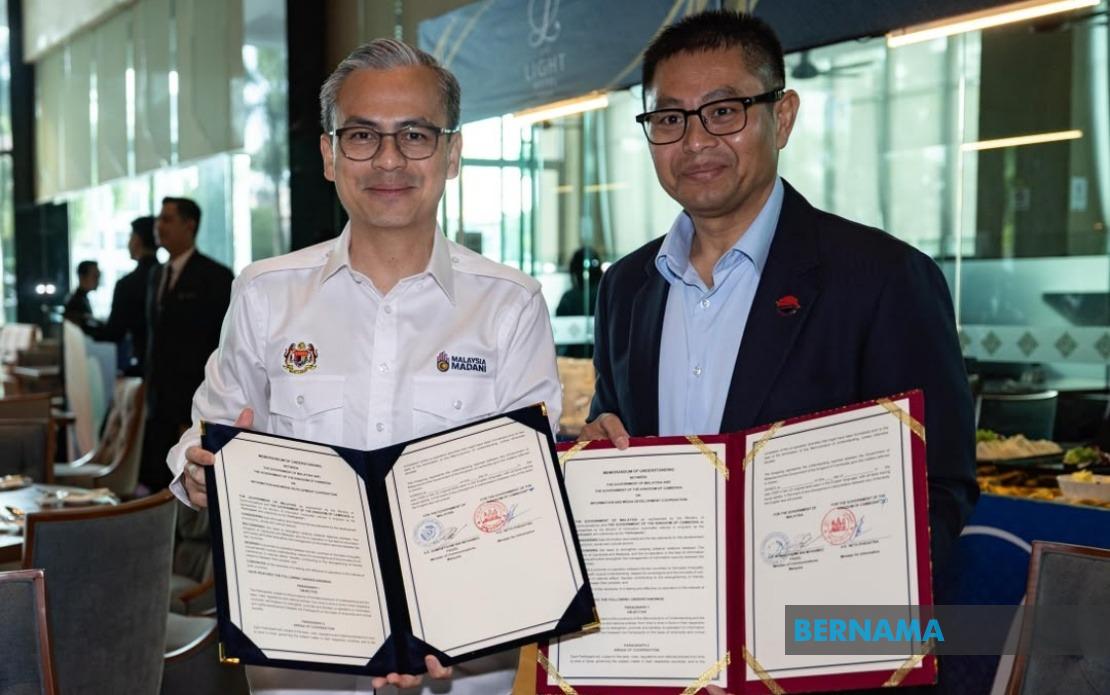
Malaysia and Cambodia have taken a significant step in their bilateral relations by formalising a comprehensive partnership framework focused on media and communications development. Communications Minister Datuk Fahmi Fadzil and Cambodian Information Ministry Under Secretary of State Prak Thaveak Amida signed the memorandum of understanding at the Light Hotel in Butterworth on June 20, with Amida acting on behalf of Cambodia's Information Minister Neth Pheaktra. The agreement reflects both nations' commitment to leveraging their respective media sectors for mutual growth and strengthened people-to-people connections.
The scope of the cooperation is notably broad, covering multiple dimensions of the modern media landscape. The partnership extends to news and information exchange mechanisms, radio and television broadcasting collaboration, and joint initiatives in printing and publishing. Beyond traditional media domains, the agreement encompasses human resource development programmes designed to elevate professional standards across both countries' information sectors. This multifaceted approach suggests recognition that media industries today operate across converging technological and content ecosystems.
One particularly relevant element for the Southeast Asian context is the inclusion of film and documentary production cooperation. Both Malaysia and Cambodia have growing creative industries, and collaborative projects could strengthen regional soft power while creating economic opportunities for producers, technicians, and talent in both nations. The focus on innovation in media and broadcasting also indicates both countries are attuned to the rapid evolution of digital platforms and audience consumption patterns that are reshaping journalism worldwide.
Cybersecurity and information policy coordination represent forward-looking provisions that address contemporary challenges. As media organisations increasingly navigate threats from cyberattacks and disinformation, establishing bilateral frameworks for best-practice sharing and regulatory alignment becomes strategically important. For Malaysia and Cambodia, both of which have experienced concerns around media freedom and information integrity, such cooperation could strengthen institutional capacity to distinguish legitimate news operations from malicious actors attempting to exploit platform vulnerabilities.
The agreement emerged during Malaysia's hosting of the National Journalists' Day 2026 grand finale, known as HAWANA. The timing underscores how diplomatic initiatives on media cooperation align with broader efforts to strengthen journalism standards and professional identity across the region. The sixth edition of HAWANA, held at the PICCA convention centre in Butterworth, gathered approximately 1,000 media practitioners from Malaysia and abroad under the theme "Media Integrity Strengthens Credibility." This thematic emphasis on integrity directly complements the bilateral partnership's focus on knowledge exchange and professional development.
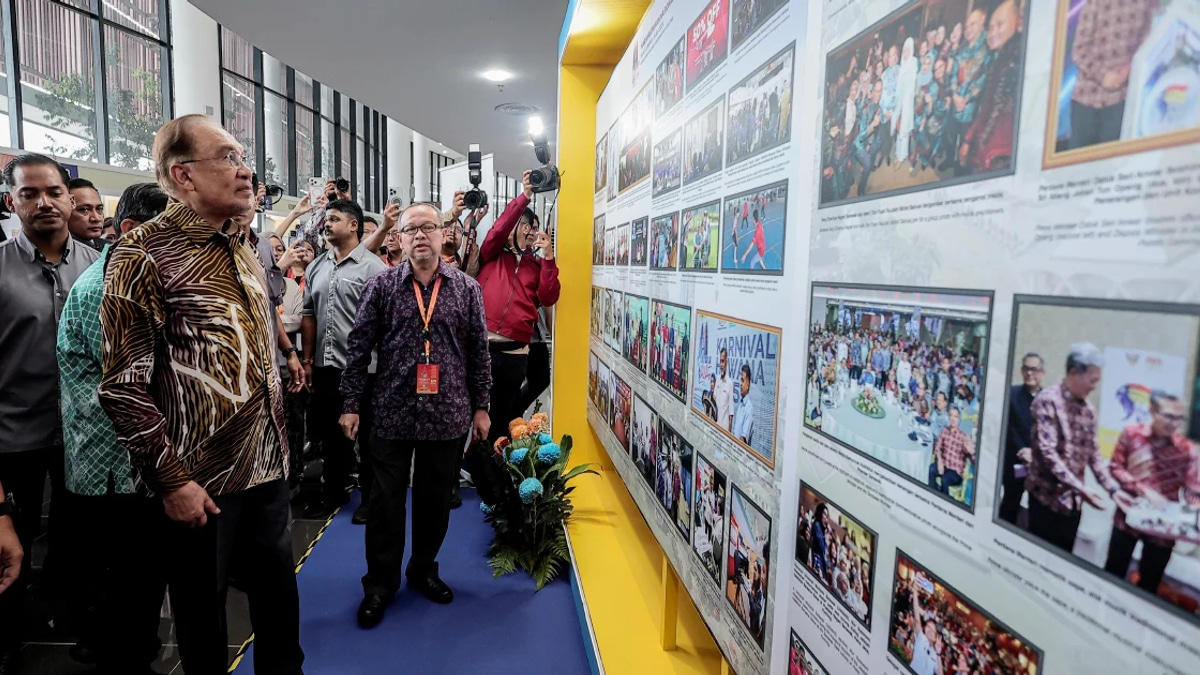
Prime Minister Datuk Seri Anwar Ibrahim was scheduled to officiate the HAWANA proceedings, signalling government-level commitment to the journalism sector's role in Malaysia's democratic institutions and public discourse. His presence alongside other senior figures including Penang Chief Minister Chow Kon Yeow and Bernama leadership demonstrated that media development is increasingly viewed as a cornerstone policy area rather than a peripheral concern. Such political elevation of journalism and media standards reflects acknowledgement that information quality directly influences public confidence in institutions and national stability.
From a regional geopolitical perspective, the Malaysia-Cambodia partnership speaks to broader ASEAN efforts to coordinate on shared challenges. Both nations face similar pressures from digital transformation, platform dominance by non-regional actors, and evolving audience preferences that have disrupted traditional media business models. By formalising knowledge-sharing structures, Malaysia and Cambodia create mechanisms through which solutions developed in one context can be adapted and implemented in the other, potentially cascading benefits across Southeast Asia if other nations adopt similar frameworks.
The emphasis on regulatory practices and information policy alignment also reflects growing recognition that media governance requires sophisticated coordination in an interconnected region. Cross-border content flow, the operation of regional media companies, and the transnational nature of disinformation campaigns mean that unilateral regulatory approaches often prove inadequate. The MoU provides institutional channels through which Malaysian and Cambodian authorities can compare regulatory philosophies and coordinate responses to challenges that transcend national boundaries.
For Malaysian media organisations, this partnership opens practical pathways for collaboration with Cambodian counterparts in content production, training exchanges, and technology transfer. Larger Malaysian news organisations and broadcasting companies may find opportunities to establish regional bureaus or joint ventures in Cambodia, while Cambodian media entities can benefit from Malaysian expertise in audience research, digital monetisation, and editorial standards. Such commercial cooperation, underpinned by government-level goodwill, typically develops more rapidly and sustainably than ad-hoc arrangements.
Human capital development provisions deserve particular attention given both countries' ongoing efforts to professionalise their journalism sectors. Exchange programmes for journalists, editors, and broadcast technicians can expose practitioners to different editorial traditions and technical innovations, ultimately raising industry standards. For Malaysia, which maintains relatively developed media infrastructure and training institutions, such exchanges position the country as a knowledge hub while generating soft power benefits. For Cambodia, access to Malaysian expertise accelerates development trajectories that might otherwise require more time to achieve independently.
The partnership also carries symbolic significance in reinforcing Malaysia and Cambodia's commitment to maintaining constructive bilateral relations across multiple sectors. In Southeast Asia, where geopolitical tensions occasionally emerge, sustained cooperation in non-contentious areas like media development helps build institutional trust and interpersonal networks that serve broader diplomatic objectives. Journalists and media professionals who develop working relationships across the border become informal ambassadors for bilateral friendship and mutual understanding.
Looking forward, the success of this MoU will likely depend on implementation fidelity and the commitment both governments devote to translating agreed principles into concrete programmes and exchanges. Regular joint meetings, clearly defined project timelines, and adequate funding mechanisms will determine whether the partnership becomes transformative or remains primarily a diplomatic gesture. Malaysian and Cambodian media organisations will be watching closely to see how readily their respective governments facilitate the practical collaboration envisioned in the agreement.
This media cooperation framework arrives at a particularly timely moment when journalism across Southeast Asia confronts urgent questions about sustainability, credibility, and independence. By investing in bilateral partnerships focused on professional standards and technological advancement, Malaysia and Cambodia signal that they view a robust, well-resourced media sector as integral to national development and regional stability. Whether this MoU catalyses meaningful institutional changes or serves primarily as diplomatic symbolism will become apparent in the coming months as implementation proceeds.

%22%2F%3E%3C%2Fpattern%3E%3C%2Fdefs%3E%3Crect%20width%3D%22100%25%22%20height%3D%22100%25%22%20fill%3D%22url(%23ph2hy9vg)%22%2F%3E%3Crect%20width%3D%22100%25%22%20height%3D%22100%25%22%20fill%3D%22url(%23ph2hy9vp)%22%2F%3E%3Ctext%20x%3D%2250%25%22%20y%3D%2250%25%22%20text-anchor%3D%22middle%22%20dominant-baseline%3D%22central%22%20fill%3D%22rgba(255%2C255%2C255%2C0.95)%22%20font-family%3D%22Georgia%2C%20'Times%20New%20Roman'%2C%20serif%22%20font-weight%3D%22700%22%20font-size%3D%22272%22%20letter-spacing%3D%22-0.02em%22%3EAnwar%3C%2Ftext%3E%3C%2Fsvg%3E)