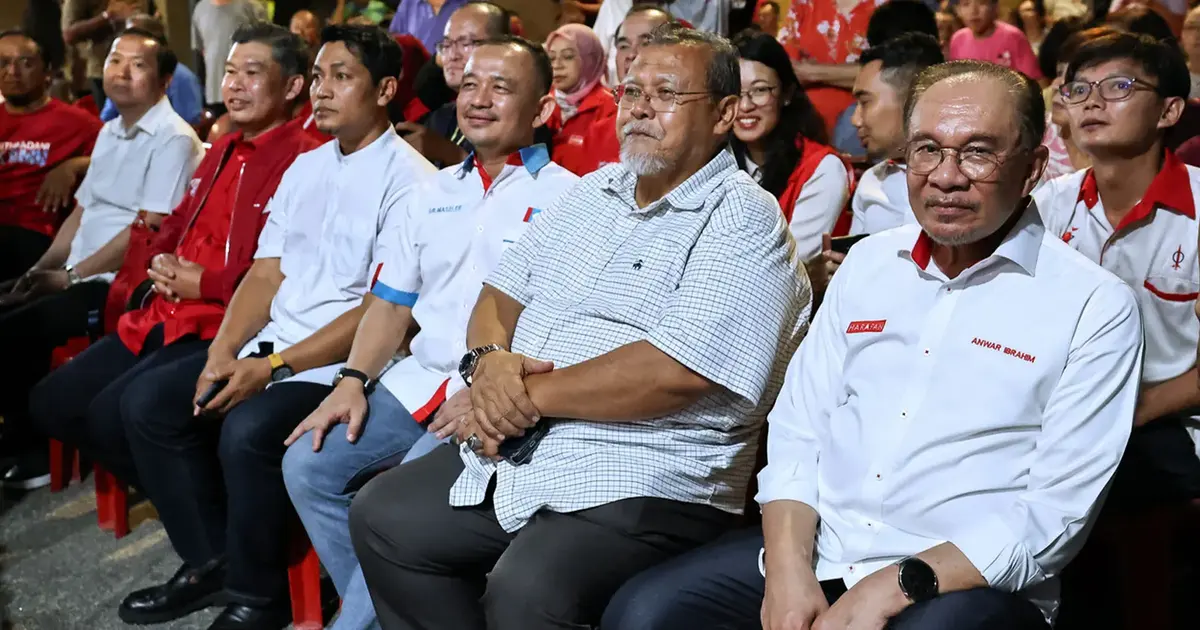
Prime Minister Anwar Ibrahim has made clear that Malaysia's growing closeness with China will not come at the expense of legal principles or judicial independence, signalling the government's determination to maintain a balanced foreign policy even as it deepens engagement with major powers across the region and beyond.
The assertion reflects the delicate diplomatic position Malaysia occupies as a Southeast Asian nation with significant economic and security interests tied to Beijing, while simultaneously managing relationships with the United States, India, and other regional partners. Anwar's comments underscore Putrajaya's commitment to what officials describe as principled engagement—a framework that allows Malaysia to benefit from strategic partnerships without surrendering sovereignty over domestic governance.
The statement carries particular weight given the international scrutiny surrounding how developing nations in the region manage their relationships with Beijing. Malaysia has faced periodic criticism from Western capitals regarding its approach to Chinese engagement, particularly in areas such as trade, investment, and defence cooperation. However, officials maintain that such partnerships are grounded in mutual respect and do not require abandoning fundamental commitments to transparency and the rule of law.
Anwar's position aligns with a broader pattern of statements from the Malaysian government over recent years emphasizing that development partnerships and commercial ties can coexist with robust legal frameworks and institutional independence. The government has repeatedly stressed that law enforcement decisions, including high-profile cases involving corruption or financial impropriety, are made by relevant authorities based on evidence and applicable legislation, not external political considerations.
For Malaysian business and civil society observers, the clarification addresses lingering concerns about how increased Chinese engagement might influence governance standards. Foreign investors, particularly those from Western countries, have long cited predictable legal systems and transparent enforcement as factors influencing their decisions to maintain or expand operations in Malaysia. The prime minister's reaffirmation of this commitment serves to reassure both domestic and international stakeholders that economic pragmatism will not erode institutional credibility.
The regional context shapes the significance of Anwar's remarks considerably. Across Southeast Asia, countries face comparable pressures to leverage relationships with major powers while preserving autonomy over domestic affairs. Singapore, Vietnam, Indonesia, and Thailand have all navigated similar tensions, each developing distinct approaches based on their particular geostrategic circumstances and historical experiences. Malaysia's articulation of its position contributes to regional discourse about how middle powers can sustain genuine partnerships with competing global centres of influence.
China's expanding role in Southeast Asian infrastructure, finance, and technology has prompted ongoing discussion among policymakers and analysts about appropriate safeguards. Malaysia's Belt and Road Initiative participation, investments in ports and railways, and defence cooperation with Beijing represent substantial commitments that require careful management alongside other international engagements. The government's emphasis on maintaining legal independence suggests an attempt to address concerns that deep economic integration might inadvertently compromise decision-making autonomy.
Anwar's comments also implicitly acknowledge the expectations of Malaysia's diverse coalition government and parliamentary system. Various political parties and constituencies maintain different perspectives on China engagement and the pace of deepening ties. By framing Malaysia's approach around universal principles rather than any particular relationship, the prime minister seeks common ground across the political spectrum and signals that no single external power will dictate domestic policy directions.
The question of legal enforcement becomes particularly sensitive when high-profile cases involve individuals with connections to state institutions, political parties, or major trading partners. Malaysia's court system has demonstrated independence in several significant rulings, though debates persist about whether all cases receive equally rigorous investigation and prosecution. The prime minister's explicit commitment to maintaining these standards suggests awareness that perceptions of selective enforcement could undermine confidence in institutions and complicate both domestic governance and international partnerships.
For Southeast Asian analysts observing Malaysian policy, Anwar's statement represents an important clarification during a period of significant geopolitical realignment. The region remains contested terrain where China, the United States, India, and other powers compete for influence through trade, investment, and security partnerships. Countries that succeed in preserving genuine autonomy while cultivating beneficial relationships across multiple powers tend to achieve better long-term outcomes than those perceived as aligned exclusively with any single partner.
Looking ahead, the credibility of Malaysia's commitment to these principles will depend on consistent implementation across multiple policy domains and diverse circumstances. Test cases will emerge involving commercial disputes, regulatory enforcement, and strategic decisions where Chinese interests may diverge from Malaysian preferences. The government's willingness to maintain legal standards and institutional independence in such instances will ultimately determine whether Anwar's assurance reflects genuine commitment or merely diplomatic rhetoric designed for international audiences.

%22%2F%3E%3C%2Fpattern%3E%3C%2Fdefs%3E%3Crect%20width%3D%22100%25%22%20height%3D%22100%25%22%20fill%3D%22url(%23ph2hy9vg)%22%2F%3E%3Crect%20width%3D%22100%25%22%20height%3D%22100%25%22%20fill%3D%22url(%23ph2hy9vp)%22%2F%3E%3Ctext%20x%3D%2250%25%22%20y%3D%2250%25%22%20text-anchor%3D%22middle%22%20dominant-baseline%3D%22central%22%20fill%3D%22rgba(255%2C255%2C255%2C0.95)%22%20font-family%3D%22Georgia%2C%20'Times%20New%20Roman'%2C%20serif%22%20font-weight%3D%22700%22%20font-size%3D%22272%22%20letter-spacing%3D%22-0.02em%22%3EAnwar%3C%2Ftext%3E%3C%2Fsvg%3E)