%22%2F%3E%3C%2Fpattern%3E%3C%2Fdefs%3E%3Crect%20width%3D%22100%25%22%20height%3D%22100%25%22%20fill%3D%22url(%23phd81ig)%22%2F%3E%3Crect%20width%3D%22100%25%22%20height%3D%22100%25%22%20fill%3D%22url(%23phd81ip)%22%2F%3E%3Ctext%20x%3D%2250%25%22%20y%3D%2250%25%22%20text-anchor%3D%22middle%22%20dominant-baseline%3D%22central%22%20fill%3D%22rgba(255%2C255%2C255%2C0.95)%22%20font-family%3D%22Georgia%2C%20'Times%20New%20Roman'%2C%20serif%22%20font-weight%3D%22700%22%20font-size%3D%22170%22%20letter-spacing%3D%22-0.02em%22%3EMalaysia%3C%2Ftext%3E%3C%2Fsvg%3E)
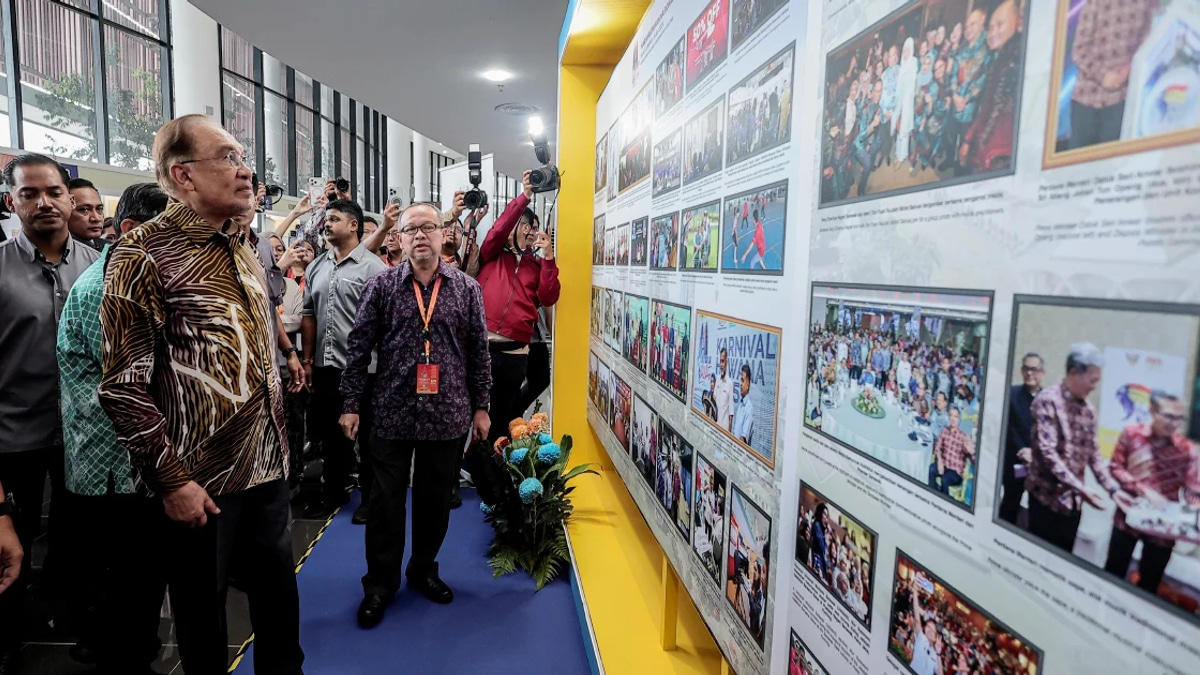
Prime Minister Datuk Seri Anwar Ibrahim has firmly rejected the premise that Malaysia faces a binary choice between competing great powers, instead asserting that his government intends to preserve the nation's strategic autonomy while engaging pragmatically with all major economic and political players. Speaking in Seberang Perai, Anwar articulated a vision of Malaysian foreign policy that sidesteps the false dichotomy presented by geopolitical rivalry, a position that reflects both the aspirations and constraints facing medium-sized nations navigating an increasingly fractious international landscape.
The Prime Minister's remarks come amid intensifying strategic competition between the United States, China, and India across the Indo-Pacific region. Each power has pursued initiatives designed to expand influence and secure partnerships that advance its broader geopolitical objectives. Malaysia, as a significant economy and crucial maritime hub positioned along vital shipping lanes between the South China Sea and Indian Ocean, naturally attracts attention from all three players. Anwar's statement suggests his administration views this competition not as a predicament requiring submission, but rather as an opportunity to extract benefits through deliberate, multi-vector engagement.
Anwar's articulation of strategic autonomy represents a continuation of Malaysia's longstanding non-aligned tradition, though the modern iteration must contend with far greater complexity than previous eras. During the Cold War, non-alignment carried relatively clear meaning: refusing to join either NATO or the Soviet bloc. Today's multipolar landscape offers no equivalent binary division. Instead, Malaysia must simultaneously manage economic interdependence with China through trade and investment, security partnerships with the United States through regional arrangements, and growing engagement with India as New Delhi expands its regional profile. This triangular balancing act demands sophisticated diplomacy and consistent articulation of principles.
The economic dimensions of Anwar's position deserve particular scrutiny. China remains Malaysia's largest trading partner, with bilateral commerce exceeding US$150 billion annually, while China accounts for roughly 80 percent of Malaysia's foreign direct investment. Simultaneously, the United States remains critical to maritime security architecture, while Indian investment and trade, though proportionally smaller, continues expanding. Malaysia's reluctance to choose reflects not merely diplomatic preference but economic reality: the nation benefits measurably from relationships with all three powers and faces substantial costs from alienating any of them. Anwar's framework acknowledges this structural reality while attempting to preserve room for independent decision-making on issues of genuine national consequence.
Security considerations add further complexity to Malaysia's calculus. The nation depends heavily on freedom of navigation in waters through which Chinese military assets now operate with unprecedented frequency. Yet Malaysia also participates in Quad-adjacent arrangements and maintains security dialogues with Washington. India's expanding naval presence and growing defense relationships with Southeast Asian partners create additional layers of strategic consideration. Anwar's position implicitly rejects pressure from any quarter to subordinate Malaysian security interests to the strategic preferences of external powers, insisting instead that such decisions flow from assessment of actual threats and opportunities.
The geopolitical context surrounding Anwar's remarks reflects genuine anxiety among smaller regional powers about being forced into explicit alignment. Vietnam, Indonesia, Thailand, and other Southeast Asian nations face similar pressures. Anwar's public statement therefore carries weight beyond Malaysia's borders, signaling to the region that sustained autonomy remains possible even as great power competition intensifies. This messaging serves Malaysian interests by reinforcing the concept that strategic independence constitutes a legitimate and sustainable position, rather than mere temporary evasion of inevitable alignment.
Several factors strengthen Malaysia's capacity to sustain this stance. The country's geographic significance means all three powers regard Malaysia as valuable regardless of explicit alignment. None of the three can afford to lose access to Malaysian ports, trade relationships, and diplomatic space. Additionally, ASEAN's collective emphasis on non-alignment and consensus-building provides institutional backing for individual members pursuing similar policies. Malaysia can reference regional norms and multilateral frameworks as justification for its choices in ways that smaller, more isolated nations cannot. The Association of Southeast Asian Nations, despite its limitations, offers diplomatic cover for members unwilling to choose between great powers.
Domestically, Anwar faces incentives to maintain this balancing position. Malaysia's Chinese diaspora and Muslim-majority population each maintain distinct preferences regarding foreign policy orientation. A government visibly subordinating itself to any single power risks generating domestic political complications that could undermine stability. Anwar's multi-alignment approach allows different constituencies to perceive governmental policy as compatible with their own preferences and concerns. This domestic political dimension, though less frequently articulated in international analysis, substantially reinforces commitment to strategic autonomy.
However, sustaining this position demands constant management and presents inherent fragilities. Great power competition tends toward sharpening binary choices rather than maintaining stable ambiguity. Crises, whether military incidents in the South China Sea or trade disputes, often force nations to take explicit positions despite their prior commitments to neutrality. Anwar must navigate between articulating Malaysia's independent interests and avoiding actions that appear to favor one power excessively. This requires careful calibration of statements, decisions, and diplomatic moves across multiple dimensions of foreign policy.
The stability of Anwar's framework also depends substantially on the broader trajectory of great power relations. Should US-China competition deescalate or reach some stabilizing equilibrium, the pressure on intermediate powers to choose declines correspondingly. Conversely, intensifying confrontation could make sustained autonomy progressively more difficult. India's role remains particularly unpredictable, as New Delhi's strategic orientation continues evolving and its relationship to both Washington and Beijing remains fluid. Malaysia's ability to maintain its position correlates directly with how stable the broader regional order remains.
Anwar's insistence that Malaysia need not choose between great powers reflects both aspiration and necessity. The nation genuinely possesses sufficient strategic weight to preserve meaningful autonomy if its leadership maintains consistency and clarity of purpose. Simultaneously, the position acknowledges Malaysia's fundamental interests in economic prosperity, security stability, and regional order preservation. Rather than viewing Malaysian independence as opposition to any particular power, Anwar frames it as complementary to regional peace and prosperity broadly construed. This rhetorical move attempts to transform what some great powers might view as unreliability into a contribution to regional stability.
The ultimate success of Anwar's approach hinges on Malaysia's ability to deliver measurable returns to all three powers through the relationship even without explicit alignment. Malaysia must prove that engaging with a non-aligned nation generates sufficient benefits regarding trade, investment, security cooperation, and diplomatic access to justify continued tolerance of Malaysian autonomy. This requires Malaysia to appear genuinely valuable to each power on multiple dimensions rather than merely interesting as a pawn in broader competitions. Anwar's vision, therefore, demands not just diplomatic skill but sustained economic dynamism and strategic relevance that convinces great powers Malaysia constitutes a worth-having partner in its own right.

%22%2F%3E%3C%2Fpattern%3E%3C%2Fdefs%3E%3Crect%20width%3D%22100%25%22%20height%3D%22100%25%22%20fill%3D%22url(%23ph2hy9vg)%22%2F%3E%3Crect%20width%3D%22100%25%22%20height%3D%22100%25%22%20fill%3D%22url(%23ph2hy9vp)%22%2F%3E%3Ctext%20x%3D%2250%25%22%20y%3D%2250%25%22%20text-anchor%3D%22middle%22%20dominant-baseline%3D%22central%22%20fill%3D%22rgba(255%2C255%2C255%2C0.95)%22%20font-family%3D%22Georgia%2C%20'Times%20New%20Roman'%2C%20serif%22%20font-weight%3D%22700%22%20font-size%3D%22272%22%20letter-spacing%3D%22-0.02em%22%3EAnwar%3C%2Ftext%3E%3C%2Fsvg%3E)