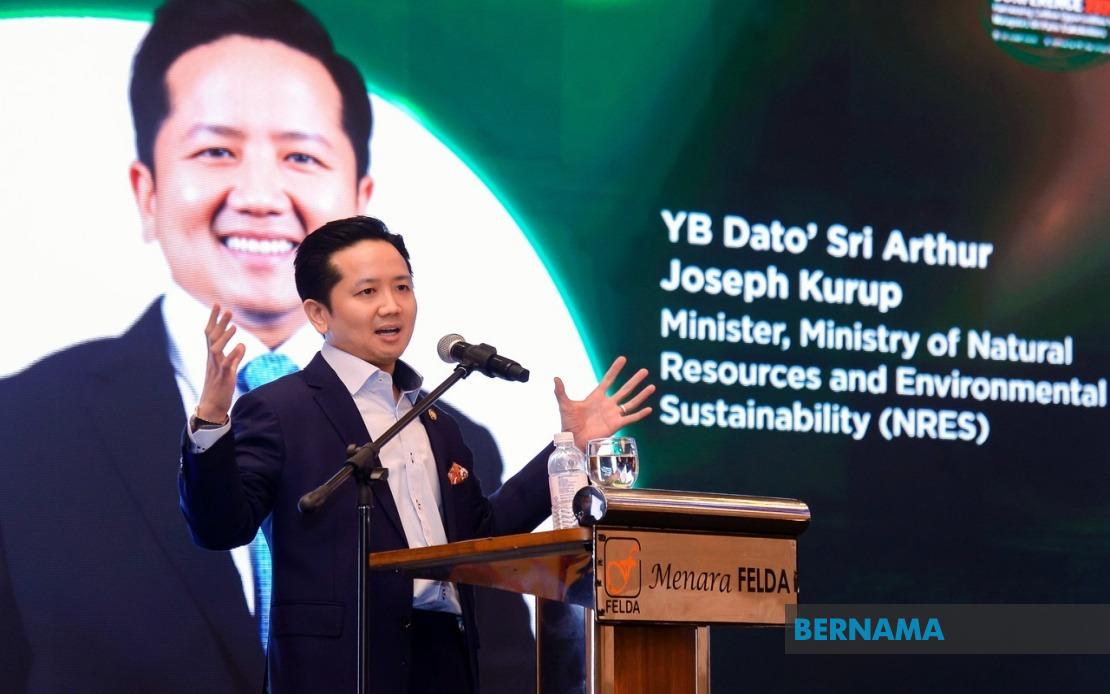
The Malaysian government remains committed to introducing a carbon tax but is taking a methodical approach to ensure the measure succeeds without unnecessarily burdening industry, Natural Resources and Environmental Sustainability Minister Datuk Seri Arthur Joseph Kurup indicated at the Malaysia Palm Carbon Conference 2026 in Kuala Lumpur on June 16. Speaking after opening the conference alongside Federal Land Development Authority chairman Datuk Seri Ahmad Shabery Cheek, Arthur emphasised that authorities are carefully calibrating both the timing and mechanics of the policy rollout to align with business capacity and broader economic conditions.
The minister's remarks represent the latest evolution in Malaysia's carbon taxation journey, which has seen multiple adjustments since the initiative was first proposed. Rather than imposing the measure immediately, the government is undertaking a deliberate review process that factors in current energy market dynamics, geopolitical complications, and the readiness of targeted sectors to absorb compliance costs. This cautious stance reflects lessons learned from other jurisdictions where poorly timed environmental taxes have triggered backlash from affected industries and consumers struggling with elevated costs.
Arthur stressed that the carbon tax should not be perceived as a punitive instrument designed to penalise companies, but rather as a constructive incentive framework that encourages businesses to transition toward cleaner technologies and reduce their emissions footprint. This reframing is significant for Malaysian policymakers, as it signals an attempt to build broader stakeholder buy-in by positioning the measure as aligned with long-term competitiveness and technological advancement rather than as an additional compliance burden. The distinction matters considerably in a region where manufacturing competitiveness remains sensitive to input costs and regulatory uncertainty.
In April, Arthur had previously acknowledged that the carbon tax implementation timeline required reassessment due to the global energy supply constraints and heightened geopolitical tensions that have created unpredictable cost pressures for industries. The scheme, originally slated for introduction in 2024 and designed to target steel, cement, construction and other carbon-intensive sectors, was flagged for potential deferral to shield businesses and consumers from compounded financial strain during a period of considerable global uncertainty. That cautious recalibration underscores the government's recognition that policy implementation windows matter enormously when economies face external shocks.
A critical dimension of the emerging framework involves how revenue generated from the carbon tax will be allocated. The government is currently evaluating mechanisms to direct those funds toward climate adaptation initiatives, forest conservation programmes and sustainable land management projects. This approach transforms the carbon tax from a simple extraction mechanism into a circular investment instrument, where businesses contributing to emissions mitigation simultaneously fund the environmental resilience measures that protect Malaysia's ecosystems and economic assets. For Malaysian stakeholders, this revenue allocation strategy strengthens the policy's legitimacy by demonstrating tangible reinvestment in climate action.
The rationale for this revenue-cycling model reflects deeper strategic thinking about Malaysia's vulnerability to climate-related risks. As a tropical nation with significant forestry assets, coastal economic zones and agricultural sectors, Malaysia faces material exposure to climate impacts including extreme weather events, shifting precipitation patterns and sea-level rise. Channelling carbon tax revenues into adaptation and conservation creates a direct nexus between emissions pricing and climate resilience, making the policy less about taxation and more about investing in national stability. This framing will likely prove more palatable to both business and civil society stakeholders.
Parallel to the carbon tax initiative, the government intends to introduce the National Climate Change Bill in the Dewan Rakyat during the current parliamentary year. Arthur indicated that this legislation represents a cornerstone element of Malaysia's climate governance architecture, establishing the institutional and legal foundations necessary to address the escalating global climate emergency. The bill's passage would provide the statutory framework within which carbon pricing and other emissions reduction mechanisms can operate, creating coherence across the regulatory landscape.
The timing and substance of the National Climate Change Bill will shape how effectively the carbon tax operates once implemented. A robust legislative framework can clarify compliance obligations, establish transparent pricing mechanisms and ensure accountability in revenue deployment, thereby reducing business uncertainty and enhancing policy credibility. For multinational companies operating in Malaysia or considering investment decisions, clarity around the legal and regulatory architecture underlying climate policy will likely influence capital allocation and operational planning.
Malaysia's measured approach to carbon taxation reflects broader regional dynamics in Southeast Asia, where governments are grappling with the tension between climate commitments and economic competitiveness. Neighbouring jurisdictions have experimented with various carbon pricing models, and Malaysia's decision to study implementation carefully rather than rush forward suggests policymakers are learning from both regional experiences and international best practices. The Malaysia Palm Carbon Conference 2026, where these announcements were made, underscores the particular relevance of climate action to Malaysia's substantial palm oil sector, which faces international scrutiny over environmental practices.
The involvement of Felda, a significant player in Malaysia's agricultural and land management sectors, in the conference proceedings reflects recognition that carbon taxation and climate policy cannot succeed without alignment between government agencies and major industry participants. Felda's presence signals that land-dependent sectors are part of the implementation conversation, which should theoretically improve the likelihood that final policy design accommodates legitimate business concerns while advancing emissions reduction objectives.
For foreign investors and trading partners, Malaysia's deliberate approach to carbon taxation carries implications for supply chain positioning and production cost calculations. Companies considering whether to source from or invest in Malaysia will increasingly factor in climate policy costs and timelines when evaluating competitive positioning. The government's commitment to eventual implementation, paired with its willingness to adjust timing based on economic conditions, suggests Malaysia will ultimately adopt carbon pricing but in a manner calibrated to protect economic interests while fulfilling climate obligations.

%22%2F%3E%3C%2Fpattern%3E%3C%2Fdefs%3E%3Crect%20width%3D%22100%25%22%20height%3D%22100%25%22%20fill%3D%22url(%23ph2hy9vg)%22%2F%3E%3Crect%20width%3D%22100%25%22%20height%3D%22100%25%22%20fill%3D%22url(%23ph2hy9vp)%22%2F%3E%3Ctext%20x%3D%2250%25%22%20y%3D%2250%25%22%20text-anchor%3D%22middle%22%20dominant-baseline%3D%22central%22%20fill%3D%22rgba(255%2C255%2C255%2C0.95)%22%20font-family%3D%22Georgia%2C%20'Times%20New%20Roman'%2C%20serif%22%20font-weight%3D%22700%22%20font-size%3D%22272%22%20letter-spacing%3D%22-0.02em%22%3EAnwar%3C%2Ftext%3E%3C%2Fsvg%3E)