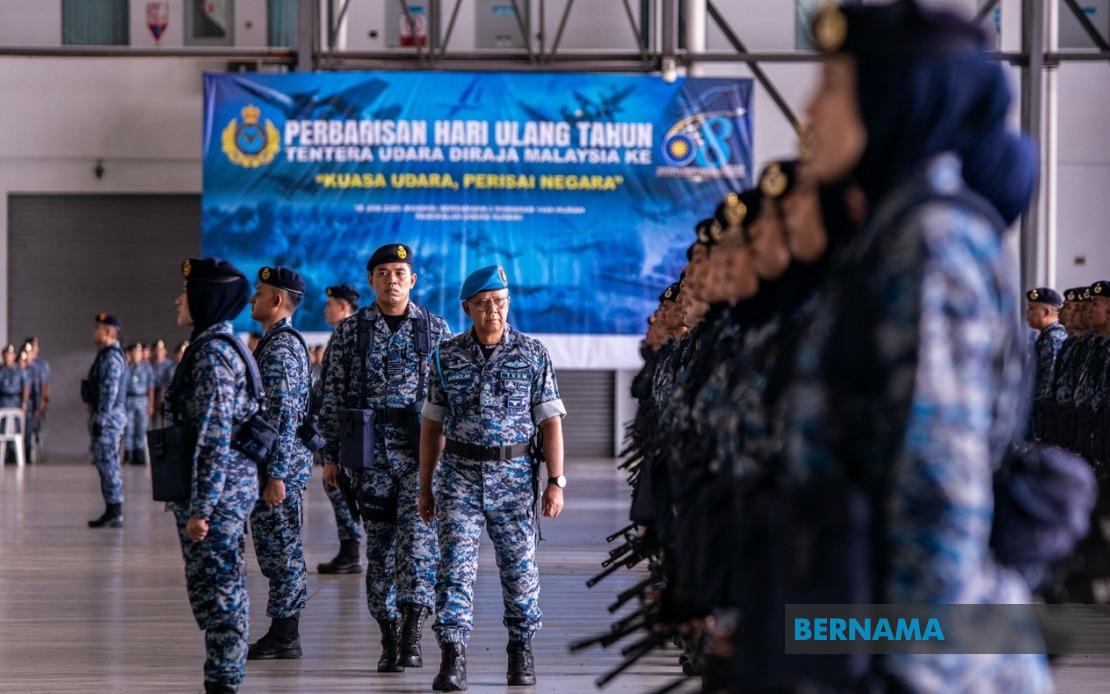
Malaysia is moving to strengthen its aerial defences through a coordinated deployment of radar technology across multiple regions, with the Royal Malaysian Air Force announcing installations at four strategically important locations during its 68th anniversary celebrations here today. The initiative represents a significant step in modernising the nation's surveillance infrastructure and reflects growing recognition of the need to monitor airspace more comprehensively at a time of increased geopolitical tensions in the region.
General Tan Sri Muhamad Norazlan Aris, the Chief of Air Force, outlined the scope of the expansion at the anniversary parade held in Subang. Air defence radar systems are being positioned in Bintulu, Sarawak; Bukit Puteri, Terengganu; and Bukit Lunchu, Johor, while a separate air surveillance radar facility will be established on Pulau Layang-Layang in the South China Sea. This geographic spread ensures coverage across the peninsula and extends monitoring capacity into contested waters where Malaysia maintains claims and interests.
The modernisation programme addresses long-standing gaps in Malaysia's ability to detect and track aircraft movements across its vast airspace. The Chief of Air Force emphasised that these capabilities are fundamental to establishing an effective early warning system and eliminating blind spots that could compromise national security. For a country with territorial claims in the South China Sea and responsibility for monitoring one of the world's busiest maritime corridors, comprehensive radar coverage is not merely a technical upgrade but a strategic necessity.
These installations form part of phase one of the RMAF Capability Development Plan 2055, an ambitious roadmap designed to position Malaysia's air force as a technologically competitive and operationally ready force well into the middle of this century. The 2055 plan acknowledges that future security challenges will differ fundamentally from those facing the military today, driven by emerging technologies, evolving threats, and shifting regional power dynamics. By beginning investments now, Malaysia seeks to avoid the trap of acquiring outdated capabilities that become obsolete within years.
General Tan Sri Muhamad Norazlan drew explicit parallels between Malaysia's modernisation efforts and lessons emerging from the ongoing West Asian conflict. The disruptions to shipping through the Strait of Hormuz have demonstrated how regional instability can disrupt global energy flows and destabilise international supply chains. For Malaysia, a nation deeply integrated into global trade networks and dependent on freedom of navigation through critical chokepoints, such disruptions carry direct economic consequences affecting fuel prices, manufacturing costs, and export competitiveness.
The vulnerability of the Strait of Malacca and the South China Sea to potential interdiction remains a constant concern for Malaysian planners. These waterways facilitate the passage of trillions of dollars in annual trade, including energy shipments that fuel the Malaysian economy. Any restriction of movement through these routes would have cascading effects across domestic industries, from petrochemicals to manufacturing to shipping services. The air force chief's emphasis on maintaining readiness reflects understanding that economic security and military capability are inseparable in the modern strategic environment.
The radar deployments also carry significance for Malaysia's broader security architecture within Southeast Asia. Enhanced surveillance capability strengthens the nation's ability to monitor unauthorised incursions and provides better situational awareness for coordinating with regional partners on airspace management. As countries throughout the region upgrade their defences and surveillance systems, Malaysia must maintain technological parity to ensure its interests are adequately protected and its voice carries weight in regional security discussions.
The timing of the announcement reflects growing momentum in defence modernisation across Asia-Pacific nations responding to shifting regional balances of power. Malaysia's neighbours are investing substantially in advanced military systems, and the air force must keep pace to maintain operational effectiveness. The radar programme represents measured but necessary progress, reflecting budget constraints while addressing the most critical capability gaps.
Beyond hardware, the anniversary parade highlighted the human dimension of force development through the presentation of service medals and commendation certificates to 17 personnel. The parade itself, themed "Kuala Lumpur Udara, Perisai Negara" (Air Power, Shield of the Nation), involved 288 personnel representing diverse specialisations including special forces, ground defence units, and women pilots. This emphasis on inclusive force development and recognition of service excellence underscores that modernisation depends not only on acquiring new equipment but on developing and retaining skilled personnel capable of operating advanced systems effectively.
The four-phase radar deployment will require sustained funding and technical expertise over years to complete. Malaysian defence planners must balance this investment against competing demands for resources, including personnel costs, maintenance, and training. Success will depend on securing adequate budgetary allocation and ensuring the systems integrate effectively with existing command and control infrastructure.
As Malaysia pursues this capability development trajectory, the radar programme serves as a visible demonstration of commitment to territorial defence and maritime security. For a nation navigating complex regional dynamics while maintaining commitments to international law and regional stability, modern surveillance capabilities provide the foundation for informed decision-making and effective deterrence. The installations at Bintulu, Bukit Puteri, Bukit Lunchu, and Pulau Layang-Layang represent more than technical upgrades—they embody Malaysia's determination to maintain strategic autonomy and protect national interests in an increasingly uncertain security environment.

%22%2F%3E%3C%2Fpattern%3E%3C%2Fdefs%3E%3Crect%20width%3D%22100%25%22%20height%3D%22100%25%22%20fill%3D%22url(%23ph2hy9vg)%22%2F%3E%3Crect%20width%3D%22100%25%22%20height%3D%22100%25%22%20fill%3D%22url(%23ph2hy9vp)%22%2F%3E%3Ctext%20x%3D%2250%25%22%20y%3D%2250%25%22%20text-anchor%3D%22middle%22%20dominant-baseline%3D%22central%22%20fill%3D%22rgba(255%2C255%2C255%2C0.95)%22%20font-family%3D%22Georgia%2C%20'Times%20New%20Roman'%2C%20serif%22%20font-weight%3D%22700%22%20font-size%3D%22272%22%20letter-spacing%3D%22-0.02em%22%3EAnwar%3C%2Ftext%3E%3C%2Fsvg%3E)