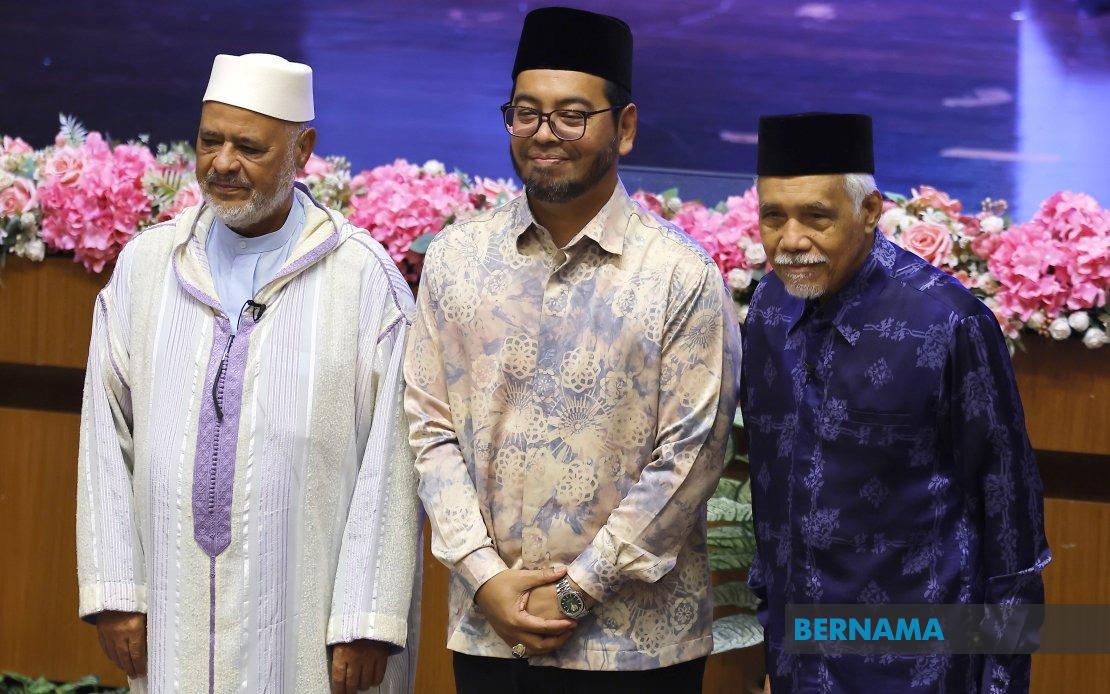
The Prime Minister's Department's Religious Affairs division has rolled out an ambitious outreach programme aimed at democratising access to the scholarly work of prominent Islamic thinkers. The Maal Hijrah Lecture Series, officially launched this week in Putrajaya, represents a strategic effort to ensure that rigorous Islamic thought reaches beyond the confines of university halls and specialist seminars to engage Malaysian society at all levels.
Minister in the Prime Minister's Department (Religious Affairs) Dr Zulkifli Hasan framed the initiative as a necessary response to the risk of intellectual isolation. He emphasised that allowing distinguished Islamic scholars' ideas to circulate only within academic and elite circles would underutilise their potential to inform public discourse and shape broader social understanding. The government's position reflects growing recognition that religious scholarship, when properly disseminated, can address contemporary challenges facing diverse communities.
The timing of the programme's introduction, coinciding with the Islamic calendar milestone of Maal Hijrah 1448H, carries symbolic weight in Malaysia's religious calendar. The lecture series will feature both domestic and international Islamic scholars, creating a platform for cross-border intellectual exchange. This dual focus acknowledges that Islamic jurisprudence and thought represent a global tradition while maintaining particular relevance to the Malaysian context.
Institutional partnerships form the backbone of the initiative's expansion strategy. Both Universiti Sains Islam Malaysia (USIM) and International Islamic University Malaysia (IIUM) have already committed support to the programme, positioning these institutions as key nodes in a network designed to multiply the reach of the lecture series. The collaboration signals confidence that universities are appropriate venues for translating specialist scholarship into accessible public knowledge.
Dr Zulkifli outlined an ambitious vision for the programme's growth, indicating plans to engage additional universities and institutions beyond the initial partners. This expansion reflects confidence that the model will resonate with Malaysian higher education institutions eager to contribute to public intellectual discourse. By building a distributed network rather than centralising activities, the government hopes to create multiple entry points for public engagement with Islamic thought.
The scholar recipients of the inaugural Maal Hijrah awards exemplify the calibre of thinkers the initiative seeks to amplify. Emeritus Professor Osman Bakar, rector of IIUM, earned recognition as the national Maal Hijrah figure, while Prof Sheikh Dr Ahmad Al-Raysuni from Morocco received the international designation. Al-Raysuni's expertise in Islamic jurisprudence brings comparative regional perspectives that can enrich Malaysian discussions of Islamic law and ethics. The Sultan of Perak, Sultan Nazrin Shah, presented the awards at the national-level celebration held at Masjid Putra, lending royal endorsement to the initiative.
Dr Zulkifli's expression of hope that the lecture series might appeal to non-Muslim audiences signals an interesting dimension to the programme's ambitions. Rather than conceiving Islamic scholarship as inherently sectional, the government appears positioned to present it as addressing universal questions of philosophy, ethics, and social organisation. This approach reflects Malaysia's multicultural context and the potential for religious scholarship to contribute to inter-community dialogue and mutual understanding.
The conceptual foundation for the lecture series addresses a perceived gap in Malaysia's knowledge infrastructure. While universities and research centres produce sophisticated Islamic scholarship, mechanisms to translate this work into formats accessible to general audiences remain underdeveloped. The lecture series aims to fill this space, creating structured opportunities for scholars to engage with public audiences in ways that maintain intellectual rigour while improving comprehension.
For Southeast Asian observers, Malaysia's approach offers a model for how governments might support religious scholarship without either imposing ideological constraints or abdicating responsibility for ensuring that intellectual work serves public purposes. The initiative acknowledges state interest in religious knowledge while devolving much of the organisational responsibility to educational institutions, potentially reducing risks of politicisation.
The programme's success will likely depend on whether it attracts diverse audience participation and generates substantive public discussion of the scholars' contributions. Simply providing platforms for lecturers does not guarantee impact; the initiative must cultivate genuine intellectual engagement rather than functioning as ceremonial performance. The involvement of multiple institutions should help sustain momentum and prevent the series from becoming a one-off event.
Looking ahead, the lecture series represents the Malaysian government's bet that Islamic scholarship, when properly presented, can strengthen social cohesion and public discourse. By positioning recognised Islamic figures as resources for the entire society rather than representatives of particular factions, the programme attempts to harness intellectual authority toward inclusive national purposes. Whether this ambitious vision translates into sustained public engagement remains to be seen, but the institutional commitments already secured suggest serious investment in the initiative's development.


%22%2F%3E%3C%2Fpattern%3E%3C%2Fdefs%3E%3Crect%20width%3D%22100%25%22%20height%3D%22100%25%22%20fill%3D%22url(%23ph2hy9vg)%22%2F%3E%3Crect%20width%3D%22100%25%22%20height%3D%22100%25%22%20fill%3D%22url(%23ph2hy9vp)%22%2F%3E%3Ctext%20x%3D%2250%25%22%20y%3D%2250%25%22%20text-anchor%3D%22middle%22%20dominant-baseline%3D%22central%22%20fill%3D%22rgba(255%2C255%2C255%2C0.95)%22%20font-family%3D%22Georgia%2C%20'Times%20New%20Roman'%2C%20serif%22%20font-weight%3D%22700%22%20font-size%3D%22272%22%20letter-spacing%3D%22-0.02em%22%3EAnwar%3C%2Ftext%3E%3C%2Fsvg%3E)