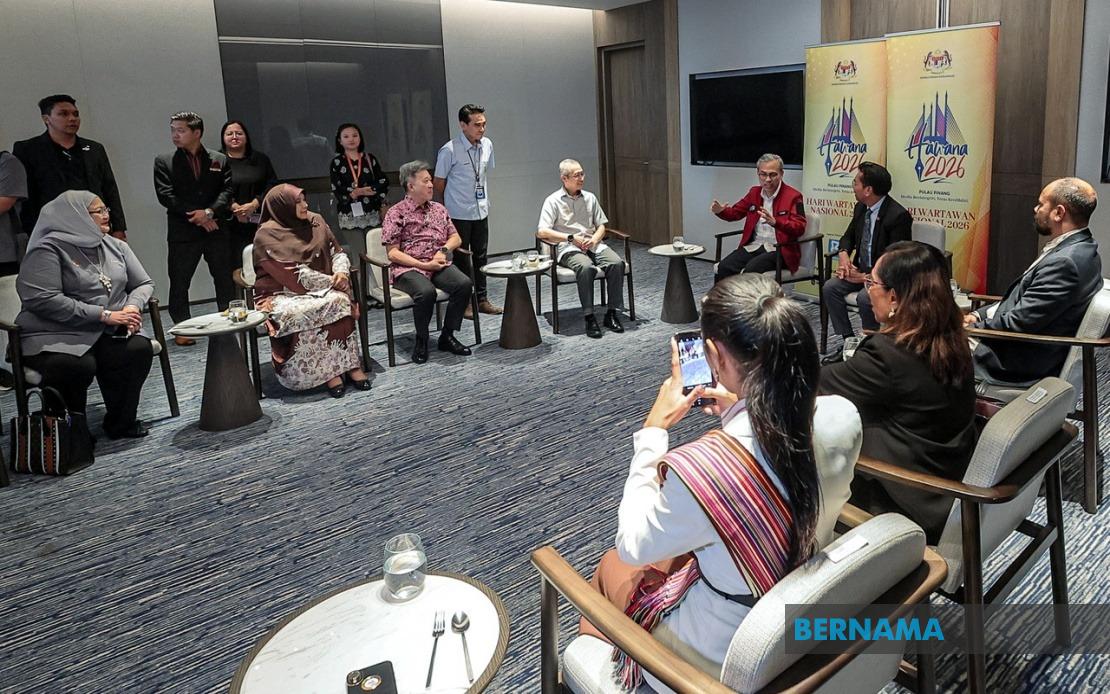
Communications Minister Datuk Fahmi Fadzil has signalled Malaysia's intention to deepen institutional ties with Timor-Leste in the media and broadcasting sector, proposing a framework that would involve multiple government agencies and regulatory bodies. The overture emerged during a bilateral meeting in Butterworth on June 20, where Fahmi engaged with a delegation from Timor-Leste headed by the country's Secretary of State for Social Communication, Expedito Loro Dias Ximenes, alongside senior figures from the nation's news agency, Agencia Noticiosa de Timor-Leste (TATOLI).
The initiative centres on reinforcing existing linkages between Malaysia's Malaysian National News Agency (Bernama) and state broadcaster Radio Televisyen Malaysia (RTM) with their Timorese counterparts. Beyond institutional coordination, Fahmi outlined plans for the Tun Abdul Razak Broadcasting and Information Institute (IPPTAR) to develop capacity-building programmes tailored specifically for Timor-Leste's journalism community. Such exchanges represent part of a broader Southeast Asian strategy to harmonise media standards and professional practices across the region, particularly as smaller nations in the area work to professionalise their broadcasting and news gathering operations.
A notable dimension of the discussion centred on comparative press freedom metrics, an area where Timor-Leste has achieved unexpected prominence. According to the World Press Freedom Index compiled annually by international watchdog Reporters Without Borders (RSF), Timor-Leste currently ranks as the regional leader across Southeast Asia, placing 30th globally out of 180 countries assessed. Malaysia, meanwhile, occupies the second position within the region, a standing that Fahmi acknowledged represents meaningful progress but leaves room for further advancement.
Fahmi's candid recognition of Timor-Leste's superior index ranking reflects a strategic acknowledgement by the MADANI Government that neighbouring democracies may offer lessons in press governance and editorial independence. Rather than deflecting comparisons, the minister framed Malaysia's trajectory as one of consistent improvement, particularly over the three to four years since the MADANI administration assumed office. This positioning contrasts with the previous government's record and underscores the current administration's stated commitment to addressing historical concerns that had constrained Malaysia's international media freedom credentials.
The minister attributed part of Timor-Leste's strong showing to institutional frameworks and policy decisions that have safeguarded editorial autonomy while maintaining constructive relationships between government and media outlets. Malaysia's acknowledgement of this achievement suggests receptiveness to studying how a younger democratic system has navigated the tensions between state oversight and press independence, tensions that have persistently complicated Malaysia's own press freedom standing on the global stage.
The bilateral engagement occurs within the broader context of the sixth edition of HAWANA, a regional media conference convening approximately one thousand journalism professionals from across Malaysia and beyond at the PICCA Convention Centre @ Butterworth Arena. This year's programme operates under the overarching theme of 'Media Integrity Strengthens Credibility', framing discussions around how newsrooms can rebuild public trust amid widespread concerns over misinformation and editorial bias. Prime Minister Datuk Seri Anwar Ibrahim was scheduled to officially launch the conference proceedings, underscoring the government's institutional commitment to advancing professional media standards.
The timing of Malaysia's outreach to Timor-Leste reflects evolving regional dynamics in Southeast Asia, where growing economic interdependence and security considerations have intensified bilateral engagement across multiple sectors. Media cooperation, traditionally a lower-priority area, has acquired heightened significance as governments recognise the role of professional journalism in combating disinformation, enhancing democratic participation, and fostering cross-border understanding. A more integrated regional approach to training, editorial standards, and news agency cooperation could strengthen the capacity of smaller nations to resist external information manipulation and invest in quality local reporting.
For Malaysia specifically, the commitment to improving its World Press Freedom Index standing carries both domestic and international implications. Domestically, enhancing press freedom credentials aligns with the MADANI Government's broader agenda of institutional reform and democratic renewal, signalling to domestic constituencies and international observers a genuine departure from authoritarian governance patterns. Internationally, a stronger ranking would enhance Malaysia's soft power positioning within Southeast Asia and the wider Indo-Pacific region, counteracting narratives of democratic backsliding that have circulated in Western media assessments.
The proposed journalist training initiatives through IPPTAR represent a concrete instrument for translating bilateral goodwill into measurable capacity development. Cross-national journalism exchanges and professional development programmes can elevate technical competencies while creating informal networks among practitioners, fostering a culture of shared professional standards and editorial ethics that transcends national boundaries. For Timor-Leste, access to Malaysian expertise in broadcast technology and news production could accelerate the modernisation of its media infrastructure, while Malaysian journalists gain exposure to how younger democracies approach questions of editorial independence.
Fahmi's delegation hosting responsibilities extended to high-ranking ministry personnel, including secretary-general Datuk Abdul Halim Hamzah, broadcasting director-general Ashwad Ismail, and Bernama leadership. This elevated participation underscores the administrative seriousness attached to the engagement, suggesting that cooperation proposals will advance beyond rhetorical gestures toward concrete institutional protocols and resource allocation.
The broader significance of this initiative extends beyond bilateral relations to encompass regional questions about media governance standards and the role of public broadcasters in the modern information environment. As Southeast Asian democracies grapple with how to balance journalistic independence against political pressures and commercial interests, initiatives such as the Malaysia-Timor-Leste cooperation framework offer opportunities for peer learning and collective problem-solving. The conference theme of media integrity reflects recognition that credible, independent journalism serves as essential infrastructure for functioning democracies, particularly in regions where misinformation and state-sponsored disinformation campaigns pose growing threats to informed citizenship.


%22%2F%3E%3C%2Fpattern%3E%3C%2Fdefs%3E%3Crect%20width%3D%22100%25%22%20height%3D%22100%25%22%20fill%3D%22url(%23ph2hy9vg)%22%2F%3E%3Crect%20width%3D%22100%25%22%20height%3D%22100%25%22%20fill%3D%22url(%23ph2hy9vp)%22%2F%3E%3Ctext%20x%3D%2250%25%22%20y%3D%2250%25%22%20text-anchor%3D%22middle%22%20dominant-baseline%3D%22central%22%20fill%3D%22rgba(255%2C255%2C255%2C0.95)%22%20font-family%3D%22Georgia%2C%20'Times%20New%20Roman'%2C%20serif%22%20font-weight%3D%22700%22%20font-size%3D%22272%22%20letter-spacing%3D%22-0.02em%22%3EAnwar%3C%2Ftext%3E%3C%2Fsvg%3E)