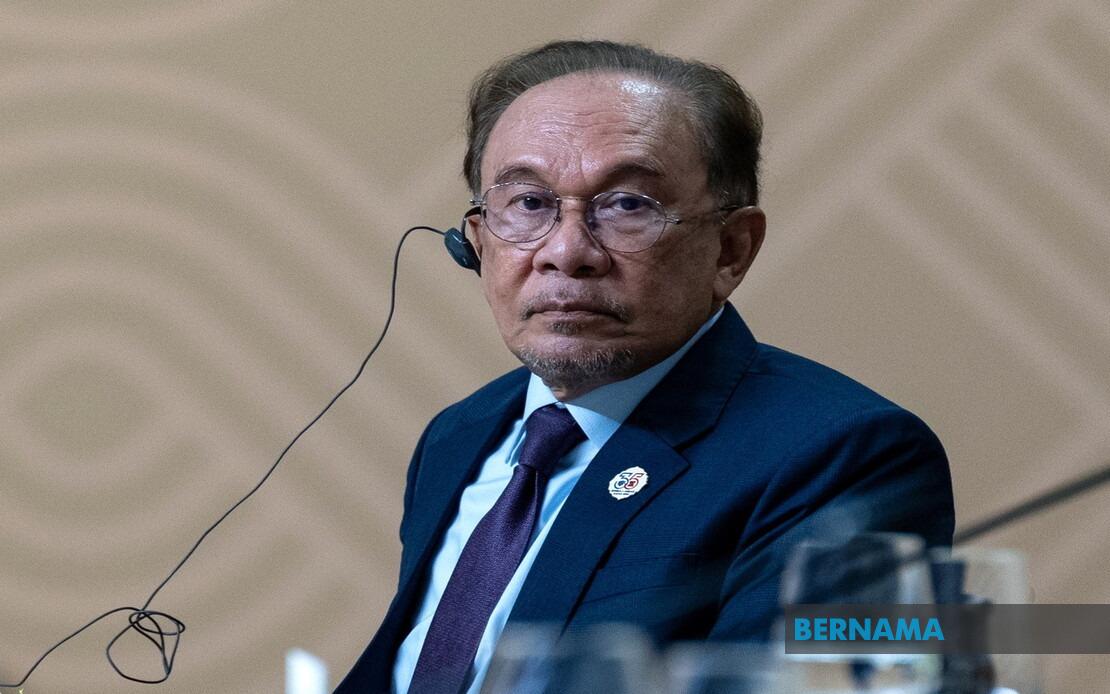
Malaysia's Prime Minister Datuk Seri Anwar Ibrahim has publicly endorsed the viability of ongoing peace negotiations between the United States and Iran, declaring that a memorandum of understanding between the two countries could represent a watershed moment for regional stability in West Asia. Speaking at the 35th ASEAN-Russia Commemorative Summit in Kazan on Thursday, Anwar articulated an unusually bullish assessment of diplomatic progress on what has long been one of the world's most intractable conflicts.
The Malaysian leader's optimism hinges partly on a compressed timeline that both parties are reportedly working within. A final agreement, should it materialise, would need to be reached within a maximum 60-day window—a deadline that underscores both the urgency negotiators feel and the fragility of any emerging consensus. Yet despite this relatively tight constraint, Anwar suggested that momentum rather than despair characterises the current phase of talks, marking a departure from years of failed diplomatic overtures.
Anwar's assessment carries particular weight because it is grounded in intelligence gathered directly from key intermediaries rather than speculation. Pakistan Prime Minister Shehbaz Sharif has been instrumental in facilitating talks between Washington and Tehran, and Sharif has maintained close communication with Anwar about the trajectory of negotiations. According to Anwar, Sharif has been embedded throughout the process, observing the deliberations at every critical juncture and maintaining an open, substantive dialogue about where discussions are headed. This insider perspective suggests that the optimism is not merely rhetorical positioning but reflects tangible shifts in negotiating positions.
Russian President Vladimir Putin, whom Anwar met during the ASEAN-Russia summit, similarly conveyed upbeat views about the prospects for a breakthrough. Putin's positive outlook adds another layer of credibility, given Russia's geopolitical interests in West Asia and its role as an observer—if not always active participant—in regional diplomatic initiatives. The alignment of sentiment among three major players across different geopolitical alignments implies that there may indeed be genuine movement where previously there has been deadlock.
The significance of potential US-Iran reconciliation for Malaysia and the broader Southeast Asian region cannot be overstated. A sustainable peace agreement would dampen regional tensions that have rippled across global energy markets, shipping corridors, and security architectures. For Malaysia, which relies heavily on Gulf oil and maintains important trade relationships throughout the Middle East, any reduction in geopolitical volatility translates directly into economic benefits and predictability. Conversely, continued confrontation between Washington and Tehran creates uncertainty that undermines regional prosperity and diverts resources away from development towards military preparedness.
Anwar tempered his optimism with a measured acknowledgment of the unpredictability introduced by the current US administration under President Donald Trump. The Malaysian premier refrained from making categorical predictions, recognising that political calculations in Washington could shift the calculus at any moment. Trump's track record on Iran policy—marked by the withdrawal from the Joint Comprehensive Plan of Action in 2018 and subsequent maximum pressure campaigns—means that scepticism about American commitment to any agreement remains warranted. However, Anwar's framing suggests that even factoring in this element of uncertainty, the overall trajectory appears encouraging.
The symbolic weight of Malaysia's public backing for these negotiations also merits consideration. As a Muslim-majority nation with significant Shia populations, Malaysia occupies a unique position in West Asian affairs. By lending explicit support to US-Iran dialogue, Anwar is signalling that the broader Muslim world and Asia-Pacific region stand ready to welcome de-escalation rather than view it with suspicion. This positioning could help legitimise any eventual agreement within constituencies that have historically viewed American Middle East policy with deep scepticism.
The 60-day timeline itself carries implications for regional powers and their hedging strategies. Countries across Southeast Asia have been calibrating relationships with both Iran and the United States, attempting to maintain equitable balance sheets with both powers. If a peace agreement is genuinely within reach, nations from Malaysia to Vietnam and Thailand will need to recalibrate their diplomatic and economic positioning. The clarity that would come from resolution, even partial, would allow for more efficient allocation of diplomatic capital and resources.
Anwar's comments also reflect Malaysia's broader diplomatic activism on regional conflict resolution. Beyond energy security concerns, there is a principled dimension to Malaysia's position. The country has longstanding experience mediating disputes and advocating for dialogue-based solutions to seemingly intractable problems. By publicly backing the US-Iran peace process, Anwar positions Malaysia as a voice for rationality and negotiation in a region often characterised by militarisation and confrontation.
The road ahead remains uncertain, and 60 days is indeed a compressed timeframe for resolving decades of animosity, numerous proxy conflicts, and structural security dilemmas between Washington and Tehran. Yet Anwar's carefully calibrated optimism, drawn from conversations with frontline mediators and major powers, suggests that dismissing these negotiations as mere theatre would be premature. For Malaysia and Southeast Asia, a successful outcome would represent a genuine foreign policy achievement with tangible ramifications for regional prosperity and stability.


%22%2F%3E%3C%2Fpattern%3E%3C%2Fdefs%3E%3Crect%20width%3D%22100%25%22%20height%3D%22100%25%22%20fill%3D%22url(%23ph2hy9vg)%22%2F%3E%3Crect%20width%3D%22100%25%22%20height%3D%22100%25%22%20fill%3D%22url(%23ph2hy9vp)%22%2F%3E%3Ctext%20x%3D%2250%25%22%20y%3D%2250%25%22%20text-anchor%3D%22middle%22%20dominant-baseline%3D%22central%22%20fill%3D%22rgba(255%2C255%2C255%2C0.95)%22%20font-family%3D%22Georgia%2C%20'Times%20New%20Roman'%2C%20serif%22%20font-weight%3D%22700%22%20font-size%3D%22272%22%20letter-spacing%3D%22-0.02em%22%3EAnwar%3C%2Ftext%3E%3C%2Fsvg%3E)