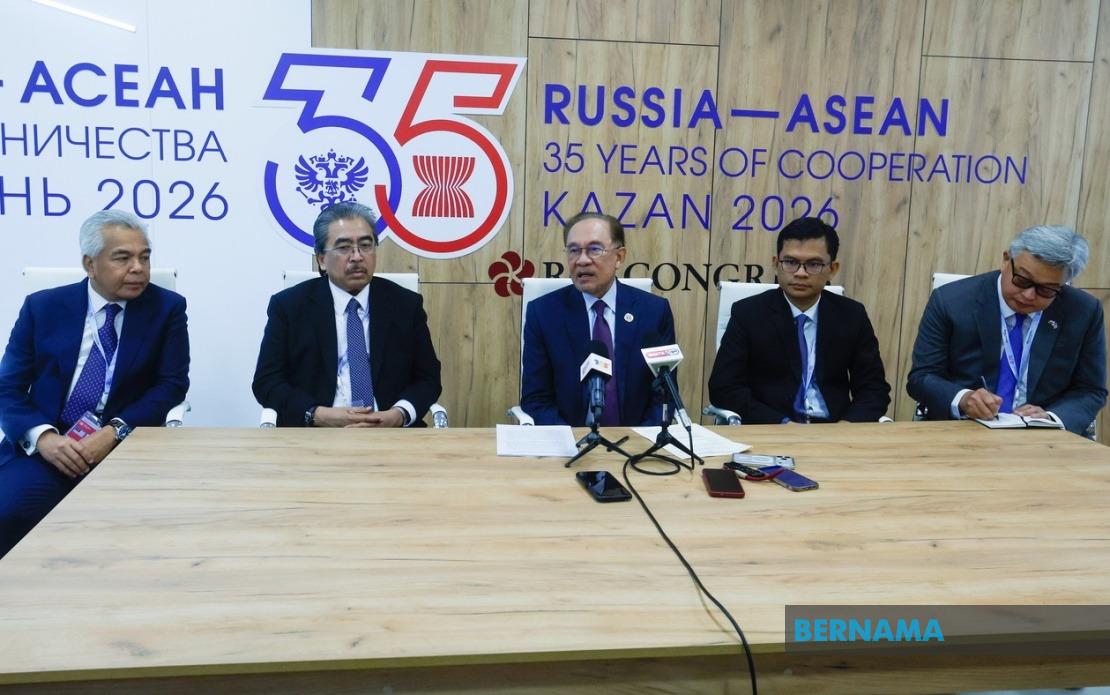
Prime Minister Datuk Seri Anwar Ibrahim has called for the swift implementation of visa-free travel between Malaysia and Russia alongside the establishment of direct air routes, arguing that both measures are essential to attracting more Russian tourists to the country. Speaking to the Malaysian media in Kazan following his attendance at the ASEAN-Russia Commemorative Summit, Anwar highlighted a significant disparity between Malaysia's current visitor numbers from Russia and those achieved by regional and international competitors.
The comparison painted by the Prime Minister underscores the untapped potential within Malaysia's tourism sector. Türkiye attracts approximately five million Russian tourists annually, while Thailand draws two million visitors from the same source. Malaysia, by contrast, receives just 100,000 Russian tourists each year—a figure that Anwar characterized as inadequate given the historical ties and mutual interests between the two nations. This gap suggests that structural barriers rather than lack of interest are preventing stronger tourism ties from developing.
Anwar identified multiple obstacles hindering the growth of travel between the two countries. Chief among these are the absence of direct flight connectivity and the complexity surrounding payment mechanisms for Russian visitors. International payment systems continue to present challenges due to various geopolitical and financial restrictions, making transactions cumbersome for prospective tourists planning their Malaysian holidays. Additionally, the Prime Minister pointed to outdated administrative procedures and regulatory frameworks that he characterized as archaic and unnecessarily restrictive, creating friction in the visa application process.
A significant aspect of Anwar's remarks centered on what he described as excessive caution regarding international perceptions. Malaysia and other nations, he suggested, remain overly concerned with how certain countries might react to closer bilateral engagement with Russia. This conservative approach, in his view, places Malaysia at a competitive disadvantage compared with other nations that have pursued more pragmatic tourism and trade relationships regardless of potential international criticism. The Prime Minister's comments suggest that strategic hesitation rooted in geopolitical sensitivity may be costing Malaysia substantial economic opportunities.
The issue extends beyond Russia alone. Anwar drew parallels with Iran, another country experiencing lower-than-potential visitor numbers to Malaysia due to similar barriers and procedural complications. The underlying message conveyed during the press conference was that Malaysia needs to adopt a more streamlined, business-friendly approach to tourism facilitation that prioritizes practical outcomes over excessive concern about external reactions from third parties.
The timing of these remarks is significant. The ASEAN-Russia Commemorative Summit provided an ideal diplomatic platform for Anwar to underscore Malaysia's commitment to deepening bilateral relationships while signaling to Russian counterparts that the Malaysian government is prepared to remove obstacles to visitor flows. Such public statements at international forums carry weight in negotiations and signal political will to implement necessary changes.
From a Malaysian perspective, the expansion of Russian tourism represents a valuable economic opportunity. Each additional 100,000 tourists could generate substantial foreign exchange earnings, support employment across hospitality, transportation, and retail sectors, and enhance Malaysia's regional tourism brand. Russia's geographic position, coupled with its significant middle-class population with disposable income and travel aspirations, makes it an attractive demographic for Malaysian tourism operators.
The regional implications are equally noteworthy. Thailand and Türkiye have successfully leveraged Russian visitor demand, demonstrating the commercial viability of such tourism flows even amidst geopolitical complexities. Malaysia's current underperformance suggests competitive disadvantage rather than lack of demand. By expediting visa facilitation and establishing direct flights, Malaysia could capture a meaningful share of Russian leisure travelers, particularly during winter months when warm, tropical destinations become especially appealing.
Implementing Anwar's recommendations would require coordination across multiple government agencies and the private aviation sector. Direct flights require commercial viability, carrier interest, and supporting infrastructure. Visa-free or simplified visa arrangements necessitate border security protocols that balance accessibility with safety concerns. Payment system reforms involve banking regulations and potentially international coordination. Yet the Prime Minister's public advocacy indicates these obstacles are surmountable with sufficient political commitment.
The modernization of administrative procedures represents perhaps the most immediately achievable reform. Transitioning from archaic visa processes to digital platforms and risk-based assessment systems could reduce processing times and friction without compromising security. Malaysia has demonstrated capability in such digital transitions elsewhere within government services, suggesting that the technical means exist.
Anwar's emphasis on reducing external pressure in decision-making also reflects evolving Malaysian foreign policy pragmatism. While maintaining important international relationships, Malaysia increasingly recognizes that pursuing independent national interests need not preclude engagement with nations facing international scrutiny. This balanced approach positions Malaysia as a nation capable of sophisticated diplomatic maneuvering.
The ASEAN-Russia Commemorative Summit context amplifies the significance of these remarks. ASEAN as a bloc has traditionally maintained strategic ambiguity regarding great power relationships. Malaysia's advocacy for stronger Russia ties, expressed through tangible tourism facilitation measures, reflects its own assessment of mutual benefit and commercial opportunity. Such positioning also enhances Malaysia's credibility as an honest interlocutor between different regional and international stakeholders.
Moving forward, the true measure of Anwar's commitment will lie in concrete actions by relevant ministries and agencies. Whether the government implements visa-free travel arrangements, facilitates direct flight establishment through regulatory support, and reforms payment processing systems will determine whether these remarks translate into actual increased Russian visitor numbers or remain aspirational statements.

%22%2F%3E%3C%2Fpattern%3E%3C%2Fdefs%3E%3Crect%20width%3D%22100%25%22%20height%3D%22100%25%22%20fill%3D%22url(%23ph2hy9vg)%22%2F%3E%3Crect%20width%3D%22100%25%22%20height%3D%22100%25%22%20fill%3D%22url(%23ph2hy9vp)%22%2F%3E%3Ctext%20x%3D%2250%25%22%20y%3D%2250%25%22%20text-anchor%3D%22middle%22%20dominant-baseline%3D%22central%22%20fill%3D%22rgba(255%2C255%2C255%2C0.95)%22%20font-family%3D%22Georgia%2C%20'Times%20New%20Roman'%2C%20serif%22%20font-weight%3D%22700%22%20font-size%3D%22272%22%20letter-spacing%3D%22-0.02em%22%3EAnwar%3C%2Ftext%3E%3C%2Fsvg%3E)