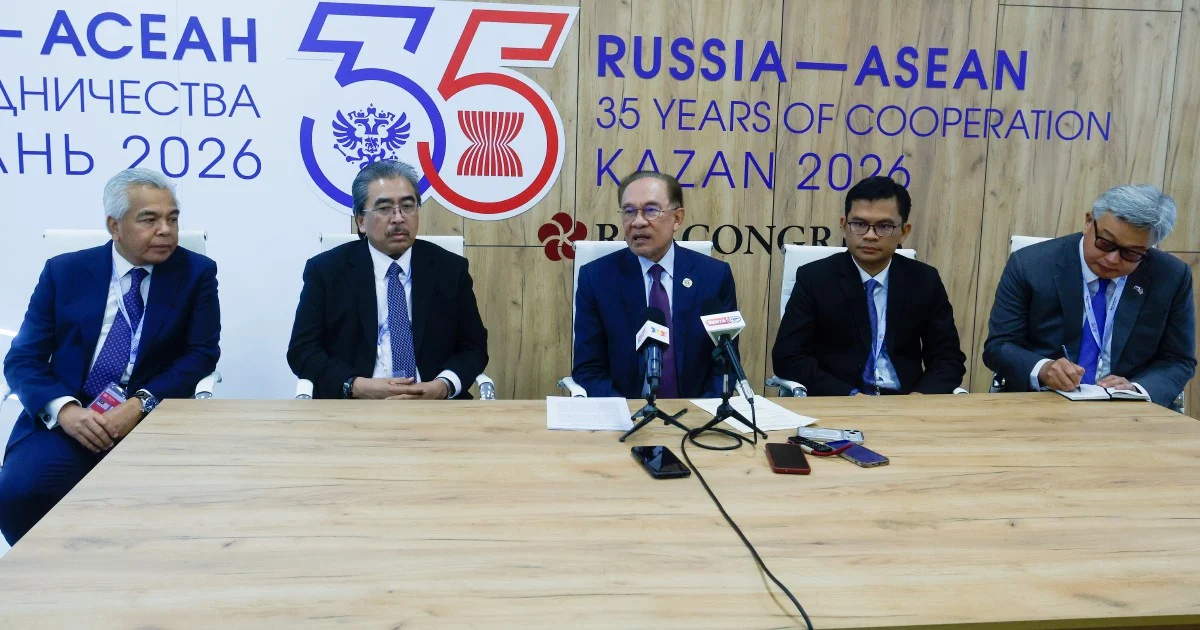
Prime Minister Datuk Seri Anwar Ibrahim has directed government agencies to accelerate the implementation of visa-free travel privileges for Russian nationals visiting Malaysia, signalling the administration's commitment to reconstructing the country's tourism sector following pandemic-induced setbacks. The pronouncement, made during remarks in Kazan, underscores Malaysia's pivot towards diversifying its international visitor base and strengthening ties with emerging market economies.
The move represents a calculated approach to tourism recovery, particularly as Malaysia contends with competitive pressures from regional destinations vying for the same traveller demographics. By removing visa impediments for Russian citizens, Kuala Lumpur aims to lower barriers to entry and position itself as an accessible Southeast Asian gateway. This initiative signals recognition that bureaucratic friction—even minor requirements like pre-arrival visa applications—can deter spontaneous leisure travel and group bookings.
Russia has traditionally maintained a significant tourism presence in Southeast Asia, with Russian visitors contributing meaningfully to regional hospitality and retail sectors. However, geopolitical developments in recent years have created uncertainty around travel flows. The PM's directive suggests Malaysia is strategically positioning itself to capture Russian traveller spending during a period when traditional European and North American markets remain competitive and saturated.
The timing of this announcement carries particular significance given Malaysia's broader economic diversification agenda. Tourism represents a critical foreign exchange earner and employment generator, particularly in hospitality, transportation, and retail sectors. Recovery targets set by the government require bold measures to rebuild international arrivals to pre-pandemic levels. By facilitating frictionless travel arrangements for a substantial source market, the administration demonstrates willingness to employ administrative tools to stimulate demand.
Implementation of visa-free arrangements requires coordination across multiple government bodies, including the Immigration Department, Foreign Ministry, and tourism promotion agencies. The PM's explicit directive to expedite procedures suggests these entities should prioritise this initiative over standard processing timelines. Such acceleration typically involves streamlining approvals, reducing inter-departmental bureaucratic delays, and allocating additional resources to finalise implementing regulations.
From a geopolitical perspective, the visa-facilitation initiative carries subtle diplomatic dimensions. Russia has sought to strengthen ties across Asia as Western nations maintain sanctions and restrictions. Malaysia's willingness to embrace Russian visitors—coupled with the ASEAN bloc's longstanding non-aligned positioning—signals openness to engagement regardless of international tension. This approach aligns with Malaysia's historical neutrality in great power competition and preference for pragmatic, mutually beneficial relationships.
The Russian outbound tourism market demonstrates resilience despite external pressures, with travellers increasingly exploring alternative destinations beyond traditional European circuits. Southeast Asia's relative affordability, diverse experiences, and cultural attractions hold considerable appeal for Russian visitors seeking value and authenticity. Malaysia's natural attractions—from Petronas Twin Towers to Taman Negara's biodiversity—offer compelling propositions that justify marketing investments in this demographic.
Successful implementation of this initiative could establish a template for similar arrangements with other non-traditional source markets. Should visa-free travel effectively boost Russian visitor numbers and associated spending, the government may pursue comparable arrangements with other nationalities. This experimental approach allows policymakers to assess demand elasticity and measure tourism revenue impacts before committing to broader policy shifts.
For Malaysian stakeholders across the tourism ecosystem, the directive promises tangible benefits. Hotel operators, tour operators, restaurants, and retail establishments stand to gain from incremental visitor volumes and associated expenditure. Small and medium enterprises, particularly those in secondary tourism destinations, could benefit significantly if promotional efforts successfully distribute visitors beyond major urban centres. Regional distribution of tourism benefits represents a broader government objective, as central authorities seek to catalyse provincial economic development.
The announcement also reflects Malaysia's recognition that tourism competitiveness increasingly depends on convenience and accessibility. Indonesia, Thailand, and Vietnam have previously employed similar visa liberalisation strategies to attract specific markets. Malaysia's comparable move ensures the country remains competitive rather than losing market share to rivals offering more straightforward entry procedures. In an era when travellers can easily substitute between regional destinations, removing administrative friction becomes a crucial competitive advantage.
Challenges to successful implementation include ensuring security and immigration control mechanisms remain robust despite streamlined procedures. The government must balance facilitation against legitimate concerns regarding identity verification and security screening. Working closely with Russian authorities to establish mutual recognition protocols and information-sharing arrangements will prove essential to managing these considerations without undermining the initiative's convenience benefits.
The PM's directive carries broader implications for Malaysia's tourism strategy beyond the immediate Russian market. It signals that the administration intends to employ creative policy instruments—not merely marketing expenditure—to drive sector recovery. This approach acknowledges that competitive advantage in modern tourism increasingly derives from operational accessibility rather than destination inherence alone. As Malaysia continues recovering from pandemic impacts and competing for international visitor dollars, such administrative innovations may prove as valuable as infrastructure investment in determining long-term success.

%22%2F%3E%3C%2Fpattern%3E%3C%2Fdefs%3E%3Crect%20width%3D%22100%25%22%20height%3D%22100%25%22%20fill%3D%22url(%23ph2hy9vg)%22%2F%3E%3Crect%20width%3D%22100%25%22%20height%3D%22100%25%22%20fill%3D%22url(%23ph2hy9vp)%22%2F%3E%3Ctext%20x%3D%2250%25%22%20y%3D%2250%25%22%20text-anchor%3D%22middle%22%20dominant-baseline%3D%22central%22%20fill%3D%22rgba(255%2C255%2C255%2C0.95)%22%20font-family%3D%22Georgia%2C%20'Times%20New%20Roman'%2C%20serif%22%20font-weight%3D%22700%22%20font-size%3D%22272%22%20letter-spacing%3D%22-0.02em%22%3EAnwar%3C%2Ftext%3E%3C%2Fsvg%3E)