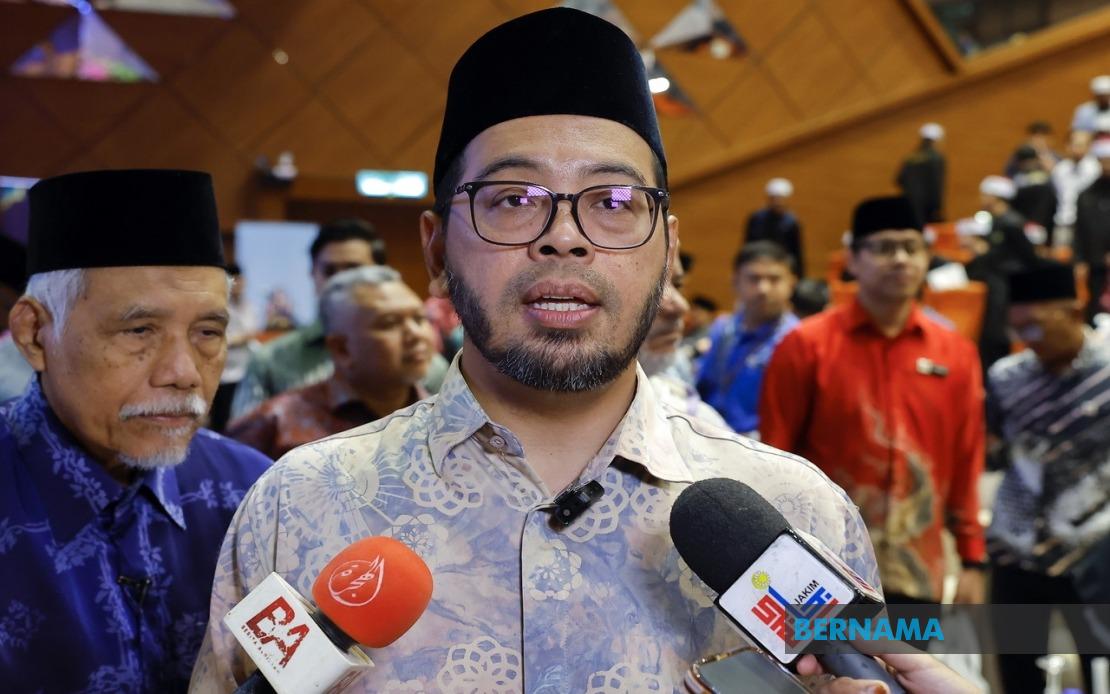
The Prime Minister's Department (Religious Affairs) has committed to strengthening its outreach to young Malaysians following a significant royal intervention on how the country should address contemporary threats to social stability. The initiative comes in response to Sultan Nazrin Shah's recent address calling for religious leaders to adopt a more proactive stance in engaging with youth populations confronting unprecedented challenges in an increasingly digital and fractured information landscape.
Dr Zulkifli Hasan, Minister in the Prime Minister's Department (Religious Affairs), pledged that his ministry will embrace the Sultan's directives and integrate them into its programmatic framework. Speaking after presiding over the National and International Tokoh Ma'al Hijrah Premier Lecture 1448/2026 in Putrajaya, the minister underscored the department's commitment to translating the royal message into concrete action. He indicated that the guidance provided by the Perak Sultan would serve as a foundational principle for shaping future initiatives aimed at safeguarding young people from ideological radicalisation and the corrosive effects of online disinformation.
The Sultan's intervention addresses a mounting preoccupation among Malaysia's policymakers regarding the vulnerability of younger generations to extremist recruitment and the destabilising influence of unverified information circulating across digital platforms. Sultan Nazrin Shah articulated a comprehensive assessment of the pressures confronting contemporary youth, highlighting not merely security concerns but also the broader existential anxieties that shape their worldview. Environmental degradation, geopolitical instability, economic precarity, algorithmic polarisation, and eroding confidence in traditional institutions collectively constitute a complex ecosystem within which radicalisation becomes a potential response to perceived systemic failure.
The Perak Sultan's remarks reflect a sophisticated understanding of how extremist narratives gain purchase among young people by offering explanatory frameworks and community belonging in response to genuine grievances and uncertainty. By framing religious leaders' engagement with youth as a preventive measure rather than merely a punitive one, the Sultan has effectively reoriented Malaysian policy discourse toward understanding radicalisation as a symptom of deeper social disconnection. This approach acknowledges that confronting digital polarisation and misinformation requires not simply fact-checking or surveillance but meaningful connection between faith communities and the young people they seek to influence.
The commitment to implement the Sultan's vision carries particular significance for Southeast Asia, where Malaysia has positioned itself as a model for moderate Islam and interfaith coexistence. The region faces mounting challenges from various extremist groups leveraging social media to radicalise recruits across borders, particularly targeting disaffected youth in urban centres. Malaysia's decision to institutionalise royal directives regarding youth engagement through the Prime Minister's Department signals that combating digital-era threats has become a matter of highest governmental priority, not merely a secondary concern delegated to security agencies.
Dr Zulkifli Hasan's statement that the department would "mainstream" the Sultan's messages suggests a systematic effort to embed these principles across multiple governmental touchpoints and programmes. This approach implies coordination across religious bodies, educational institutions, and digital governance mechanisms to create a coherent national strategy. The minister's invocation of "responding to the best of our ability" acknowledges the scale of the challenge while committing to resource allocation commensurate with the threat level that the government perceives.
The timing of this initiative reflects heightened awareness among Malaysian authorities of how extremist narratives intersect with legitimate grievances about climate change, economic inequality, and geopolitical instability. By empowering religious leaders to engage youth substantively on these broader concerns rather than only on theological or security matters, the government appears to be adopting a holistic approach to radicalisation prevention. This methodology recognises that young Malaysians require guidance not solely from security or intelligence frameworks but from trusted spiritual authorities who can help them navigate moral complexity and construct meaning in turbulent times.
The convergence of royal directive and ministerial implementation also underscores the constitutional and institutional mechanisms through which Malaysia addresses systemic challenges. Sultans' addresses function as more than ceremonial statements; they effectively mobilise government bureaucracy and shape policy priorities. This dynamic has particular relevance for Malaysia's federal system, where coordination between palace institutions and elected government is essential for executing nationwide initiatives, particularly those requiring religious institutional participation.
Further, the emphasis on misinformation and digital polarisation reflects Malaysia's struggle with the weaponisation of social media platforms. Unlike traditional propaganda, which required significant resources and could be monitored relatively easily, digital misinformation spreads through decentralised networks and algorithmic amplification, making it difficult for state actors alone to counter. By positioning religious leaders as authentic voices capable of reaching youth audiences through trusted channels, the government is attempting to offset these structural disadvantages inherent to state-controlled communication.
The implementation of these programmes will likely encompass multiple components, from enhanced chaplaincy services in schools and universities to coordinated social media campaigns by religious organisations, as well as enhanced training for faith leaders in digital literacy and counter-narrative techniques. Success will depend substantially on whether religious institutions perceive sufficient autonomy and resources to conduct meaningful youth engagement rather than merely transmitting government messaging.
The broader Malaysian context shows a government increasingly focused on preventive approaches to radicalisation, moving beyond security-centric interventions toward social and spiritual inoculation. This shift acknowledges that sustainable solutions to extremism require addressing root causes of alienation and offering young people compelling alternatives to radical ideologies. The Sultan's intervention lends royal authority to this reorientation, signalling that preventing radicalisation is compatible with Malaysia's foundational constitutional commitments to Islam and traditional institutions.
As Malaysia implements these youth engagement initiatives, their effectiveness will become a significant indicator of whether religious institutions can successfully compete with extremist narratives in the digital sphere. The government's confidence in religious leaders reflects a strategic calculation that authenticity and spiritual credibility matter as much as institutional resources when addressing the ideological vulnerabilities of young Malaysians. Whether this approach produces measurable outcomes in reducing radicalisation, misinformation susceptibility, and digital polarisation will substantially influence Malaysia's capacity to maintain social cohesion amid ongoing technological and geopolitical transformation.

%22%2F%3E%3C%2Fpattern%3E%3C%2Fdefs%3E%3Crect%20width%3D%22100%25%22%20height%3D%22100%25%22%20fill%3D%22url(%23ph2hy9vg)%22%2F%3E%3Crect%20width%3D%22100%25%22%20height%3D%22100%25%22%20fill%3D%22url(%23ph2hy9vp)%22%2F%3E%3Ctext%20x%3D%2250%25%22%20y%3D%2250%25%22%20text-anchor%3D%22middle%22%20dominant-baseline%3D%22central%22%20fill%3D%22rgba(255%2C255%2C255%2C0.95)%22%20font-family%3D%22Georgia%2C%20'Times%20New%20Roman'%2C%20serif%22%20font-weight%3D%22700%22%20font-size%3D%22272%22%20letter-spacing%3D%22-0.02em%22%3EAnwar%3C%2Ftext%3E%3C%2Fsvg%3E)