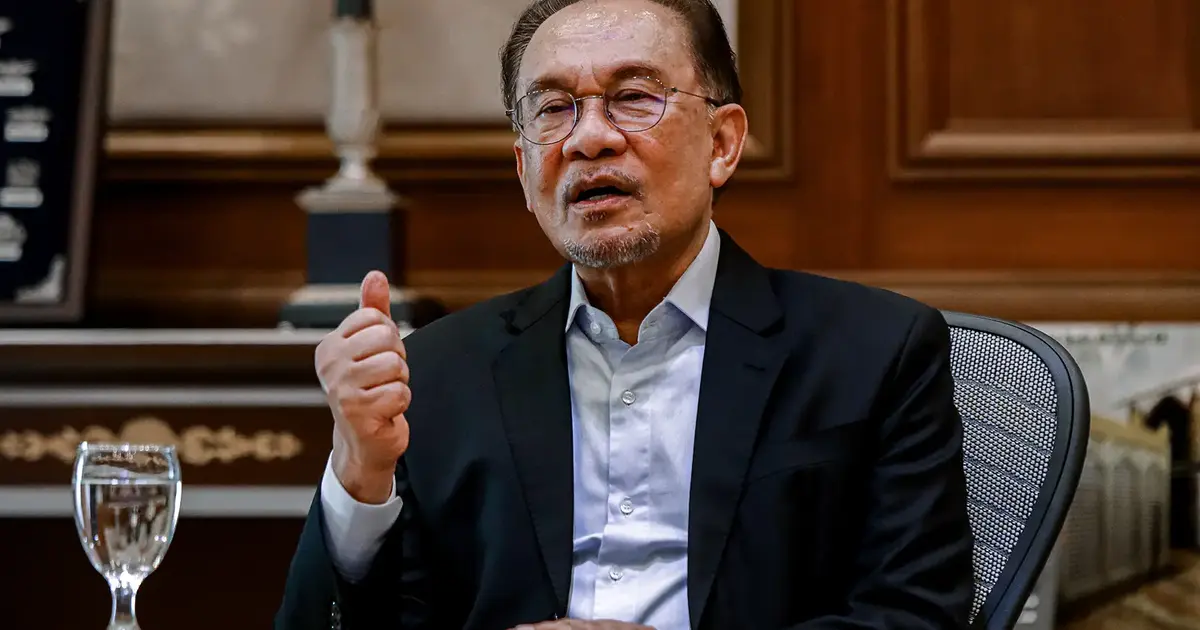
Prime Minister Anwar Ibrahim has drawn a firm line against what he characterises as inequitable conduct by European nations toward the Global South, signalling that Malaysia and other developing countries are prepared to explore alternative avenues rather than accept what they view as unjust treatment. The declaration reflects a broader assertiveness in Kuala Lumpur's foreign policy stance and underscores the changing dynamics of international relations, where countries are increasingly willing to diversify their partnerships rather than remain dependent on traditional Western arrangements.
The Prime Minister's comments appear to be rooted in Malaysia's current defence-related disagreement with Norway, a Nordic nation that has long positioned itself as a champion of human rights and international norms. By invoking this specific dispute as an illustrative example, Anwar has elevated what might otherwise be viewed as a bilateral irritant into a symbolic moment about the rules-based international order and whether those rules are applied consistently across different nations and regions. The specificity of the reference suggests that the Malaysian government views the Norwegian stance as emblematic of broader patterns within Europe rather than an isolated incident.
The dispute with Norway carries particular significance because it challenges the narrative often promoted by Nordic and Western European countries that they operate according to a coherent set of universal principles. When such nations adopt what Kuala Lumpur perceives as selective or punitive measures against Malaysia while maintaining more accommodating stances toward allied nations, it creates friction rooted in perceptions of hypocrisy. For developing countries that have historically had limited leverage in international affairs, such perceived double standards have accumulated over time, generating frustration with the existing global governance architecture.
Anwar's positioning is neither isolationist nor anti-Western; rather, it reflects a pragmatic recalibration of how Malaysia engages with the international community. The Prime Minister's emphasis on seeking alternative solutions indicates that Kuala Lumpur will pursue partners who approach negotiations and disputes with what Malaysia regards as greater evenhandedness. This approach aligns with Malaysia's broader strategic pivot toward diversification, evident in its strengthened relationships across Asia, the Middle East, and beyond. The message to Europe is subtle but clear: unfair treatment carries consequences in terms of partnership quality and depth.
The timing of Anwar's remarks carries geopolitical weight as Malaysia navigates complex regional dynamics. Southeast Asia occupies an increasingly central position in global affairs, and countries within the region are acutely aware that their cooperation—whether on security matters, trade, or technology—is sought by multiple powers. This enhanced bargaining position allows nations like Malaysia to be more assertive about the terms and tone of international engagement. What might have been accepted without significant pushback a decade ago now meets with explicit objection and repositioning.
The Malaysian government's willingness to publicly articulate this position also signals to domestic audiences that their leadership is vigilant about protecting national sovereignty and dignity. In Malaysia's context, where questions about international treatment and fairness resonate with public opinion shaped by historical experience and contemporary concerns, demonstrating that the government will not passively accept external pressure carries political weight. Anwar's statement thus serves multiple purposes simultaneously—managing international relations, addressing domestic expectations, and clarifying Malaysia's place within evolving global hierarchies.
For other developing nations observing from similar positions, the Prime Minister's declaration offers both reassurance and a model for assertive diplomacy. Countries across Africa, Asia, and Latin America frequently encounter situations where they feel their concerns are dismissed or their interests subordinated to Western preferences. When a nation like Malaysia, with its moderate profile and substantial economic significance, openly declares its refusal to tolerate such treatment, it legitimises similar positions elsewhere and suggests that pushback against perceived unfairness carries fewer costs than previously assumed.
The reference to defence-related matters is particularly noteworthy, as it touches on sovereignty and security—domains where nations are especially sensitive about external interference or pressure. Malaysia's willingness to court alternative solutions in this sphere rather than yield to European preferences demonstrates how seriously the government takes the principle at stake. Whether through shifting procurement relationships, adjusting diplomatic priorities, or recalibrating defence partnerships, Malaysia appears prepared to accept adjustments to its external relationships rather than accept what it views as unjust treatment.
Looking forward, Anwar's intervention may prompt recalibration among European policymakers regarding how they approach developing nations, at least those with the economic and strategic weight to credibly threaten reorientation. The statement implicitly suggests that Europe's soft power—its capacity to influence through attracting cooperation—depends partly on being perceived as operating according to consistent principles. When developing nations detect what they interpret as selectivity or double standards, the costs to Europe may include precisely the kind of partnership repositioning that Anwar is signalling Malaysia is contemplating. The Prime Minister's words, therefore, carry implications that extend well beyond Malaysia's specific dispute with Norway, reshaping expectations about how developing nations will engage with the traditional West.


%22%2F%3E%3C%2Fpattern%3E%3C%2Fdefs%3E%3Crect%20width%3D%22100%25%22%20height%3D%22100%25%22%20fill%3D%22url(%23ph2hy9vg)%22%2F%3E%3Crect%20width%3D%22100%25%22%20height%3D%22100%25%22%20fill%3D%22url(%23ph2hy9vp)%22%2F%3E%3Ctext%20x%3D%2250%25%22%20y%3D%2250%25%22%20text-anchor%3D%22middle%22%20dominant-baseline%3D%22central%22%20fill%3D%22rgba(255%2C255%2C255%2C0.95)%22%20font-family%3D%22Georgia%2C%20'Times%20New%20Roman'%2C%20serif%22%20font-weight%3D%22700%22%20font-size%3D%22272%22%20letter-spacing%3D%22-0.02em%22%3EAnwar%3C%2Ftext%3E%3C%2Fsvg%3E)