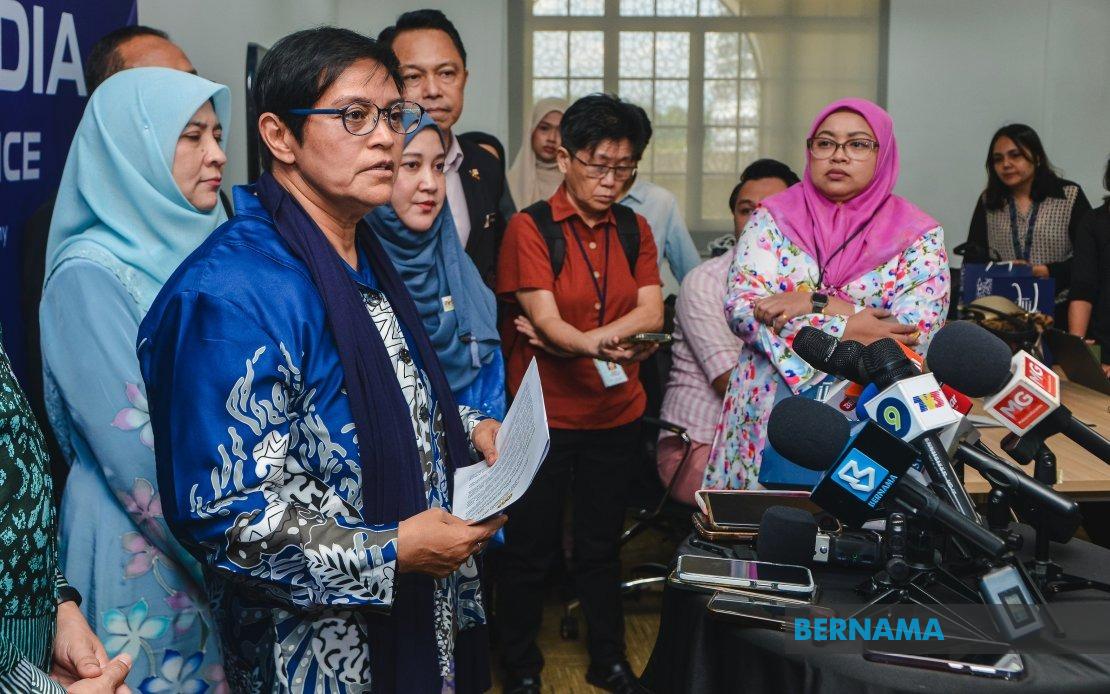
Malaysia is fundamentally reshaping how bullying is addressed through legislation that extends legal accountability beyond the perpetrator to encompass the entire family unit. The Anti-Bullying Act 2026, unveiled by Datuk Seri Azalina Othman Said, the Minister in the Prime Minister's Department (Law and Institutional Reform), represents a significant departure from conventional criminal law by introducing the concept of parental joint liability. Under this framework, guardians may face legal consequences for misconduct perpetrated by their children, a provision designed to instil greater familial responsibility in addressing youth behavioural issues.
The legislation distinguishes itself fundamentally from traditional criminal statutes. Most offences in Malaysia's legal system anchor liability squarely on the individual perpetrator, with limited recourse against family members except in narrowly defined circumstances. The Anti-Bullying Act inverts this approach by creating binding obligations that extend to parents and guardians. This mechanism proves particularly potent in enforcement through financial penalties—any fines or related sanctions imposed on a young perpetrator become jointly enforceable against the family unit. This shared financial burden represents an innovative deterrent mechanism, theoretically encouraging parents to actively supervise and discipline their offspring to prevent bullying conduct.
The legislative framework emerges against a backdrop of escalating bullying incidents across Malaysian schools and communities. Azalina emphasised that the gravity of the situation—including cases resulting in fatal outcomes—necessitated comprehensive legal intervention beyond existing administrative remedies. Prior frameworks typically relied on school management procedures or limited criminal provisions addressing specific manifestations of abuse. The new Act consolidates these fragmented approaches into a cohesive regulatory structure explicitly designed to signal societal intolerance toward peer harassment in all its forms.
To operationalise this framework, Malaysia has established the Anti-Bullying Tribunal, headquartered at the Asian International Arbitration Centre (AIAC) in Kuala Lumpur. The tribunal comprises 56 members drawn from legal specialists, child psychologists, social workers, and other professionals with expertise spanning child welfare and behavioural psychology. This multidisciplinary composition reflects recognition that bullying involves complex psychological and social dimensions requiring informed judgment beyond conventional legal expertise. The tribunal's appointment signals institutional commitment to treating bullying as a substantive societal concern warranting specialised adjudication mechanisms.
Accessibility forms a cornerstone of the new enforcement architecture. Rather than concentrating proceedings exclusively in formal courtrooms, the tribunal operates through a distributed network encompassing six physical and virtual hearing zones positioned strategically across Malaysia. These facilities leverage existing infrastructure from the Legal Affairs Division, the Insolvency Department, the Legal Aid Bureau, and unused courtroom spaces. This geographic distribution proves particularly significant for rural communities where travel to urban legal centres previously constituted a substantial barrier to accessing remedies. Virtual hearing capacity further dismantles temporal and logistical obstacles, enabling simultaneous case management across multiple jurisdictions.
The tribunal's operational reach extends beyond institutional boundaries that traditionally confined school discipline mechanisms. Crucially, victims retain the right to initiate complaints directly with the tribunal for bullying incidents occurring outside school or hostel settings, without requiring prior escalation through institutional hierarchies. This provision acknowledges that contemporary bullying frequently manifests in digital spaces and community settings where school administrations exercise limited authority. The direct access mechanism essentially transfers certain disciplinary functions from educational institutions to specialised tribunals, potentially streamlining resolution while ensuring consistent application of statutory standards.
Technological integration enhances complaint accessibility through an online portal enabling case registration without requiring physical presence or specialized legal representation. This digital infrastructure proves particularly valuable for vulnerable complainants who may hesitate pursuing formal complaints through traditional channels. Online submission reduces psychological barriers associated with confronting authority figures while creating documented digital trails that strengthen evidential foundations for tribunal deliberations. The portal represents recognition that friction in complaint submission mechanisms inherently suppresses reporting of genuine grievances, particularly among younger victims.
The parental liability dimension generates significant implications for Malaysian family structures and parenting norms. Historically, Malaysian legal culture has emphasised parental rights and authority over parental duties enforced through state mechanisms. The Anti-Bullying Act inverts this emphasis by creating enforceable parental obligations with financial consequences for non-compliance. This represents philosophical alignment with established child protection frameworks common in developed jurisdictions, yet introduces mechanisms unfamiliar to many Malaysian families accustomed to more permissive legal approaches regarding intergenerational accountability.
Implementation challenges loom substantially on the horizon. Establishing consistent evidentiary standards across 56 tribunal members operating nationwide requires comprehensive training protocols and regular quality assurance mechanisms. Defining bullying's boundaries—particularly distinguishing serious harassment from normative peer conflict—will prove contentious in borderline cases. The financial burden imposed on families through joint liability, while theoretically deterrent, may generate unintended consequences among lower-income households already financially vulnerable. Additionally, determining appropriate parental culpability levels remains conceptually ambiguous; the legislation must clarify whether negligent supervision suffices for liability or whether active facilitation represents a prerequisite.
Regional implications merit consideration given Southeast Asia's generally reactive approaches to cyberbullying and peer harassment. Malaysia's legislative innovation positions it as regional exemplar, potentially influencing neighbouring jurisdictions to strengthen their own anti-bullying frameworks. However, implementation success depends substantially on cultural acceptance of expanded state involvement in family discipline matters and genuine commitment to professional tribunal operations. Should the mechanism prove effective in reducing bullying incidence while maintaining fair procedural safeguards, Malaysia may establish a replicable template for regional governments seeking to address the demonstrable harms perpetuated by unaddressed peer harassment.

%22%2F%3E%3C%2Fpattern%3E%3C%2Fdefs%3E%3Crect%20width%3D%22100%25%22%20height%3D%22100%25%22%20fill%3D%22url(%23ph2hy9vg)%22%2F%3E%3Crect%20width%3D%22100%25%22%20height%3D%22100%25%22%20fill%3D%22url(%23ph2hy9vp)%22%2F%3E%3Ctext%20x%3D%2250%25%22%20y%3D%2250%25%22%20text-anchor%3D%22middle%22%20dominant-baseline%3D%22central%22%20fill%3D%22rgba(255%2C255%2C255%2C0.95)%22%20font-family%3D%22Georgia%2C%20'Times%20New%20Roman'%2C%20serif%22%20font-weight%3D%22700%22%20font-size%3D%22272%22%20letter-spacing%3D%22-0.02em%22%3EAnwar%3C%2Ftext%3E%3C%2Fsvg%3E)