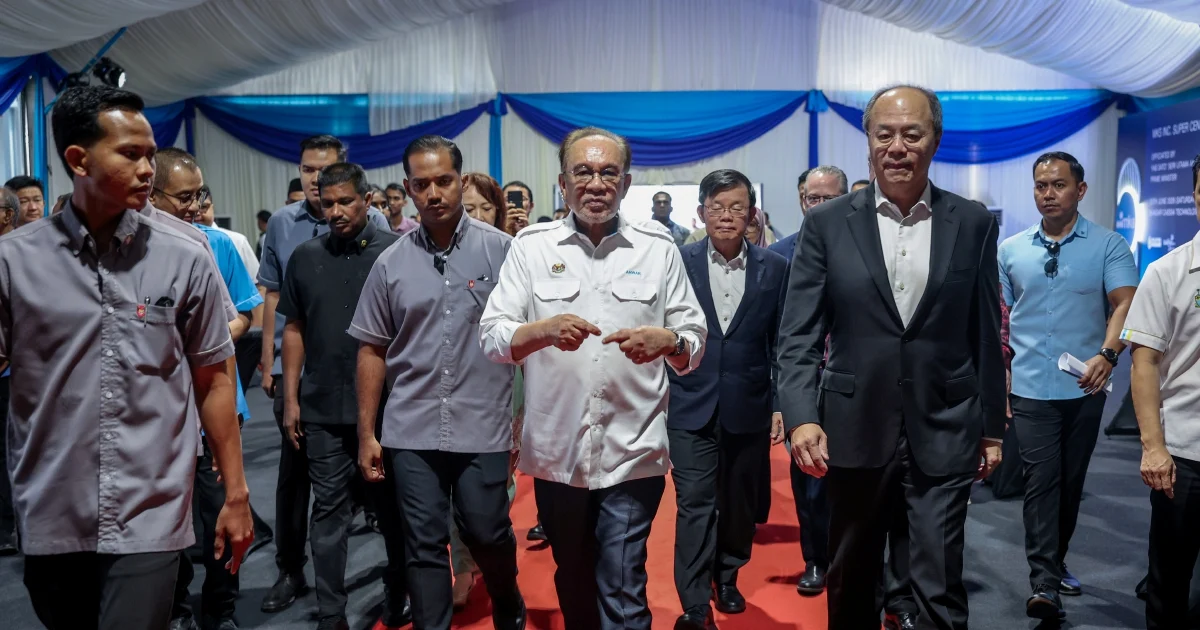
Prime Minister Datuk Seri Anwar Ibrahim has articulated a compelling case for Malaysia's distinctive diplomatic approach, arguing that the country's refusal to align exclusively with any single power bloc while maintaining active relations across the geopolitical spectrum is proving instrumental in attracting foreign direct investment and sustaining economic momentum. Speaking in Batu Kawan, Anwar emphasised how this strategic positioning differentiates Malaysia in an increasingly fragmented global landscape, where many nations face mounting pressure to choose between competing superpowers and their respective spheres of influence.
The Prime Minister's remarks underscore a fundamental reassessment of Malaysia's role in regional and global affairs, suggesting that non-alignment—far from being a liability in contemporary international relations—has become a competitive advantage. While major economies worldwide grapple with geopolitical tensions, trade wars, and ideological divisions, Malaysia has deliberately cultivated a reputation as a pragmatic, neutral player willing to work constructively with all major economies and their allies. This approach resonates powerfully with multinational corporations and institutional investors seeking stable, predictable operating environments insulated from the volatility of great-power competition.
The correlation Anwar draws between diplomatic independence and investor sentiment reflects growing awareness among global capital markets that political volatility and forced alignment impose substantial economic costs. Companies making long-term investment decisions in manufacturing, financial services, and technology increasingly factor in political risk assessments that reward stable, non-partisan governance frameworks. Malaysia's ability to simultaneously deepen engagement with Western democracies, China, Japan, India, and Middle Eastern economies creates a hedging mechanism that appeals to internationally diversified investment portfolios seeking geographic and geopolitical diversification.
Malaysia's historical position as a non-aligned nation during the Cold War established diplomatic traditions and institutional frameworks that continue to provide contemporary advantage. Unlike some regional neighbours who have tilted definitively toward particular powers, Malaysia has maintained the flexibility to pursue bilateral relationships based on economic merit and mutual benefit rather than ideological affinity. This flexibility has enabled the country to attract Chinese investment in infrastructure and manufacturing while simultaneously deepening security and economic partnerships with the United States, Australia, and European nations—a balancing act that increasingly defines successful regional positioning in Southeast Asia.
The economic implications extend beyond headline investment figures. Multinational corporations establishing regional headquarters or supply-chain hubs prioritise locations where political disruption is minimized and partnerships with diverse trading partners remain feasible. Malaysia's neutral stance facilitates this imperative by ensuring that business operations are not jeopardised by sudden shifts in diplomatic relations or trade friction stemming from geopolitical realignment. For technology companies, financial institutions, and manufacturers, this stability translates into reduced political risk premiums and lower capital-allocation hurdles, making Malaysia competitive against regional alternatives.
Anwar's emphasis on engagement with all powers also reflects Malaysia's recognition that the emerging multipolar world order requires sophisticated statecraft rather than rigid positioning. Southeast Asia's strategic importance to both established and rising powers creates genuine leverage for nations like Malaysia willing to serve as responsible brokers and constructive partners. Rather than viewing this intermediary role as passive, the Prime Minister is articulating an active strategy where Malaysia derives economic and diplomatic returns from its positioning between competing interests. This approach has historically enabled Malaysia to punch above its weight in regional affairs and secure disproportionate benefits from great-power competition for regional influence.
The investor-confidence dimension that Anwar emphasises points to measurable economic effects already evident in Malaysia's external accounts. Capital inflows across sectors remain robust despite global macroeconomic headwinds, and companies are expanding operations rather than consolidating or relocating. Investment decisions reflect confidence that Malaysian authorities will maintain consistent, predictable policy frameworks regardless of shifting global alliances. This reputation for reliability and political maturity represents accumulated diplomatic capital that translates directly into competitive advantage in attracting footloose capital and job-generating investments.
Regional context amplifies the significance of Anwar's positioning. Thailand and Vietnam have each faced reputational challenges regarding political stability, while the Philippines navigates significant great-power tensions. By contrast, Malaysia has consciously avoided zero-sum choices between Washington and Beijing, instead presenting itself as committed to maintaining beneficial relations with all powers. This calculated ambiguity, while sometimes frustrating to foreign governments seeking explicit alignment, has become Malaysia's distinctive selling proposition to global investors evaluating Southeast Asian locations.
The longer-term sustainability of this approach depends on Malaysia's ability to balance competing pressures without appearing indecisive or uncommitted to principles. Regional security challenges, trade disputes, and technological competition inevitably create moments where neutrality becomes complicated. Nevertheless, Anwar's public articulation of non-alignment as core economic policy suggests that Malaysia intends to maintain this positioning as a defining characteristic of its development model. For Southeast Asian policymakers, Malaysia's experience offers a valuable lesson that strategic autonomy and pragmatic multi-directional engagement can deliver superior economic outcomes compared to exclusive great-power alignment.


%22%2F%3E%3C%2Fpattern%3E%3C%2Fdefs%3E%3Crect%20width%3D%22100%25%22%20height%3D%22100%25%22%20fill%3D%22url(%23ph2hy9vg)%22%2F%3E%3Crect%20width%3D%22100%25%22%20height%3D%22100%25%22%20fill%3D%22url(%23ph2hy9vp)%22%2F%3E%3Ctext%20x%3D%2250%25%22%20y%3D%2250%25%22%20text-anchor%3D%22middle%22%20dominant-baseline%3D%22central%22%20fill%3D%22rgba(255%2C255%2C255%2C0.95)%22%20font-family%3D%22Georgia%2C%20'Times%20New%20Roman'%2C%20serif%22%20font-weight%3D%22700%22%20font-size%3D%22272%22%20letter-spacing%3D%22-0.02em%22%3EAnwar%3C%2Ftext%3E%3C%2Fsvg%3E)