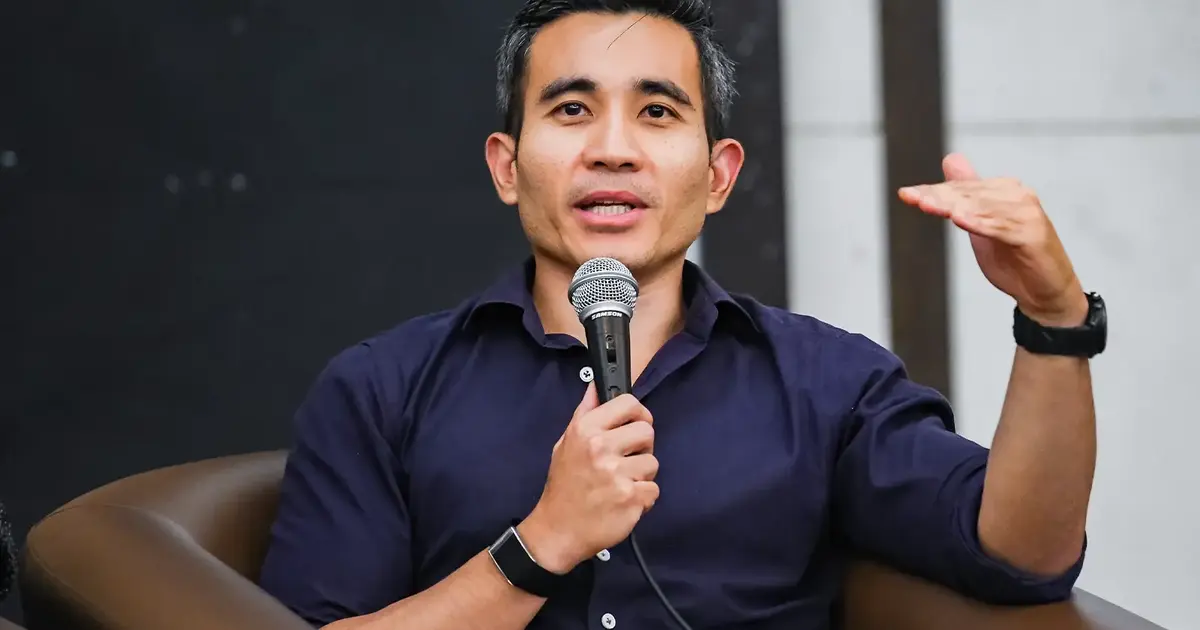
Malaysia's upcoming general election is likely to unfold with campaign messaging that prioritises pragmatism over vision, according to Shahril Hamdan, who previously served as information chief for Umno. In assessing the political landscape ahead of what is expected to be a closely contested ballot, Shahril has argued that the nation's major political formations lack the structural capacity or credibility to articulate genuinely transformative agendas that would fundamentally reshape governance and society.
This observation comes at a time when Malaysian politics remains fragmented across competing coalitions, each with their own internal tensions and competing interests. The ruling Pakatan Harapan coalition, the Barisan Nasional opposition led by Umno, and other significant political blocs face constraints in their ability to construct compelling narratives that transcend the immediate concerns of managing bureaucracies and distributing resources to their constituencies. Such limitations reflect deeper structural realities within the Malaysian political system that have accumulated through successive electoral cycles.
Shahril's assessment suggests that rather than witnessing bold policy frameworks or visionary leadership propositions, Malaysian voters should expect campaigns centred on incremental improvements, practical governance, and the routine administration of state resources. This pattern reflects a broader maturation of democratic competition in the region, where the electorate has become increasingly sceptical of sweeping promises and where political parties themselves have learned the electoral costs of overpromising and underdelivering on grandiose schemes.
The absence of transformative narratives carries particular significance for Malaysia's ongoing development challenges. Issues including economic inequality, educational reform, infrastructural modernisation, and regional competitiveness require long-term strategic thinking that extends beyond electoral cycles. When political parties default to functional rather than aspirational messaging, the space for addressing these deeper structural issues contracts correspondingly. Voters seeking clarity on how different administrations would tackle generational problems may find themselves disappointed by campaigns that offer little more than management of existing systems.
For the ruling coalition, this limitation reflects the inherent difficulties of defending a government record while simultaneously proposing fundamental change. Pakatan Harapan must navigate the tension between acknowledging what it has accomplished since 2018 and explaining why deeper transformation has not materialised at the pace or scale many supporters anticipated. This rhetorical challenge becomes especially acute when previous campaigns had emphasised reformasi and systemic renewal. Maintaining credibility while modulating expectations downward proves politically awkward.
Umno-led Barisan Nasional faces different but equally constraining dynamics. The coalition must address perceptions of institutional fatigue and historical baggage from nearly seven decades of continuous governance, while simultaneously presenting itself as a viable custodian of state institutions. Constructing a genuinely transformative narrative under these circumstances requires overcoming scepticism about capacity for change, a burden that often proves heavier than promises of steady administration.
Regional political movements and smaller coalition partners similarly struggle to break free from functional messaging, as they must often prioritise survival and maintaining coalition partnerships over articulating distinctive visions. This subordination of ideological clarity to coalition arithmetic necessarily produces campaigns that emphasise competence and incremental adjustments rather than fundamental reimagining of governance approaches.
Shahril's perspective as a former communications strategist within Malaysia's largest opposition party gives his assessment particular weight. His experience positioning Umno's public messaging suggests intimate familiarity with the constraints that even well-resourced political organisations face when attempting to construct narratives that transcend pragmatism. The inability to generate truly inspiring campaign themes despite professional expertise and institutional resources points to systemic rather than merely tactical limitations.
For Malaysian voters, this predicted shift toward uninspiring functionality raises important questions about democratic engagement and representation. Elections serve multiple purposes beyond selecting personnel for office—they provide moments when societies deliberate about their futures and political parties articulate visions of where they might be directed. When campaigns reduce to functional messaging, something essential about democratic self-reflection diminishes. Voters may find themselves choosing between competing management teams rather than debating fundamentally different approaches to national development.
The implications for Southeast Asia extend beyond Malaysia's borders. As various nations across the region navigate their own democratic transitions and electoral cycles, questions about the quality and ambition of political narratives become increasingly relevant. If even relatively developed democracies with established institutional frameworks struggle to produce transformative political visions, the challenge becomes magnified in contexts facing more acute institutional constraints or developmental bottlenecks.
Sahril's prediction ultimately suggests that Malaysia's electoral contest will likely emphasise continuity and incremental adjustment rather than rupture and reimagination. While functional governance narratives may prove sufficient to determine electoral outcomes, they offer limited resources for addressing the forward-looking questions that will shape Malaysia's competitive position in an increasingly dynamic region. The absence of transformative political messaging, however pragmatically justified, may itself represent a challenge that extends beyond any single electoral cycle.

%22%2F%3E%3C%2Fpattern%3E%3C%2Fdefs%3E%3Crect%20width%3D%22100%25%22%20height%3D%22100%25%22%20fill%3D%22url(%23ph2hy9vg)%22%2F%3E%3Crect%20width%3D%22100%25%22%20height%3D%22100%25%22%20fill%3D%22url(%23ph2hy9vp)%22%2F%3E%3Ctext%20x%3D%2250%25%22%20y%3D%2250%25%22%20text-anchor%3D%22middle%22%20dominant-baseline%3D%22central%22%20fill%3D%22rgba(255%2C255%2C255%2C0.95)%22%20font-family%3D%22Georgia%2C%20'Times%20New%20Roman'%2C%20serif%22%20font-weight%3D%22700%22%20font-size%3D%22272%22%20letter-spacing%3D%22-0.02em%22%3EAnwar%3C%2Ftext%3E%3C%2Fsvg%3E)