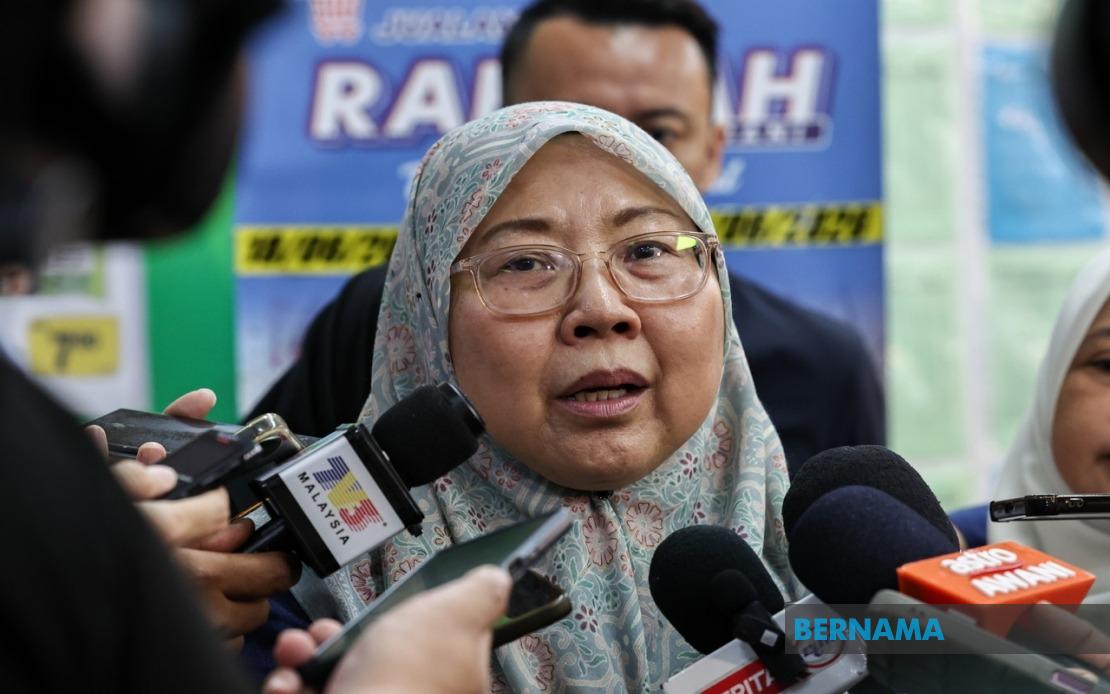
The Malaysian government has moved to reassure residents of Johor and Negeri Sembilan that essential supplies will remain plentiful throughout the upcoming state elections, despite headwinds from elevated global shipping costs triggered by ongoing instability in West Asia. The Ministry of Domestic Trade and Cost of Living (KPDN) announced the commitment through its Deputy Minister Datuk Dr Fuziah Salleh, who emphasised that contingency planning is already underway to shield local markets from any demand spikes linked to the electoral process.
The election cycle typically draws increased consumption patterns as officials and visitors from other states converge on voting constituencies, potentially straining distribution networks if left unmanaged. To forestall such disruptions, KPDN has restructured how subsidised cooking oil reaches consumers, bypassing the traditional wholesaler layer entirely. Instead, repackers now deliver supplies directly to retail points of sale, a streamlining that reduces bottlenecks and ensures faster inventory turnover at shop level.
Johor's share of the national cooking oil distribution programme maintains a monthly allocation exceeding 3,000 metric tonnes, channelled through a network of 18 licensed repackers and made available across 95 designated sales points. These outlets encompass major supermarket chains including Econsave locations, creating a dispersed retail footprint that should theoretically prevent geographic imbalances in product availability. A visit to the Econsave branch in Taman Daya on the day of Fuziah's statement revealed daily stocks of approximately 100 cartons, suggesting that current supplies are tracking comfortably above immediate local demand.
Beyond logistics, the ministry has implemented verification protocols designed to ensure that subsidised goods genuinely benefit Malaysian citizens rather than leaking into informal resale channels or being diverted to foreign purchasers. Point-of-sale checkouts now require customers to either scan their digital identification through a dedicated mobile application or present their MyKad in person. These gatekeeping measures aim to maintain the targeting efficiency of the subsidy programme, which remains fiscally significant for government budgets and administratively complex to administer fairly.
The broader context for these efforts involves KPDN's flagship Rahmah MADANI Sales Programme, a nationwide initiative designed to demonstrate government commitment to alleviating cost-of-living pressures on ordinary households. Between January 1 and June 13, 2026, the programme has conducted 13,692 promotional and sales events nationwide, each bringing government-subsidised goods directly to community venues. Within Johor specifically, 920 separate programme sessions have unfolded across the state's 56 constituencies, collectively attracting 2.3 million visitors and generating over 1.46 million individual transactions.
These statistics, while significant in scale, underline how the Rahmah MADANI initiative functions as both a practical mechanism for distributing affordable essentials and a symbolic declaration of administrative competence during politically sensitive periods. The coordination required to sustain such operations during an election season—when government machinery typically experiences resource strain—reflects an attempt by authorities to prevent economic messaging from becoming a source of electoral vulnerability.
The timing of these assurances is strategically relevant given that Johor's state election has been scheduled for July 11, with early voting opening on July 7 and candidate nominations occurring on June 27. These dates compress the effective campaigning window, leaving limited time for supply chain problems to develop visibly or for public perception of shortages to crystallise. By pre-emptively announcing adequate stocks and demonstrating direct ministerial oversight through warehouse and supermarket inspections, KPDN is attempting to eliminate a potential weakness in government performance narratives.
For Malaysian businesses and distributors, the repositioning of cooking oil supply chains carries operational implications. The removal of wholesalers from the subsidy distribution pathway creates both challenges and opportunities: challenges because smaller wholesalers dependent on subsidy-driven throughput lose a revenue stream, and opportunities because the direct-to-retailer model may reduce transaction costs and friction points. The effectiveness of this new arrangement will become evident as the election period unfolds and real-time inventory data accumulate.
The global supply context further elevates the importance of these domestic measures. Elevated logistics costs from the West Asia conflict place pressure on all regional economies importing energy, raw materials, and finished goods. Malaysia's dependence on maritime trade routes passing through contested waters means that any prolonged disruption to shipping lanes would immediately translate into higher import costs for goods that cannot be sourced locally. This structural vulnerability makes government-managed subsidy programmes all the more critical as buffers against price volatility, yet simultaneously more difficult to sustain without budgetary trade-offs elsewhere.
For consumers in Johor and Negeri Sembilan, the practical upshot is that subsidised cooking oil and essentials should remain accessible at current prices through the election cycle, provided verification procedures are enforced consistently and supply chains avoid unexpected shocks. The distributed network of 95 sales points means that physical access to these goods should not emerge as a major constraint in most residential areas. However, concentrations of demand in certain constituencies during the campaign period could still produce temporary stock variations at individual outlets, even if aggregate supply remains robust.
Moving forward, KPDN's ability to sustain these commitments will depend on successful coordination between multiple stakeholders: repackers must meet delivery schedules, retailers must implement verification protocols reliably, and transportation logistics must function smoothly despite global headwinds. Should any of these components falter, the assurances currently being offered may face credibility challenges. Conversely, if the election period passes without notable supply disruptions, the ministry will have strengthened its reputation for administrative competence and forward planning—a politically valuable outcome as Malaysia navigates recurring cost-of-living pressures affecting voter sentiment across the country.

%22%2F%3E%3C%2Fpattern%3E%3C%2Fdefs%3E%3Crect%20width%3D%22100%25%22%20height%3D%22100%25%22%20fill%3D%22url(%23ph2hy9vg)%22%2F%3E%3Crect%20width%3D%22100%25%22%20height%3D%22100%25%22%20fill%3D%22url(%23ph2hy9vp)%22%2F%3E%3Ctext%20x%3D%2250%25%22%20y%3D%2250%25%22%20text-anchor%3D%22middle%22%20dominant-baseline%3D%22central%22%20fill%3D%22rgba(255%2C255%2C255%2C0.95)%22%20font-family%3D%22Georgia%2C%20'Times%20New%20Roman'%2C%20serif%22%20font-weight%3D%22700%22%20font-size%3D%22272%22%20letter-spacing%3D%22-0.02em%22%3EAnwar%3C%2Ftext%3E%3C%2Fsvg%3E)