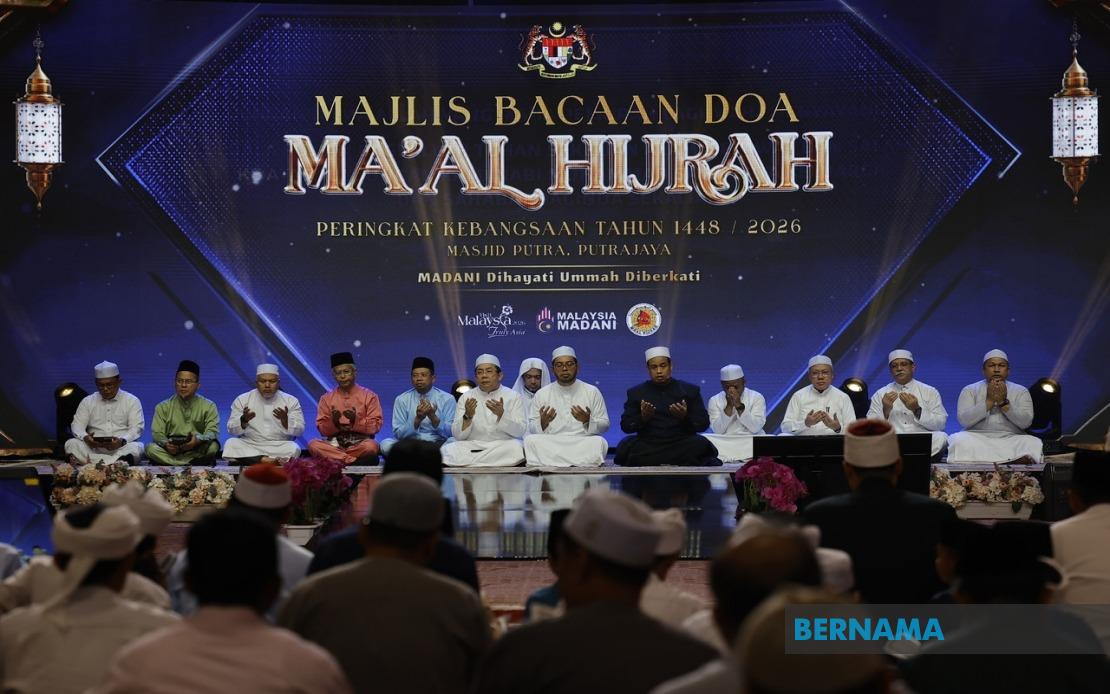
Datuk Dr Zulkifli Hasan, the Minister in the Prime Minister's Department (Religious Affairs), has made an impassioned appeal to Malaysia's young people to harness the transformative lessons embedded in the hijrah narrative, positioning it as a framework for driving meaningful personal and societal progress. Speaking in Putrajaya on June 16, Zulkifli emphasised that the hijrah—Prophet Muhammad's migration from Makkah to Madinah—offers timeless wisdom particularly relevant for contemporary youth navigating an increasingly complex world. The minister's remarks come as Malaysia prepares to observe its national Maal Hijrah 1448H/2026M celebration, an occasion that traditionally invites reflection on spiritual renewal and community-building principles.
The concept of hijrah extends beyond its historical religious context to encompass a broader philosophy of positive transformation and migration towards righteousness and purpose. Zulkifli stressed that Malaysian youth, who represent the nation's demographic advantage and economic future, possess considerable untapped potential that can be unlocked through engagement with such foundational Islamic principles. By internalising the hijrah spirit—characterised by determination, sacrifice, and commitment to establishing just institutions—young Malaysians can become agents of constructive change across educational, economic, and social spheres. This framing transforms a religious commemoration into a practical philosophy applicable to contemporary challenges ranging from career development to community leadership.
A distinctive aspect of this year's national celebration is its structural redesign to prioritise spiritual reflection over ceremonial grandeur. Rather than hosting festivities at a single venue, organisers selected Putra Mosque as the symbolic starting point, deliberately echoing Prophet Muhammad's own establishment of the first mosque upon arriving in Madinah. This architectural choice underscores the minister's conviction that civilisation and community development fundamentally originate from spiritual and moral foundations. By beginning the celebration at a mosque, the organisers signal that sustainable progress cannot be divorced from ethical moorings and collective remembrance of shared values.
Zulkifli explicitly acknowledged the practical constraints shaping this year's event design, noting that celebrations are being conducted on a more modest scale to reflect Malaysia's commitment to energy conservation during the global supply crisis. This approach demonstrates governmental sensitivity to economic realities affecting ordinary Malaysians while maintaining the spiritual essence of the occasion. The scaled-back format does not diminish the significance of the celebration; rather, it reinforces the message that meaningful observance transcends extravagant displays and finds greater power in disciplined, purposeful gathering.
A cornerstone feature of the festivities is the keynote lecture series planned for June 18 at the JAKIM Auditorium, anticipated to draw approximately 1,000 participants from diverse backgrounds. Prominent national and international figures associated with the hijrah narrative will share their experiences, interpretations, and contemporary applications of this spiritual journey. Such symposiums serve multiple purposes: they elevate public discourse beyond surface-level religious observance, expose attendees to varied perspectives on implementing hijrah principles in modern contexts, and create spaces where scholars, community leaders, and engaged citizens can dialogue about collective futures. For Malaysian youth especially, exposure to accomplished figures embodying hijrah values provides tangible role models and expanded conceptual frameworks for understanding personal ambition within spiritual disciplines.
The main ceremonial highlight will unfold on June 17 at Putra Mosque, commencing at 7 am on 1 Muharam 1448H, with the presentation of national and international Maal Hijrah Figure awards serving as the focal point. The ceremony will receive official recognition through the attendance and patronage of Sultan Nazrin Shah, the Sultan of Perak, whose presence underscores the cultural and constitutional significance that Malaysia's monarchy attaches to Islamic observances and youth development initiatives. Royal participation elevates the occasion's stature and signals state endorsement of the underlying message that hijrah principles constitute part of Malaysia's collective heritage and future trajectory.
For Malaysian readers, the resonance of this appeal extends into practical domains. Young professionals navigating career transitions, entrepreneurs launching ventures, students charting educational paths, and community organisers building grassroots initiatives can all interpret hijrah as a metaphor for purposeful migration—movement towards meaningful contribution rather than aimless drift. The principle acknowledges that genuine progress often demands sacrifice, patience, and commitment to establishing enduring institutions rather than pursuing immediate gratification. In Malaysia's increasingly competitive regional economy, such virtues become particularly valuable for youth seeking to distinguish themselves and create lasting legacies.
The regional context further amplifies the importance of Malaysia's emphasis on youth engagement with these principles. Across Southeast Asia, demographic trends show surging youth populations in countries like Indonesia, Philippines, and Vietnam, creating both opportunity and urgency for developing frameworks that channel youthful energy towards constructive ends. Malaysia's deliberate cultivation of hijrah-based messaging positions the nation as intellectually and spiritually invested in youth formation, potentially enhancing its soft power influence throughout the region. By articulating how classical Islamic concepts address contemporary challenges, Malaysian religious and political leaders model an approach that other Southeast Asian nations may observe and adapt.
The hijrah narrative also offers particular resonance in Malaysia's multicultural context. While the commemoration is rooted in Islamic tradition, the underlying principles of migration, community-building, sacrifice for principle, and institutional development resonate across religious and cultural boundaries. Young Malaysians of all backgrounds can extract value from considering how individuals and communities navigate transformative change, establish fair systems, and prioritise collective welfare alongside personal aspiration. This inclusive interpretive potential makes Maal Hijrah celebrations occasions for reinforcing Malaysia's pluralistic national identity while honouring specific religious traditions.
Looking forward, Zulkifli's exhortation to Malaysian youth represents an investment in long-term national stability and development. Youth who internalise hijrah principles—understanding change as purposeful movement towards established values rather than reactive rebellion—become more likely to contribute constructively to institutions, engage thoughtfully with governance, and build communities characterised by mutual responsibility rather than destructive individualism. As Malaysia confronts complex challenges ranging from economic restructuring to digital transformation, cohorts of young people animated by such principles could prove instrumental in navigating these transitions while preserving social cohesion and cultural continuity.

%22%2F%3E%3C%2Fpattern%3E%3C%2Fdefs%3E%3Crect%20width%3D%22100%25%22%20height%3D%22100%25%22%20fill%3D%22url(%23ph2hy9vg)%22%2F%3E%3Crect%20width%3D%22100%25%22%20height%3D%22100%25%22%20fill%3D%22url(%23ph2hy9vp)%22%2F%3E%3Ctext%20x%3D%2250%25%22%20y%3D%2250%25%22%20text-anchor%3D%22middle%22%20dominant-baseline%3D%22central%22%20fill%3D%22rgba(255%2C255%2C255%2C0.95)%22%20font-family%3D%22Georgia%2C%20'Times%20New%20Roman'%2C%20serif%22%20font-weight%3D%22700%22%20font-size%3D%22272%22%20letter-spacing%3D%22-0.02em%22%3EAnwar%3C%2Ftext%3E%3C%2Fsvg%3E)