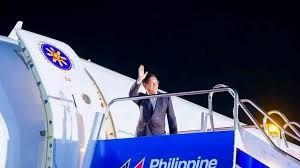
Philippine President Ferdinand R. Marcos Jr has embarked on a significant diplomatic mission to Russia, departing late Tuesday evening from Manila to lead his nation's participation in the Asean-Russia Commemorative Summit scheduled for June 17-18 in Kazan. The presidential aircraft carrying Marcos and his delegation left Villamor Airbase in Pasay City shortly after 11.55 pm, according to the Philippine News Agency. The journey represents a landmark moment for Southeast Asian-Russian relations whilst also carrying particular weight for Manila as it marks the Philippines' 50th anniversary of formal diplomatic relations with Moscow, established on June 2, 1976.
The timing of this visit underscores the multilayered significance of Philippine-Russian engagement at a moment when the region faces acute challenges related to energy stability and food supplies. Marcos characterised the summit as a crucial opportunity to assess more than three decades of Asean-Russia cooperation and chart pathways for strengthened collaboration in coming years. As the sitting chair of the regional grouping, the Philippines has positioned itself as the architect of this commemorative gathering, viewing it as a vehicle for deepening the Strategic Partnership between the ten-member bloc and Moscow whilst advancing broader objectives of regional peace and shared prosperity.
The bilateral meetings between Marcos and Russian President Vladimir Putin will serve as a focal point for the visit, with discussions slated to concentrate on two interconnected concerns: energy security and food production. These topics hold particular resonance across Southeast Asia, where economies remain vulnerable to price shocks and supply disruptions stemming from global geopolitical tensions. For the Philippines specifically, which imports substantial quantities of fuel and agricultural products, securing reliable sources and stable pricing mechanisms remains a persistent policy priority that directly impacts household purchasing power and industrial competitiveness.
Beyond the energy and food security discussions, the summit agenda encompasses a deliberately expansive range of thematic areas reflecting Asean's comprehensive approach to partnership diversification. The scheduled conversations will address peace and security architecture, trade and investment frameworks, scientific and technological cooperation, digital infrastructure development, educational exchanges, tourism promotion, and cultural-people-to-people linkages. This breadth suggests that Asean leadership views the Russian relationship not as narrowly transactional but as multidimensional engagement spanning economic, security, and sociocultural domains.
Marcos has framed the summit through his administration's broader strategic narrative of Asean centrality and inclusive regional architecture. In his departure statement, he emphasised that as chair, the Philippines commits to ensuring the summit generates substantive outcomes that reinforce Asean's position as a stabilising force in an increasingly contested geopolitical environment. The chosen thematic rubric for the Philippine chairmanship—"Navigating Our Future, Together"—serves as the conceptual anchor for this positioning, signalling commitment to unity, solidarity, and adherence to international law-based frameworks that have underpinned regional order.
The summit itself will culminate in the adoption of key documents outlining future cooperation pathways between the regional bloc and Russia. These instruments will likely establish working groups, coordination mechanisms, and priority project areas that institutionalise engagement beyond the ceremonial nature of commemorative gatherings. For Southeast Asian governments, such frameworks offer opportunities to cultivate relationships with a major global power whilst maintaining careful calibration of strategic autonomy—a balancing act that has become increasingly challenging amid broader great power competition in the region.
The logistical constraints of this mission merit attention, as First Lady Liza Araneta-Marcos highlighted the unusual time compression involved. Despite a combined 26-hour flight duration, the presidential party will spend approximately 38 hours in Russia, a schedule that underscores the concentrated diplomatic intensity of the engagement. This compressed timeframe reflects the careful choreography required when state leaders navigate multiple bilateral and multilateral obligations whilst responding to pressing domestic governance imperatives demanding their attention.
The Philippine decision to prioritise this engagement, despite the substantial travel demands and opportunity costs, reflects assessed strategic importance of the Russia relationship within broader Philippine foreign policy architecture. Energy diversification remains a fundamental concern for Manila, particularly given dependence on imports and regional supply vulnerabilities. The potential for expanded cooperation in hydrocarbons and food production with Russia presents practical avenues for addressing structural economic challenges affecting ordinary Filipino households—a concern that First Lady Marcos explicitly elevated in her public remarks about the visit.
From a regional perspective, the summit represents an important assertion of Asean agency in engaging major powers on the bloc's own terms rather than as a prize in competitions between other actors. Russia's significant resources, technological capabilities, and historical engagement with Southeast Asia position it as a relevant partner for countries seeking to diversify their strategic partnerships. For the Philippines specifically, managing the relationship with Russia requires sophisticated diplomacy that acknowledges Moscow's continued importance whilst maintaining alignment with broader regional security commitments and international law obligations.
The outcomes of the Marcos-Putin bilateral discussion may establish parameters for expanded Philippine-Russian engagement across multiple sectors beyond the formal Asean-level commitments. Energy sector cooperation, agricultural trade arrangements, and potentially defence or security consultations could emerge as priority areas from these conversations. The Philippines' vulnerability to energy price volatility and food import dependency means such discussions carry weight beyond ceremonial significance, potentially influencing domestic policy frameworks and budgetary allocations.
The summit also occurs within a context where Russia seeks to strengthen engagement with Asian partners as Western sanctions limit its European options. For Asean members, navigating these dynamics requires careful attention to balancing Russia engagement against commitments to international law, particularly regarding ongoing conflicts. The Philippines' insistence on an open, inclusive, rules-based regional architecture suggests continued emphasis on these principles even whilst expanding practical cooperation with Moscow.
Looking forward, the commemorative summit may establish foundations for longer-term institutional development in Asean-Russia relations. Working groups on energy, agriculture, and technology could create ongoing dialogue channels that transcend the ceremonial nature of high-level summits. For the Philippines, successful delivery of substantive outcomes would validate its chairmanship strategy and demonstrate capacity to manage complex multilateral processes whilst advancing concrete national interests through regional frameworks.


%22%2F%3E%3C%2Fpattern%3E%3C%2Fdefs%3E%3Crect%20width%3D%22100%25%22%20height%3D%22100%25%22%20fill%3D%22url(%23ph2hy9vg)%22%2F%3E%3Crect%20width%3D%22100%25%22%20height%3D%22100%25%22%20fill%3D%22url(%23ph2hy9vp)%22%2F%3E%3Ctext%20x%3D%2250%25%22%20y%3D%2250%25%22%20text-anchor%3D%22middle%22%20dominant-baseline%3D%22central%22%20fill%3D%22rgba(255%2C255%2C255%2C0.95)%22%20font-family%3D%22Georgia%2C%20'Times%20New%20Roman'%2C%20serif%22%20font-weight%3D%22700%22%20font-size%3D%22272%22%20letter-spacing%3D%22-0.02em%22%3EAnwar%3C%2Ftext%3E%3C%2Fsvg%3E)