%22%2F%3E%3C%2Fpattern%3E%3C%2Fdefs%3E%3Crect%20width%3D%22100%25%22%20height%3D%22100%25%22%20fill%3D%22url(%23phaj2sg)%22%2F%3E%3Crect%20width%3D%22100%25%22%20height%3D%22100%25%22%20fill%3D%22url(%23phaj2sp)%22%2F%3E%3Ctext%20x%3D%2250%25%22%20y%3D%2250%25%22%20text-anchor%3D%22middle%22%20dominant-baseline%3D%22central%22%20fill%3D%22rgba(255%2C255%2C255%2C0.95)%22%20font-family%3D%22Georgia%2C%20'Times%20New%20Roman'%2C%20serif%22%20font-weight%3D%22700%22%20font-size%3D%22272%22%20letter-spacing%3D%22-0.02em%22%3EMedia%3C%2Ftext%3E%3C%2Fsvg%3E)
Prime Minister Datuk Seri Anwar Ibrahim's announcement of an extra RM1 million injection into the Tabung Kasih@HAWANA fund, coupled with the continuation of the Media Innovation Fund, has struck a chord across Malaysia's media landscape, signalling renewed government commitment to an industry grappling with digital disruption and economic pressures. The dual-pronged approach addresses two critical pain points: the immediate financial hardship faced by practitioners and the longer-term structural challenges threatening the viability of news organisations in an increasingly competitive and technology-driven environment.
At the heart of industry enthusiasm lies recognition that the funding addresses a sector in transition. Radio Televisyen Malaysia director-general Ashwad Ismail underscored how the announcement validates the necessity for continuous innovation and adaptation in response to artificial intelligence and rapidly evolving technological landscapes. His remarks capture a broader anxiety within Malaysian media: the imperative to remain relevant in a world where news cycles compress by the hour and audiences fragment across multiple platforms. Ashwad framed the Prime Minister's decision as evidence of governmental understanding that media organisations cannot merely maintain traditional operational models but must fundamentally transform their capabilities to survive and serve the public effectively.
The welfare dimension of the funding carries particular significance for a workforce often characterised by precarity and income instability. Muhammad Yatimin Abdullah, president of the Kelantan Darul Naim Media Club and a journalist at Utusan Malaysia, emphasised that the additional allocation to Tabung Kasih@HAWANA addresses genuine hardship among media practitioners and retired journalists whose circumstances have deteriorated without institutional safety nets. For freelance journalists in particular, the precarious nature of project-based work leaves many vulnerable to sudden income loss, a reality exacerbated by newsroom retrenchments that have swept the region over the past decade. The welfare fund represents a modest but meaningful acknowledgement that those who produce journalism deserve protection against catastrophic financial instability.
Wan Syamsul Amly Wan Seadey, president of the Kuala Lumpur and Selangor Journalists Club and an Astro Awani journalist, articulated enthusiasm tempered by constructive ambition. While welcoming both components of the announcement, Wan Syamsul proposed that HAWANA establish an education fund in the coming year to enable journalists to pursue formal qualifications and skills enhancement programmes. This suggestion reflects a sophisticated understanding that welfare alone cannot address the sector's deeper vulnerability; practitioners require investment in continuous professional development to maintain competitive advantage and career resilience. Such proposals indicate that media leaders are thinking strategically about how government support can catalyse not just immediate relief but enduring capability improvement across the industry.
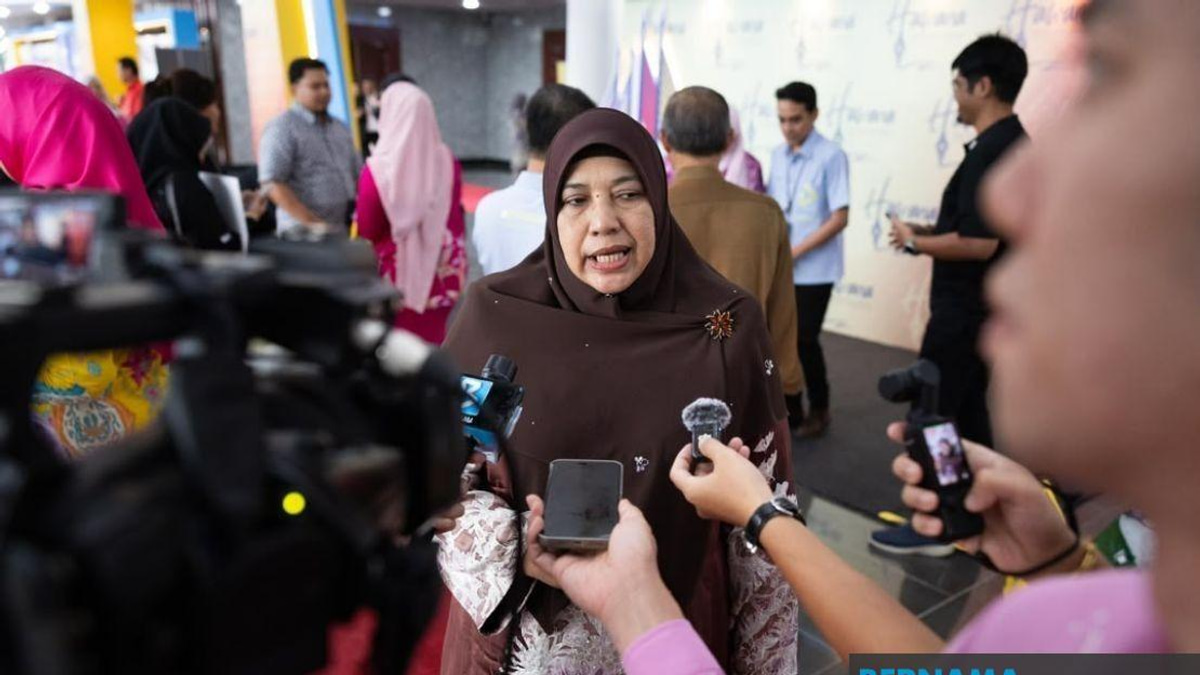
The Media Innovation Fund itself carries historical weight. Having previously commanded an allocation of RM30 million, its continuation demonstrates sustained government belief in technological modernisation as essential to sectoral health. Siti Nooraeina Omar, a lecturer at Han Chiang University College of Communication, characterised the fund as crucial for ensuring Malaysian media organisations do not become obsolete in an rapidly transforming communications landscape. Her assessment reflects sobering reality: newsrooms operating today cannot function using methods current two decades ago. The mechanisation of certain tasks, the shift toward multimedia reporting, the consolidation of editorial workflows—these changes impose significant capital and training demands that individual organisations struggle to meet independently.
However, the funding announcement carries implications that extend beyond immediate industry relief. The continuation of innovation support alongside expanded welfare provision signals government recognition that media viability depends on simultaneous advancement on multiple fronts. Technology investments alone cannot sustain journalism if practitioners face financial desperation. Conversely, welfare provision without capability upgrading leaves organisations unable to compete for audience attention or advertising revenue, ultimately undermining the long-term sustainability that such support seeks to encourage.
The relationship between technology, innovation funding, and journalistic practice deserves scrutiny. Siti Nooraeina's observation that innovation may accelerate news production processes, yet acknowledges that verification remains fundamentally a human journalistic function, articulates an important balance. The funding assumes that technology—faster production systems, data analytics tools, multimedia platforms—enhances rather than replaces journalism. This assumption warrants monitoring, as news organisations globally have sometimes deployed technological innovation to reduce headcount rather than improve output quality. For Malaysian media to benefit genuinely from innovation funding, organisations must commit to using efficiency gains to deepen reporting rather than simply shrink operations.
The sector's response reflects broader anxieties about media's role and sustainability in Southeast Asia. Malaysian news organisations compete for advertising revenue with global platforms capturing increasingly large shares of digital advertising spend. Simultaneously, they navigate audience fragmentation, rising production costs, and cyclical economic pressures that squeeze proprietor profitability. Against this backdrop, targeted government support functions as both acknowledgement that media serves public purposes transcending pure commercial viability and recognition that market forces alone cannot sustain the journalism democratic societies require.
The announcement also carries implications for media industry structure and consolidation. As smaller independent publications struggle financially, concentrated ownership becomes the default outcome. Government investment in innovation capacity and practitioner welfare can theoretically preserve space for diverse ownership models and editorial voices, though such support requires careful design to avoid inadvertently advantaging establishment players over emerging or independent outlets. The transparency and allocation criteria for both the Tabung Kasih@HAWANA expansion and the Media Innovation Fund will determine whether support genuinely strengthens sector diversity or entrenches existing hierarchies.
For Malaysian readers and media consumers, the announcement's significance lies in what it portends for news availability, quality, and independence. A media sector characterised by severe financial distress tends toward sensationalism, advertorial content, and editorial capture by proprietor interests. Conversely, professionally sustained journalists with access to modern tools and adequate training demonstrate greater capacity for public interest reporting. The announced funding, if deployed strategically, might preserve conditions for quality journalism to survive amid market pressures.
Looking forward, industry observers will scrutinise both the mechanisms for distributing innovation funding and the criteria governing welfare support allocation. Whether the Media Innovation Fund prioritises capacity-building across diverse outlets or concentrates resources among established players will shape whether Malaysian media emerges from this transition period more robust or more consolidated. Similarly, the Tabung Kasih@HAWANA expansion must reach those most vulnerable—freelancers, regional journalists, and former practitioners—rather than flowing primarily to institutional employees at established organisations.