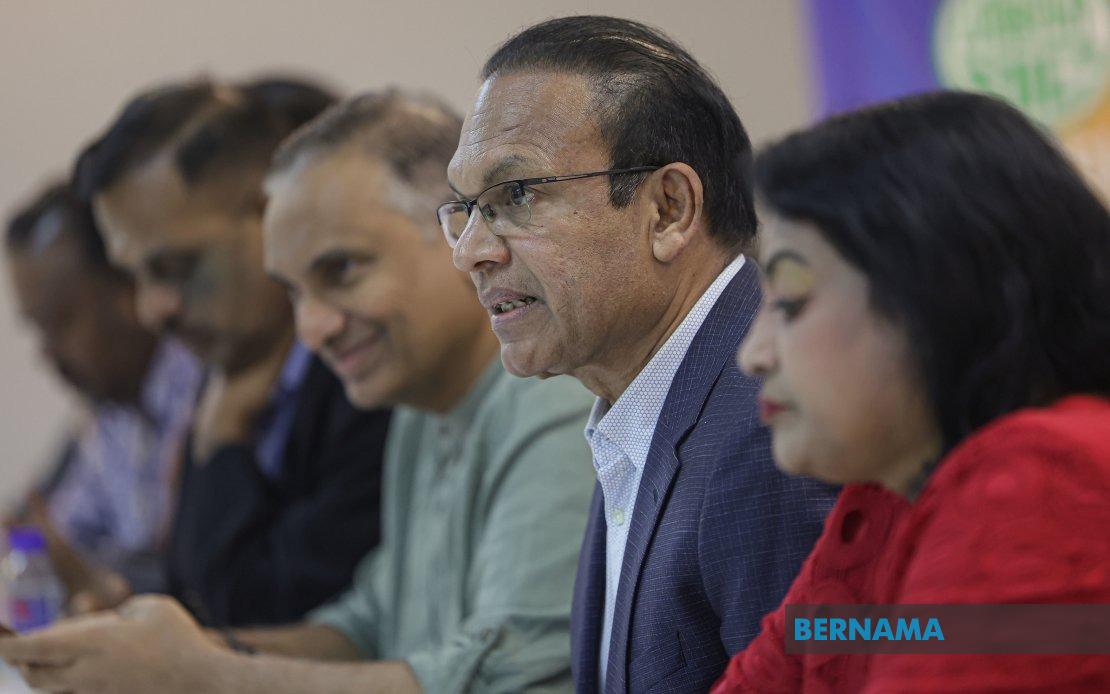
The Malaysian Indian Congress (MIC) is gearing up for the upcoming Johor state election with an allocation of four parliamentary constituencies, according to an announcement by party vice-president Datuk T. Murugiah. The allocation was confirmed by MIC president Tan Sri SA. Vigneswaran following recent strategy discussions with other Barisan Nasional component parties regarding contests in both Johor and Negeri Sembilan.
The party's participation in the Johor campaign reflects its continued role within the BN coalition structure, though the exact configuration of seats being contested suggests some electoral adjustments compared to the previous state election. While MIC has finalised its Johor slate, discussions about Negeri Sembilan representation remain ongoing, indicating that coalition seat-sharing negotiations are still evolving. This protracted process underscores the complex negotiations required to balance interests among multiple parties within the broader BN framework.
MIC's campaign strategy hinges on targeted mobilisation of the Indian community across the state's 56 constituencies contested by BN candidates. To execute this approach effectively, the party is undertaking substantial organisational preparation, including a two-day intensive training programme for approximately 150 party speakers scheduled for this weekend in Johor Bahru. These speakers will be equipped with messaging frameworks and public speaking techniques designed to communicate party and coalition priorities specifically to Indian voters.
The training initiative reflects recognition that community-specific outreach requires dedicated resources and carefully crafted messaging. Speakers will be deployed across all 56 state seats where BN has fielded candidates, indicating that MIC views its role as broader than contesting its allocated constituencies—it seeks to contribute to overall coalition performance by mobilising a key demographic segment. This strategy acknowledges the importance of ethnic Indian voters to BN's electoral fortunes in Johor, a state where such communities maintain meaningful electoral influence.
MIC's performance in the previous 2022 Johor state election provides important context for assessing the party's current electoral prospects and strategic positioning. In that contest, MIC secured victory in three of four seats it contested: Kemelah, Kahang, and Tenggaroh fell to the party, though Bukit Batu was lost. This 75 percent success rate demonstrated MIC's ability to mobilise support effectively in specific constituencies where community demographics favour it, establishing a foundation for renewed efforts.
The current allocation signals some refinement of MIC's electoral strategy moving forward. Party insiders indicate that three of the four seats being contested this cycle—Kemelah, Kahang, and Bukit Batu—will see MIC fielding candidates, suggesting the party views Bukit Batu as recoverable following its 2022 loss. The replacement of Tenggaroh with Perling represents a negotiated adjustment within the coalition, involving a seat swap with UMNO that reflects broader BN coordination efforts. Such arrangements demonstrate how coalition partners must balance individual party interests against collective electoral optimisation.
Notably, MIC is expected to field significantly refreshed candidate slates, with approximately half of the party's nominees being first-time contenders rather than incumbents. This generational renewal carries implications for campaign dynamics and voter engagement. While new candidates may bring energy and fresh perspectives to contests, they lack the incumbency advantages and established voter relationships of seasoned politicians. The party's willingness to introduce so many new faces suggests confidence in its grassroots organisation and candidate pipeline, or alternatively, reflects limited availability of existing representatives willing to stand again.
Negeri Sembilan presents a secondary opportunity for MIC expansion within this electoral cycle. Though seat allocations remain under finalisation, party sources anticipate MIC will contest two constituencies in the northern state. This potential expansion, combined with four Johor contests, could position MIC as a meaningful participant in two simultaneous state elections, requiring the party to manage resources and campaign attention across geographically distinct regions during overlapping nomination and polling periods.
The election calendar compounds these logistical challenges. Johor's nomination day falls on June 27, with polling scheduled for July 11, whilst Negeri Sembilan's nomination occurs July 18 and voting takes place August 1. This staggered timeline means MIC must conduct parallel campaign preparations and candidate announcements within weeks, testing the party's organisational capacity and finance management. The compressed timeframe also restricts campaign periods, particularly for Johor where only two weeks separate nominations from voting.
Beyond electoral competition, MIC is leveraging its milestone 80th anniversary celebration to strengthen community engagement and brand visibility. The party is organising sports competitions across 152 locations nationwide this Saturday, featuring football, badminton, bowling, carrom, and hiking activities. By explicitly inviting participation from people of all races rather than exclusively targeting ethnic Indian communities, MIC signals an inclusive political identity whilst creating grassroots activation opportunities that serve dual purposes—genuine community engagement and political positioning before the election campaigns formally commence.
For Malaysia's broader political landscape, MIC's electoral approach under Tan Sri Vigneswaran's leadership reflects the party's challenge of maintaining relevance within the coalition whilst representing a minority community facing demographic and political pressures. The Indian Malaysian electorate represents roughly 10 percent of the population, with concentration in certain constituencies. MIC's success therefore depends on strategic seat selection, effective community mobilisation, and coalition support—precisely the elements evident in its current campaign preparations.
The party's confidence in contesting four Johor seats and potentially two in Negeri Sembilan suggests MIC leadership believes BN coalition backing, combined with targeted community outreach and refreshed candidates, can maintain or expand its representation. Whether this translates into electoral gains or losses will become apparent in July and August, providing important indicators about ethnic Indian voter preferences, BN coalition effectiveness, and MIC's political trajectory in Malaysia's evolving electoral terrain.


%22%2F%3E%3C%2Fpattern%3E%3C%2Fdefs%3E%3Crect%20width%3D%22100%25%22%20height%3D%22100%25%22%20fill%3D%22url(%23ph2hy9vg)%22%2F%3E%3Crect%20width%3D%22100%25%22%20height%3D%22100%25%22%20fill%3D%22url(%23ph2hy9vp)%22%2F%3E%3Ctext%20x%3D%2250%25%22%20y%3D%2250%25%22%20text-anchor%3D%22middle%22%20dominant-baseline%3D%22central%22%20fill%3D%22rgba(255%2C255%2C255%2C0.95)%22%20font-family%3D%22Georgia%2C%20'Times%20New%20Roman'%2C%20serif%22%20font-weight%3D%22700%22%20font-size%3D%22272%22%20letter-spacing%3D%22-0.02em%22%3EAnwar%3C%2Ftext%3E%3C%2Fsvg%3E)