The Rohingya Ulama Council has categorically denied widespread claims that members of the Rohingya community in Malaysia are actively pursuing citizenship status, with council chairman Rahimullah Hussain characterising the allegations as deliberately fabricated narratives intended to incite hostility toward the displaced population.
The denial comes as Malaysia continues to grapple with the integration and status of the Rohingya refugee population, a sensitive issue that intersects with immigration policy, humanitarian concerns, and community tensions. The council's statement represents an effort to counter what its leadership perceives as misinformation circulating within broader Malaysian society and on social media platforms.
Rahimullah Hussain's assertion that such claims are deliberately constructed to generate hatred reflects deep concerns within the Rohingya community about their public perception in Malaysia. The statement underscores how allegations—whether substantive or unfounded—can rapidly inflame existing anxieties about refugee populations and their long-term intentions in host countries. For a community already facing significant social stigma and vulnerability, the spread of unverified claims threatens to further isolate members and complicate their already precarious legal standing.
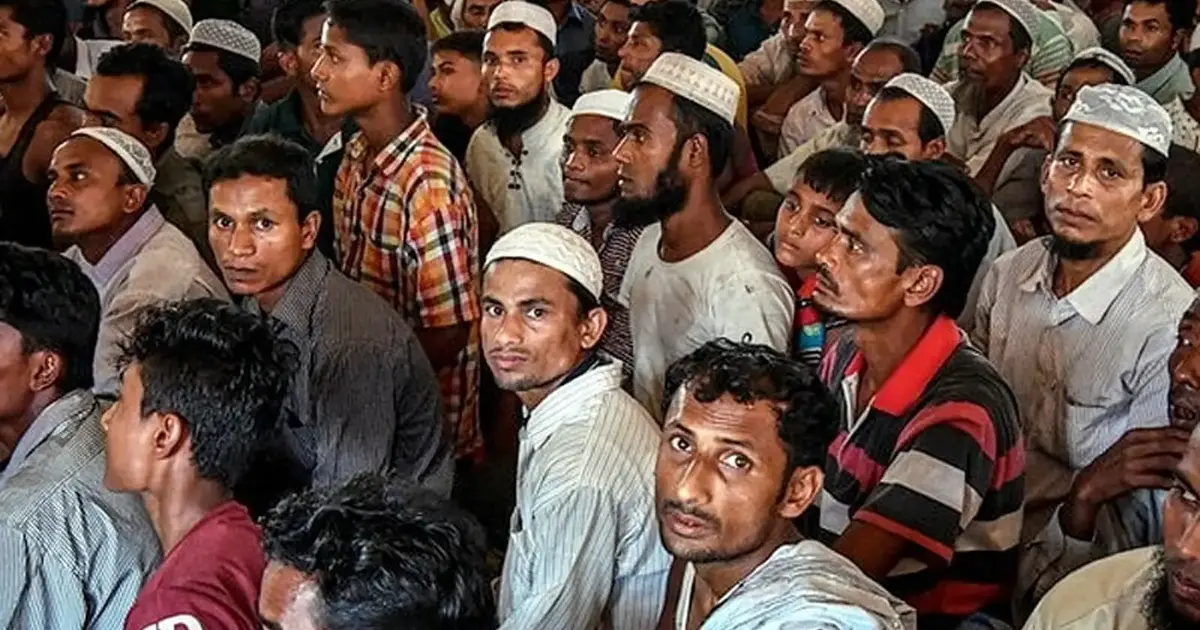
Malaysia hosts one of the world's largest Rohingya populations, with estimates suggesting over 180,000 individuals from the ethnic group residing in the country. However, the overwhelming majority lack formal legal status, remaining unregistered with Malaysian authorities and ineligible for most services, employment opportunities, and social protections. This liminal existence creates profound challenges for daily life, healthcare access, and education for children born in displacement.
The citizenship question carries particular weight in the Malaysian context. The country's constitutional framework establishes relatively restrictive pathways to naturalisation, typically requiring individuals to demonstrate long-term residence, language proficiency, and other criteria that most Rohingya displaced persons would struggle to satisfy. Additionally, Malaysia is not a signatory to the United Nations Refugee Convention, meaning it does not formally recognise refugee status through legal instruments, instead managing displaced populations through ad-hoc administrative arrangements.
For many Rohingya individuals and families, the prospect of securing Malaysian citizenship has never been a realistic expectation. Instead, the community has primarily focused on stabilising their situation through obtaining UNHCR refugee documentation, accessing humanitarian assistance, and managing day-to-day survival. Any suggestion that organised efforts toward citizenship acquisition are underway appears disconnected from the practical realities facing most community members.
The Rohingya Ulama Council's intervention into this debate highlights the internal leadership structures that have emerged within the refugee community. The council functions as a representative body addressing religious, social, and advocacy concerns, positioning itself as a bridge between the Rohingya population and broader Malaysian society. By publicly refuting these allegations, the council is engaging in what might be termed defensive communication—attempting to shape narratives about community intentions before negative perceptions calcify into entrenched public attitudes.
The timing and context of such allegations warrant scrutiny. Political rhetoric around immigration and refugee populations often intensifies during periods of economic uncertainty or when competing narratives vie for dominance in public discourse. In Malaysia's diverse society, where multiple ethnic and religious communities coexist with varying degrees of social cohesion, unfounded claims about refugee populations can quickly mobilise constituencies and become weaponised in political contexts.
Regionally, the Rohingya question remains one of Southeast Asia's most intractable humanitarian challenges. Myanmar's military government has maintained policies widely regarded by international human rights organisations as constituting genocide against the Rohingya minority. Neighbouring Bangladesh hosts nearly a million Rohingya in sprawling camps, while smaller populations are scattered across Thailand, Indonesia, and other regional states. Malaysia's role in hosting a significant proportion of the diaspora carries implicit responsibilities, yet the country's government has often adopted a cautious posture, balancing humanitarian considerations against domestic political sensitivities.
The denial issued by Rahimullah Hussain must be understood within this broader regional and domestic landscape. The Rohingya community in Malaysia exists in a state of permanent precarity, dependent on continued tolerance from host authorities and the goodwill of neighbouring communities. Public allegations—particularly those framed as threats to national sovereignty or demographic stability—carry disproportionate weight in shaping policy responses and community attitudes.
Moving forward, the Rohingya community's ability to address such claims effectively depends partly on strengthening communication channels with Malaysian civil society, media, and policymakers. Building understanding about the actual aspirations and constraints facing displaced populations requires sustained engagement beyond reactive denials. For Malaysia, clarifying its long-term approach to Rohingya populations—whether through enhanced humanitarian frameworks, clearer documentation pathways, or eventually regional solutions—remains an urgent matter that affects hundreds of thousands of lives.